

Location: Limpopo & Mpumalanga Provinces (South Africa)
Geology: Basal and granite interspersed with gabbro.
GENERAL TRAVEL INFO TO THE KRUGER PARK:
Currency: ZAR (South African Rand)
Time Zone: GMT + 2
Driving Side: Left
Calling Code: + 27
INTRODUCTION
Kruger National Park and South Africa are synonymous with each other. You can’t think of the one without the other springing to mind. The Kruger National Park borders Mozambique to the east and Zimbabwe to the north. The Limpopo National Park from Mozambique and the Gonarezhou National Park from Zimbabwe are now linked to complete the Great Limpopo, Trans-Frontier Park.
A SHORT-COMPREHENSIVE GUIDE TO TRAVEL TO THE KRUGER NATIONAL PARK (SOUTH AFRICA)
Where is the KRUGER NATIONAL PARK?
The KRUGER NATIONAL PARK is in the Limpopo and Mpumalanga provinces of South Africa, some 390 km (Numbi Gate) from the OR Tambo International Airport.
Some Interesting Facts of the KRUGER NATIONAL PARK
The Kruger National Park is the oldest national park in Southern Africa. (Established in 1895)
The Kruger National Park is home to one of Africa’s most successful hunters, the African wild dog. The wild dog’s success rate is estimated at some 80%.
Webcams are used to observe wildlife in the Kruger National Park.
Visa for Kruger National Park – South Africa
Below is a list of requirements when applying for a Visa to enter South Africa:
You will need to complete an ‘Application for a Visa’ form (BI-84).
Passport or travel documentation should be valid for a minimum of 30 days and have at least two blank pages.
Two color passport type photographs.
Documentation (Bookings and Reservations) confirming the purpose of your visit.
Minors and or children should in addition to above have documentation proving custody and consent.
A return or onward ticket.
Financial proof that you can support yourself with living expenses while staying in South Africa.
Visa for South Africa – Exempt Countries
Visitors who hold ordinary passports and originate from any of the below-listed countries can enter South Africa to visit the Kruger National Park without a visa.
Note: The red lines indicate current travel restrictions.
Visa for South Africa – Visa on Arrival
Validity: 30 Days
Cost: ZAR1,350.00
Citizens for the following countries will require a Visa when entering South Africa:
List – Courtesy of the Department of Home Affairs – South Africa (March 31st, 2020)
http://www.dha.gov.za/index.php/applying-for-sa-visa
Visa for South Africa – African Passport Holders
Most African countries, including the government of South Africa, is said to soon introduce Visa on Arrival for all African passport holders. African passports will be issued to citizens of most of the African countries on the African continent to out phase the need for Africans to obtain a visa for the 55-states in Africa. This initiative is like that of the European Union and was first launched on 17 July 2016 in Kigali, Rwanda.
How To Travel To The Kruger National Park
Prospective tourists will be landing at the OR Tambo International Airport in Johannesburg. The choice then will be to reach Kruger Park by air or by road.
Connecting flights can be taken to:Skukuza Airport, located at Skukuza, the main administrative center for the Park.
Kruger Mpumalanga National Airport, some 40 km south of the Numbi Gate.
Hoedspruit Airport for entry to the central regions of the park.
Phalaborwa Airport for entry to the northern part of the park.
A trip by road in a rental car can be a rewarding experience, should you have the time. Allow between 4 to 6 hours for south and central entry to the park and up to 7 hours for the northern gates, traveling by road. Gates are open from 05H30 and 06H00 and close daily from 17H30 to 18H00. The opening and closing times of gates are seasonally linked.
The Kruger National Park has no less than ten entry points by road:
Numbi Entrance Gate – South of the Park, (closest from OR Tambo Airport), entry via R538 from White River.
Crocodile Bridge entrance Gate – South of the Park, entry R571 from Komatipoort.
Malelane Entrance Gate – South of the Park, entry N4 from Malelane.
Paul Kruger Entrance Gate – South of the Park, entry via R40 from Hazyview.
Phabeni Entrance Gate – via the R536 from Hazyview,
Orpen Entrance Gate – Central entry point via R540 from Belfast.
Phalaborwa Entrance gate – Central and northern entry point via R71 from Polokwane and Tzaneen to Phalaborwa.
Punda Maria Entrance Gate – This northern entry point is via the R524 from Makhado.
Pafuri Entrance Gate – Northern entry point via R524 from Makhado and is an optional entry point to Punda Maria. (Most tourists enter via Punda Maria).
Giriyondo Entry Gate – Entry from the SA – Mozambique border
A Short History of the Kruger National Park
A motion for the establishment of a game reserve was introduced by one Louis van Wyk in the parliament of the old Transvaal Republic. A majority of one vote and the consent of President Paul Kruger resulted in the establishment of a government game reserve in March 1898. The final borders of the park were established in 1926 and include some 19400 square kilometers. It spans an area of 350 km from north to south and 60 km from east to west. The park was known as the Sabi Game Reserve from 1898 to 1926. A motion to formally establish and name the Kruger National Park was tabled in the South African parliament on May 31st, 1926. Although there was some political turmoil regarding the name, Act 46 of 1926 was unanimously accepted.
onal-park.html
The Best Time to Travel to the Kruger National Park
Is the Kruger National Park Safe to Travel?
The Kruger National Park lies within a malaria zone, and it is advisable to take the necessary preventative medication. Wildlife viewing has some risk involved but you will normally be safe when accompanied by a ranger or guide. Poaching is alive and still occurring in the Park and any suspicious behavior should be reported to the park rangers. In general Kruger Park is safe to visit but don’t tempt fate, apply the normal safety rules like locking up your luggage and keeping copies of your documents! (See details listed below). The danger zones are Johannesburg and areas surrounding the OR Tambo airport. Beware of so-called citycentric crimes like mugging, pick pockets and hijackings.
How to Stay Safe While you travel In and around the Kruger National Park?
Useful travel tips and precautions:
Make sure that you have duplicate documents available and stash it separately.
Avoid travelling alone at night from OR Tambo. (Game viewing by night is allowed, but rather travel with a ranger or an experienced safari guide).
Only use transport approved by your tour operator.
Be vigilant around the airport and surrounding areas.
Take care to add the local Police and emergency numbers on your cellphone.
Don’t travel without travel insurance.
Always keep your valuables in a safe deposit box at your destinations.
Keep your luggage locked in your hotel or resort.
https://www.safaribookings.com/pilanesberg/safety#travelsafety
Map of the KRUGER NATIONAL PARK
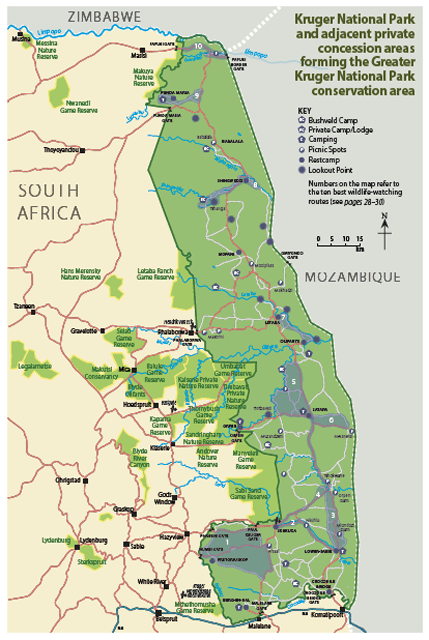
The Top Tourist Attractions in the Kruger National Park (South Africa)
This is probably one of the best places to see and experience wildlife in southern Africa in style as it was and will hopefully stay. There is a long list of camps, picnic sites, and resorts listed on the internet. Let us explore some of the popular ones:
The Big Five

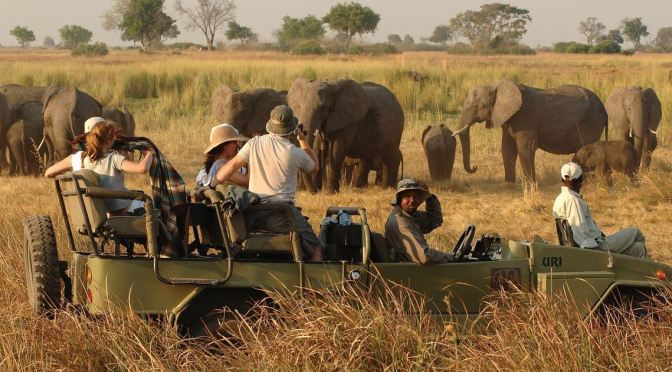
Everyone wants to see the big five, the elephants, rhinos, buffalo, lions, and the leopards. Elephants and buffalos are the most likely to be spotted. But, with an experienced guide at your side, the chances are good to score five out of five. June to September is the best time for the self-drive enthusiast.
Explore A Large Amount of Wildlife

The are at least 145 mammal species to see in the Kruger National Park. Amongst them, you will find spotted hyenas, wild dogs, wildebeest, different antelopes, giraffes, Nyalas, zebras, crocodiles, hippos, and many others. If you are looking for some fun, be on the lookout for our close relatives the baboons. But don’t despair they will be on the lookout for you as well! Warthogs and meerkats are other fun animals to watch.
Birdwatching
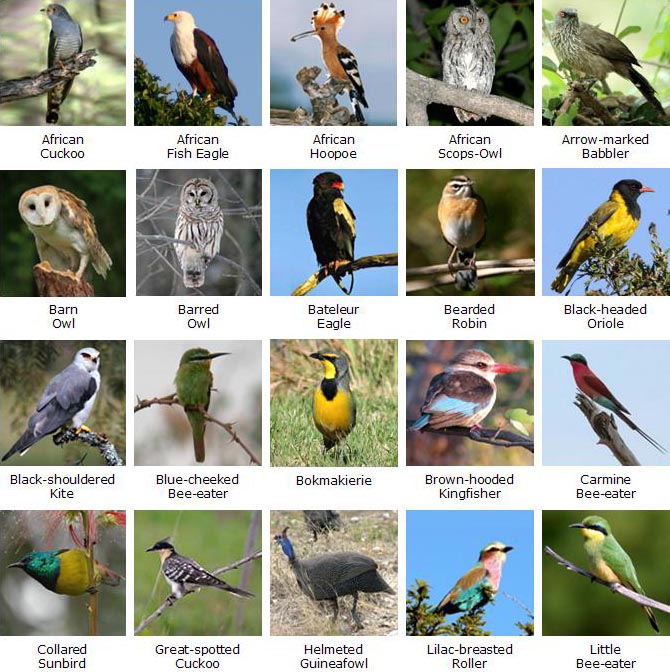
The Kruger National Park is a paradise for any birdwatcher. There are some 500 recorded species, including some 50 migratory species to be found. Some of the most well-known species to have on your watch list will be the White-fronted bee-eaters, Tawney eagles, Whitehead vultures, Bateleurs, Lapped faced vultures, spurfowls, cuckoos, African Finfoots, parrots, Saddle-billed storks, and many others. The Lake Panic Bird Hike close to Skukuza is a popular watching spot.
Trees And Other Flora
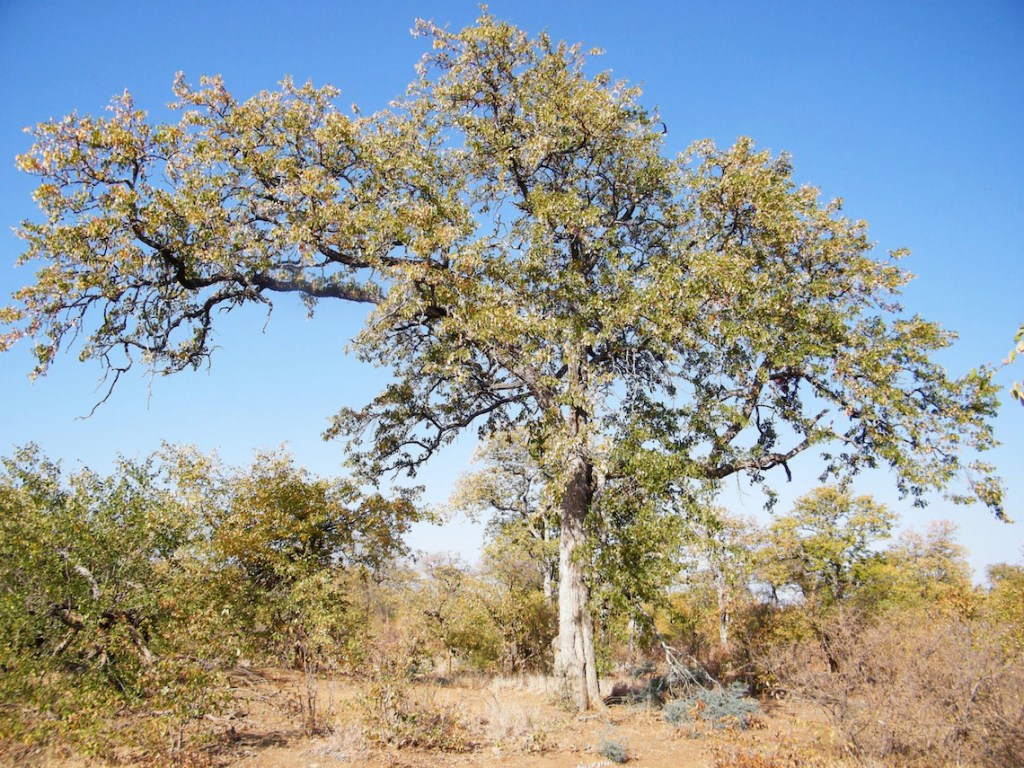
Not many tourists pay any detailed attention to the surrounding flora, but the Kruger National Park has more than 330 different tree species. Landmark trees, like the famous Baobab, are found to the east of the Satara camp. The Zulu Milk Berry and Cape Chestnut trees can be found on the Wolhuter hiking trail.
Bushman Rock Art & Paintings
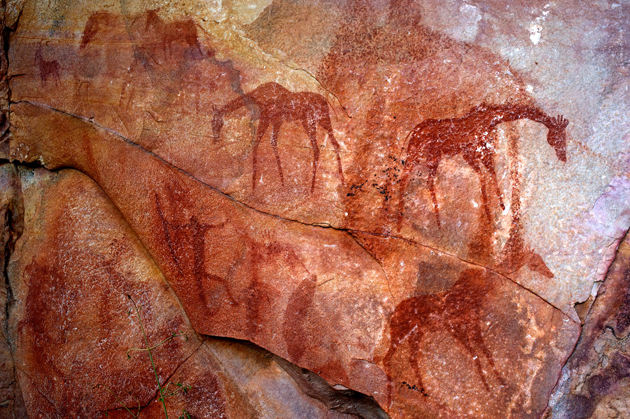
The Kruger National Park is home to some 120+ sites for this famous Khoi and San paintings, that were painted or sculptured between 1500 and 3000 years ago. Themes include wildlife, hunting, culture, ‘alien’ figures, 3-legged animals, figures with hollow bodies, and many others. Surveyor Con de Rosner revealed another 57 sites in 2007. The art is best appreciated with an experienced guide. Interested tourists will be advised to explore these on the above mentioned Wolhuter Hiking trail.
Hiking in the Kruger National Park
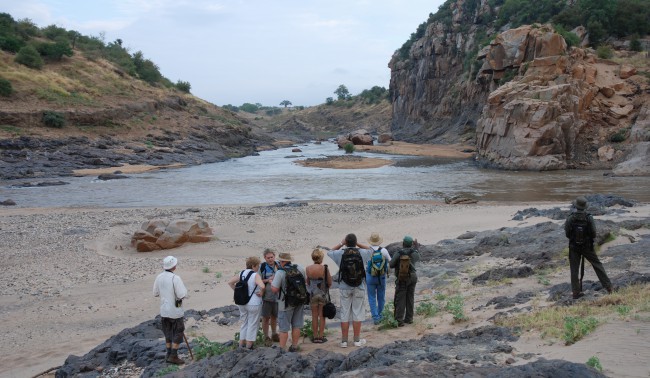
There is a long list of hiking trails offered in and out of the park. These include daily (5-hour trips) as well as up to three-night trails. Rangers take care to take the general fitness level of each group into account. Getaway magazine list the following as some of the best hiking trails: Nyalaland trail from Pafuri for birdwatchers, the Letaba elephant walk, the Satara Sweeney hike for birdlife like the Scopes Owl, Mozambican Nightjar, etc., and the Metsi-Metsi hike from Skukuza game viewing at its best.
Cultural Tours
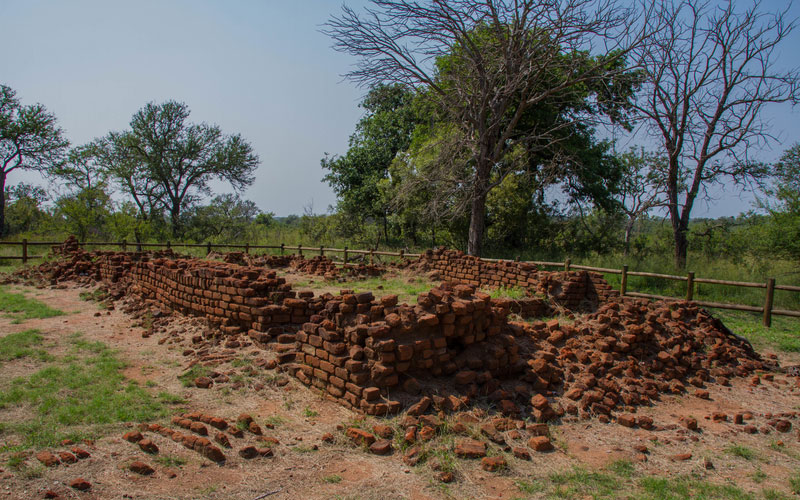
For those tourists with an interest in archaeology, there are some remarkable sites to visit. The most interesting one is probably the Stone Age Masorini ruins that include a fully restored village found close to the Phalaborwa gate. Another famous one is the Albasini ruins close to the Phabeni Gate. The ruins of the trading post belonged to one Joao Albasini, a Portuguese trader and adventurer who explored and set up trading routes in the region in the nineteenth century.
The Iconic Letaba Elephant Hall Museum
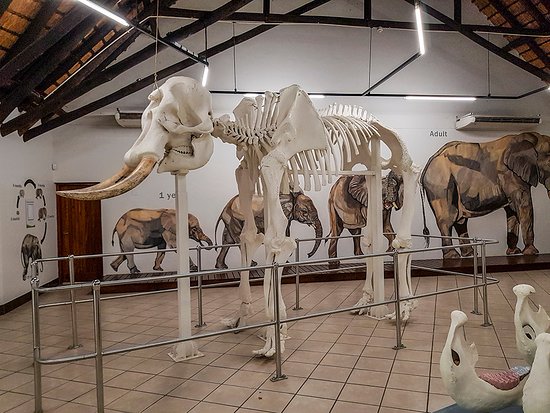
Make sure that you include a visit to the museum on your tour. Take note that entrance is FREE! The museum has amongst its exhibits a life-size elephant skeleton, tusks of up to 50kg each belonging to the famous ‘Magnificent Seven Elephants’, elephant skulls, and many more.
OTHER ACTIVITIES
Mountain bike safaris from the Olifants Rest Camp
Bush braais (BBQ’s) and Bush breakfasts
A round of golf on the 9-hole Kruger Park Golf Course at Skukuza
You can even pay a visit to the ‘Tropic of Capricorn’. It is located 12km north of Mopani Rest Camp. Wikipedia calls it “the circle of latitude that contains the subsolar point on the December (or southern) solstice.”
The best times to visit the Kruger National Park is probably the drier months from April to September, but whenever you decide to visit it will be a memorable experience that will stay with you for years to come.
ENJOYED THIS BLOG?
Let us know in the comments below. We would love to hear from you.
****************


 Falcon Safaris Blog