Just imagine a comfortable campfire with nightfall approaching. One by one, the evening sounds begin. In the distance, you can hear the roar of a wandering lion, then the laugh of a hyena. Hopefully, it is not laughing at you because the sound is normally an indication that it wants to be left alone. Then, close by, the howl of a jackal fills the night. The smell of food on a fire, the chat and laughter of friends and fellow tourists around you…
Suddenly, it is sunrise, and bird song awakens you. You hear the barking “aw” and “ih” of baboons and the gibber of apes. Our forebears (well, of some of us,) are waking up. In the distance, the bark of a zebra…
Then you realize that you are on safari with Falcon Safaris, the best tour operator in Southern Africa, and that you are in the Chobe National Park in Botswana.
WHY FALCON SAFARIS?
Well, that’s a very easy one to answer. Falcon is the prime full-service destination management company in Southern Africa. Fancy words, you muse? It applies to the best tour operator in the business, and you are on tour with them. Falcon Safaris offers choice packages that include traditional game viewing in open vehicles and comfortable overnight stops, as well the real thing: camping and campfires, the true way to experience Africa.
THE CHOBE NATIONAL PARK
A Chobe National Park safari is one of the packages offered by Falcon Safaris. The park is located in the northern part of Botswana and borders the famous Okavango Delta. Some of Falcon’s Victoria Falls tour packages include visits to the park as well. Located along the Chobe River, the park consists of vast grassy plains, with the bushier Savuti marsh areas to the south. The Chobe river camp is a favourite with tourists.
For more information visit: https://www.chobe-safari-lodges.com/ and http://www.chobe-national-park.net/
THE BIG FIVE
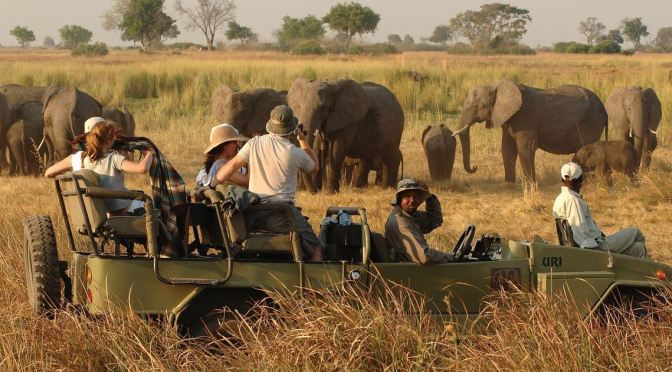
The big five are one of the reasons why most tourists want to visit a game reserve. You won’t be disappointed here. The park boasts one of the biggest elephant populations in Southern Africa. Led by a Falcon Safari guide, you will cross paths with buffalo herds, leopards and lions. The rhino, the fire fighter of the bush, is a bit on the shy side, and you may just miss it. With a bit of luck, you may see lions feeding on their kill or a leopard protecting its prey high up in a tree.
CHOBE WILDLIFE AND BIRD WATCHING
Wildlife is in abundance in the park, and it includes giraffe, zebra, kudu, springbok, impala and hartebeest. The river is well-populated with crocodiles, hippos and fish. For bird lovers, there is a kaleidoscope of birds to watch. Some 450 different species have been identified. Common species to see are the African darter, the saddle-billed stork and the squacco heron. The best time for bird watching with Falcon Safaris is from mid-November to April. This is the breeding season for the birds, and all migrant species are back “home”.
BABOONS
While everyone is on the lookout for the so-called big five, you may find yourself under observation by some close relatives. Big troops of African baboons are found all over Chobe. They like watching you as much as you like watching them. The biggest fun is to identify some of your family members amongst them. They live in close-knit family groups, with lots of children that need supervision and discipline, and you will find their almost-human behaviour great fun to watch. See if you are able to spot any of your uncles, aunts, neighbours or friends amongst them. Feeding them is a big no-no as it encourages them to raid tourists’ food supplies. Beware, they may try to steal your provisions if you allow them too close.
THE OKAVANGO DELTA
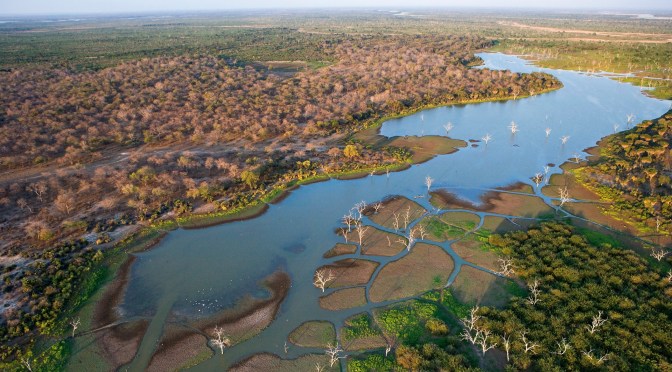
A Falcon Safari tour will include a visit to the Okavango Delta, a Unesco World Heritage Site. The delta borders Chobe and is basically a continuation of the nature reserve. It is subjected to seasonal flooding, with the main influx from the southern parts of Angola. The swampy flatland has its biggest inflow of water during the dry winter months and peaks around July. Scientists tend to regard the area as an oasis in a dry area rather than a natural wet-climate swamp. Receding water levels that follow the peak period attract large numbers of animals, which makes for excellent game viewing. Summer temperatures (November to early March) can reach 40 degrees, with a high humidity factor. The mid-year temperature pattern is mild by day with cooler nights.
OKAVANGO WILDLIFE
Falcon Safaris offers standard game viewing from open vehicles. Trips by motorboat or houseboat are also available. The delta attracts a wide variety of wildlife including the big five, the African bush elephant, blue wildebeest, springbok, sable antelope, impala, black and white rhinos, the Nile crocodile and yes, our cousins the baboons and some vervet monkeys.
Naturally, the delta supports a variety of fish species as well. Some seventy different species have been identified, including tiger fish and the well-known catfish. Fishing trips are available but need to be booked in advance. Tiger fish catches ranging between eight and ten kilograms have been recorded.
SNAKES
Most people don’t like snakes, and the feeling is somewhat mutual. That dates back to the time when the snake persuaded Eve to eat some of Eden’s export apples, with well-known consequences! Puff adders and cobras are amongst the snakes found in the area. Most snakes are likely to avoid humans. The exception is the puff adder, which, because it is slow-moving, prefers to lie still if there is danger. Puff adders bite when threatened and are responsible for up to 70% of all snakebites in Africa. Stay close to your Falcon guide and don’t try to entice or prod a snake with a stick or anything else, for that matter.
YOUR FALCON SAFARI GUIDE AND TRAVEL TIPS
As for all tourist destinations, there are some precautions you will have to take and some items that will make life easier for you:
- Malaria – The Chobe and Okavango areas are high-risk malaria areas, and you will be wise to take precautions. The swamps are rife with insects, and insect repellents are a must-have.
- Sunblock and sunglasses are essential, especially in the November to February summer season with accompanying high temperatures. Use practical sunglasses that can be replaced at low cost should you happen to lose or break them. If you use prescription glasses, a safe option is to have a spare set available.
- Well-worn hiking boots are another good investment. Well-worn is the keyword. You don’t want to hobble around with blistered feet. Remember to shake a boot before putting it on! It’s a nice hideout for spiders and scorpions.
- Binoculars are a sound investment, and a good camera is a must for recording your memories.
- Don’t overburden yourself with luggage, but do pack long-sleeved shirts and a hat, as well as a jacket for cooler nights if your visit falls within the winter months.
- It is also useful to have a small battery-powered torch and a supply of meds for headaches, indigestion, etc.
- Pack comfortable clothing, but remember it is Africa. Don’t pack camouflage or similar clothing and appear in public in it. You may just draw the attention of the police, and you wouldn’t like them to spoil your safari.
Speak to Falcon Safaris, the top tour operator for Southern Africa, for your planned Africa visit. Their top-class destination management team will make your African encounter a memorable one.
ENJOYED THIS BLOG?
Let us know in the comments below. We would love to hear from you.
****************


 Falcon Safaris Blog