Category Archives: safari

Travel Pilansberg (South Africa) – Top Tourist Attractions in Pilansberg, Pilansberg Facts & Top Travel Information

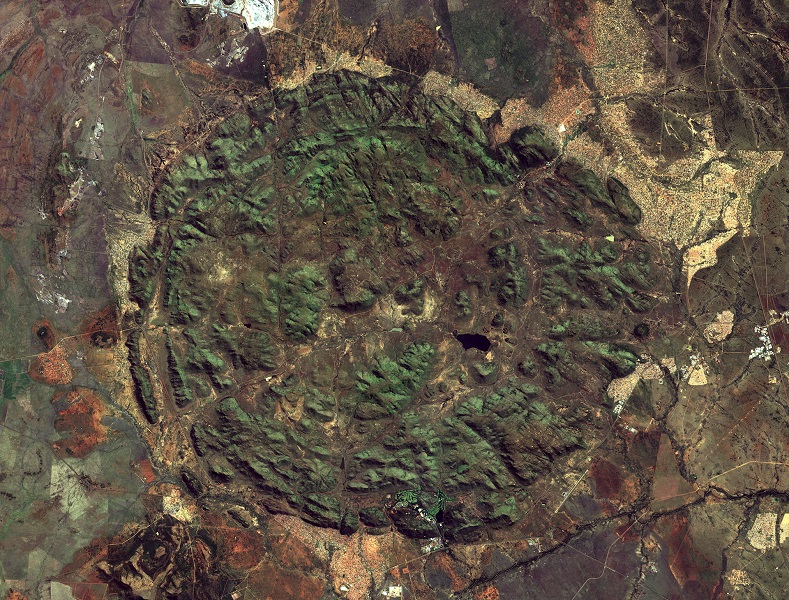
NASA picture of Pilanesberg with Vaalkop Dam on the right side.
 
Elevation: 1,687 m (5,535 ft)
Location: North West Province (South Africa)
Parent Range: Witwatersrand
Geology: Proterozoic
 
GENERAL TRAVEL INFO TO PILANSBERG:
Currency: ZAR (South African Rand)
Time Zone: GMT + 2
Driving Side: Left
Calling Code: + 27

Mention Pilansberg, and two things spring to mind. The one is the famed South African Bushveld with its rare beauty and game, and the other one is Sun City. Sun City will trigger gambling in your mind and for the sports lovers, the annual Nedbank Golf Challenge taking place in November. Let us explore the Pilansberg region.

A SHORT-COMPREHENSIVE GUIDE TO TRAVEL TO PILANSBERG (SOUTH AFRICA)

Where is Pilansberg?

The Pilansberg mountain is in the Northwest Provence of South Africa some 170 km from the OR Tambo International Airport.

5 Interesting Facts of Pilansberg

The Pilansberg mountain range is in one of the world’s only three alkaline ring complexes in what was called a ‘homeland’ by the old Apartheid Regime in South Africa.

Pilansberg is home to Sun City, South Africa’s largest gambling and entertainment complex.

Pilansberg is home to the unique Ficus wasp that pollinates the up to 300-year-old Ficus fig-trees, found in the area.

One of Africa’s most successful hunters, the African wild dog is roaming the area. The wild dog’s success rate is estimated at some 80%.

Lions, roaming the Pilansberg conservation area, have in general a lifespan of some 12 years. The oldest lion found in Pilansberg was named Ketimetsi and had a recorded age of no less than 17 years! 

Visa for South Africa

Below is a list of requirements when applying for a Visa to enter South Africa:

You will need to complete an ‘Application for a Visa’ form (BI-84).
Passport or travel documentation should be valid for a minimum of 30 days and have at least two blank pages.

Two color passport type photographs.

Documentation (Bookings and Reservations) confirming the purpose of your visit.

Minors and or children should in addition to above have documentation proving custody and consent.

A return or onward ticket.

Financial proof that you can support yourself with living expenses while staying in South Africa.

http://www.dha.gov.za/index.php/applying-for-sa-visa

Visa for South Africa – Exempt Countries

Visitors who hold ordinary passports and originate from any of the below-listed countries can enter South Africa to visit Pilansberg without a visa.

https://www.dha.gov.za/index.php/immigration-services/exempt-countries

Visa for South Africa – Visa on Arrival

Validity: 30 Days

Cost: ZAR1350.00

https://www.vfsglobal.com/dha/southafrica/visa-fees-at-glance.html

List – Courtesy of the Department of Home Affairs – South Africa (March 31st, 2020)

http://www.dha.gov.za/index.php/applying-for-sa-visa

The main entry points into South Africa are:

SOUTH AFRICAN AIRPORTS

Airport
Bloemfontein International
Cape Town International
Durban International
Gateway International
OR Tambo International Airport
Lanseria International
Kruger Mpumalanga International Airport
Pilanesberg
Port Elizabeth
Upington
Main Entry points into South Africa.

List – Courtesy South African Department of Home Affairs

http://www.dha.gov.za/index.php/immigration-services/south-african-ports-of-entry

Visa for South Africa – African Passport Holders

Most African countries, including the government of South Africa is said to soon introduce Visa on Arrival for all African passport holders. African passports will be issued to citizens of most of the African countries on the African continent to out phase the need for Africans to obtain a visa for the 55-states in Africa. This initiative is similar to that of the European Union and was first launched on 17 July 2016 in Kigali, Rwanda.

The Breathtaking Beauty of Pilansberg

The Pilansberg, laying in an alkaline ring complex, was formed by the eruption of a volcano some 1200 million years ago. The Kwa Maritane Hills (place of the rock) at the ‘ringside’ is also home to a lodge with the same name. The breathtaking beauty of northwestern bushveld, with its traces of stone age Tswana habitation (near Rustenburg), is at its best in summer, but due to dense vegetation, it is not the ideal time for game viewing. It is home to the big five and boasts some unique species like the African wild dog, amongst others. Besides amazing game viewing trips and safaris offered by most tour operators, a visit to the Sun City complex and a hot air balloon ride should be close to the top of your to-do list.

A Short History of Pilansberg

Pilansberg was named after a Tswana chief called Pilane. It was located within the borders of what Apartheid South Africa called a homeland. Bophuthatswana (Place of the Tswana People) as it was then called, became an ‘independent state’ in 1977 as part of the regime’s policies. It was reintegrated into South Africa on April 27th, 1994 with the formation of a new free South Africa. It is also home to Sun City, South Africa’s largest gambling and entertainment complex. Ironically gambling was a taboo in South Africa under the apartheid regime, but not so in the ‘independent’ state of Bophuthatswana

The Best Time to Travel Pilansberg

The best time to travel Pilansberg is during the latter part of winter and early spring which is from the middle of July to October. It’s also the best period for game viewing. Regular rain and dense vegetation make game viewing difficult in the summer months. Winters can be cold and be touching zero with summer temperature rising above 30 Degrees. April, May and September are regarded as the best safari months.

How to Travel to Pilansberg

There are two ways to get to Pilansberg.By road – Travel with the N4 West and then follow the R556 northwards towards Rustenburg and Sun City. The R510 turnoff will take you to the Pilansberg National Park. The drive will take 2 to 3 hours depending on traffic which could be heavy at times.By air – There are regular flights to the Pilansberg Airport with SA Express. The flights are scheduled for Mondays. Wednesdays and Fridays and take-off for the short 40-minute flight is 10H30 SA Time.

Is Pilansberg Safe to Travel?

Pilansberg is a Malaria free area and no vaccinations are required. It is a safe area to visit and is relatively crime free. The danger zones are Johannesburg and areas surrounding the OR Tambo airport. Beware of so-called citycentric crimes like mugging, pick pockets and hijackings.

How to Stay Safe While you travel In Pilansberg?

Useful travel tips and precautions:

Make sure that you have duplicate documents available and stash it separately.

Avoid travelling at night.

Only use transport approved by your tour operator.

Be vigilant around the airport and surrounding areas.

Take care to add the local Police and emergency numbers on your cellphone.

Don’t travel without travel insurance.

Always keep your valuables in a safe deposit box at your destinations.

Keep your luggage locked in your hotel or resort.
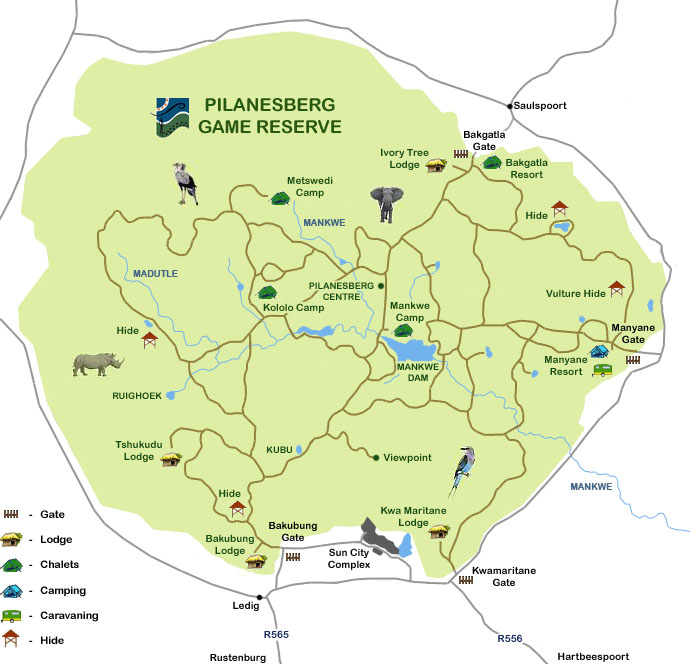
Map of Pilanesberg National Park.

The Top 10 Tourist Attractions in Pilansberg (South Africa)

10 – Picnic on the Hills
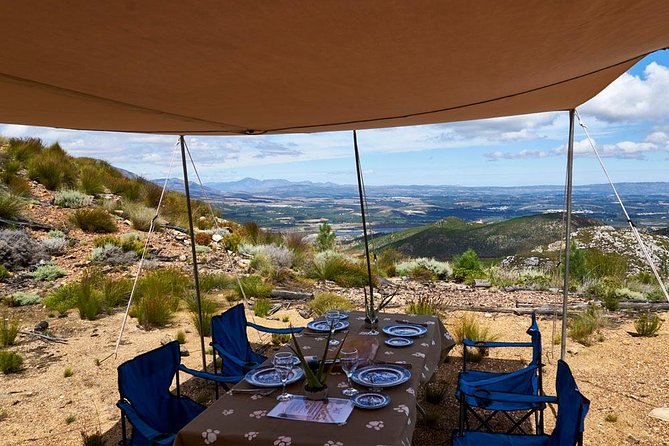
There are five picnic spots in the Pilansberg National park. The spots, high up the hills offers great views of the lake and the planes below. The Fish Eagle Picnic Spot is one of the best spots and overlooks the Mankwe dam. The picnic areas are safely fenced of and has toilet facilities. It also the best place to experience what South Africans called a ‘braai’ (barbeque).

9 – Pilansberg Hiking Trail
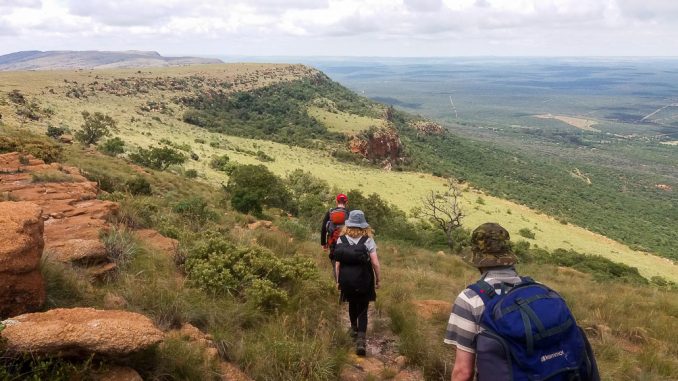
The trail provides a great opportunity for game viewing on foot. Hikes are normally 4 hours in duration. It is probably the best way to experience the overlapping Kalahari and lowveld vegetation that is alive with bird and insect life. Photographers will enjoy ample opportunities for great wildlife shots. You will have to reasonable fit and over 16 years of age for longer trips.

8 – Experience night live at Sun City.
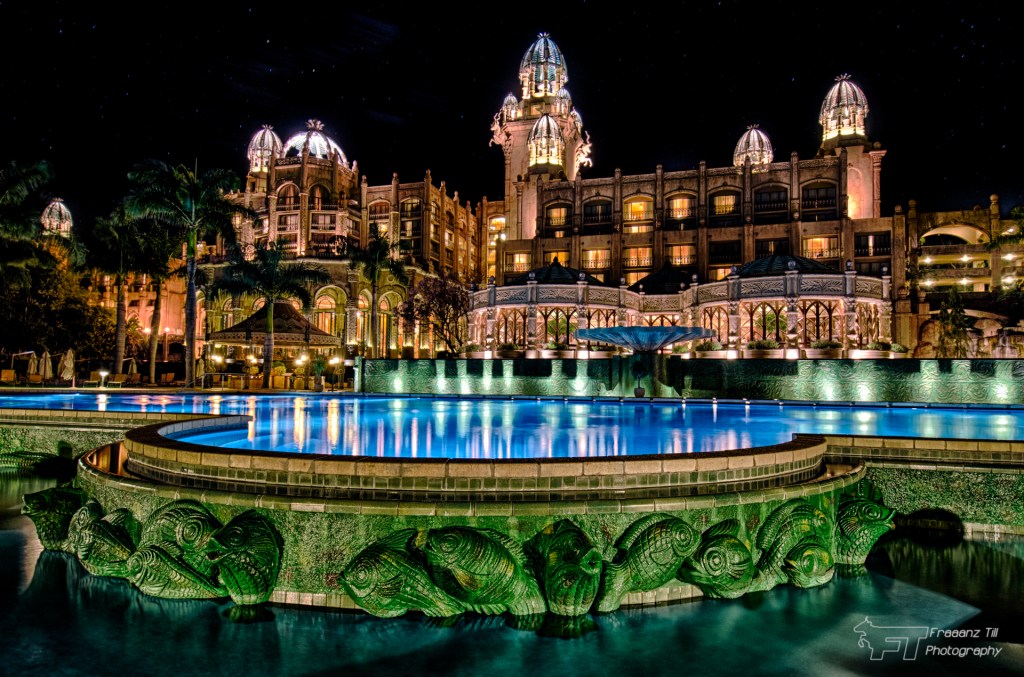
The casino is well-known for its gambling activities, but for nighthawks the complex offers a variety that will satisfy most. Dancers will enjoy the Encore, but those who just want to hang out with friends and may some pool in between, Vibes is the place for you. The review bar offers adult entertainment for those that are so inclined.

7 – Bird watching at Manyane
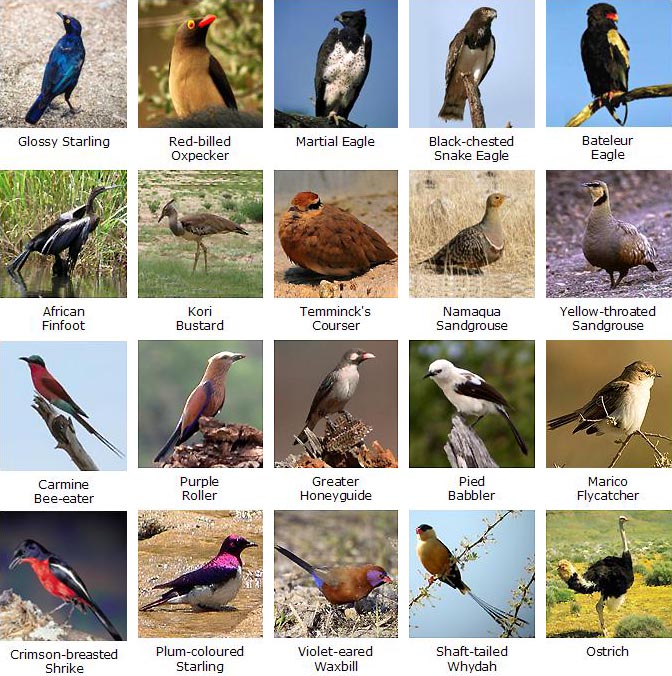
The Manyane Resort in Pilansberg is ideal for the pioneering type of tourist, those who won’t mind staying in thatched chalets or canvas tents. Daily activities include self-guided or ranger guided bird and game watching hikes. There is no shortage of fun activities like mini golf and is an ideal spot if the kids came along.

6 – Rovos Rail Golf Safari to Sun City
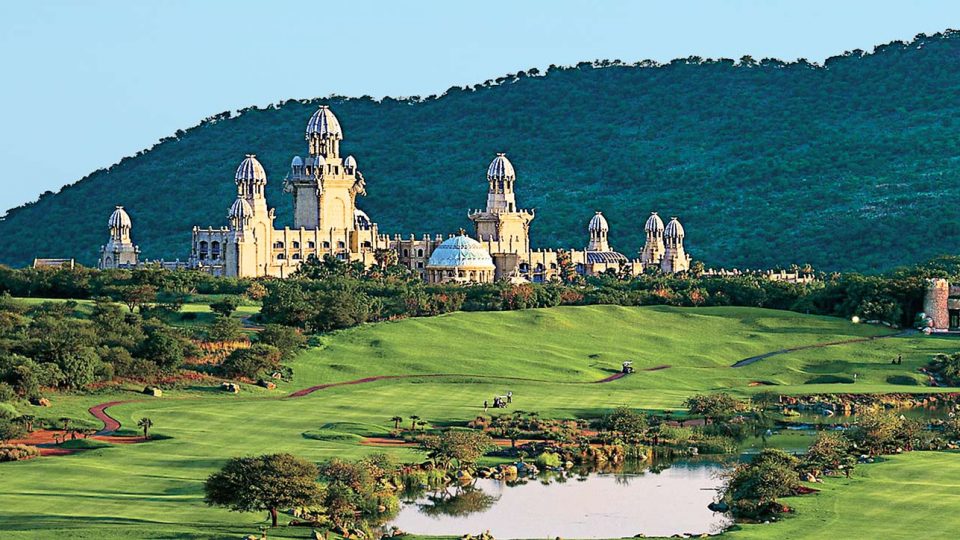
A trip by Rovos Rail offers a rather unique opportunity to get to your Pilansberg destination of the ‘beaten track’, so to speak. If luxury and good food is your style, this train trip is ideal for game viewing from a different angle. The trip is concluding with a visit to the Sun City and it is part of Rovos’s Golf tour safari packages.

5 – A meal at the Zebra Crossing
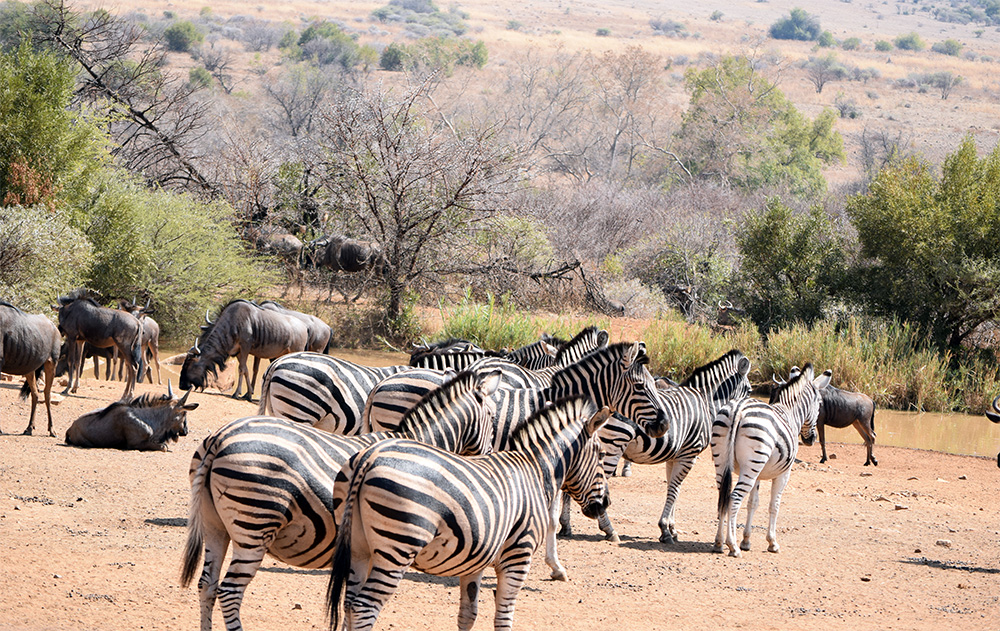
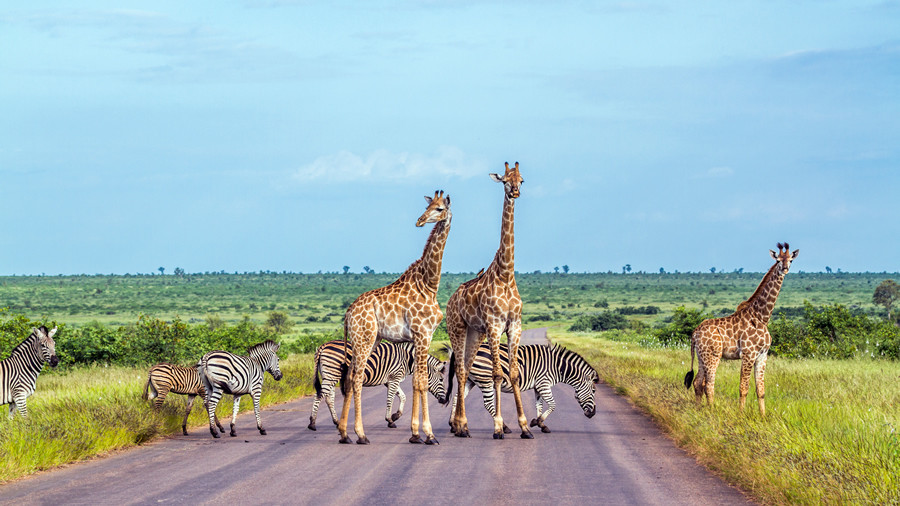
Apart from amazing food on the menu, the restaurant offers spectacular game viewing that can include, giraffes, warthogs, elephants and yes, zebras. It is the ideal stopover for lunch if you don’t mind to watch out for weird looking birds trying to steal food from your plate.

4 – The Gary Player Country Club
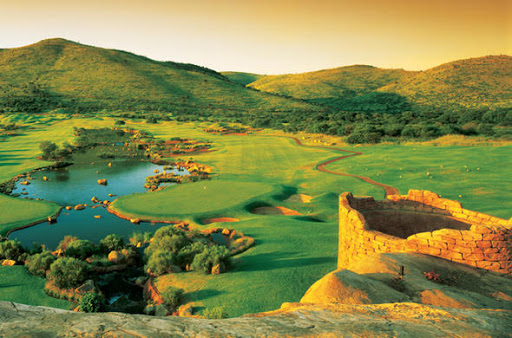
The world-famous Gary Player country club.

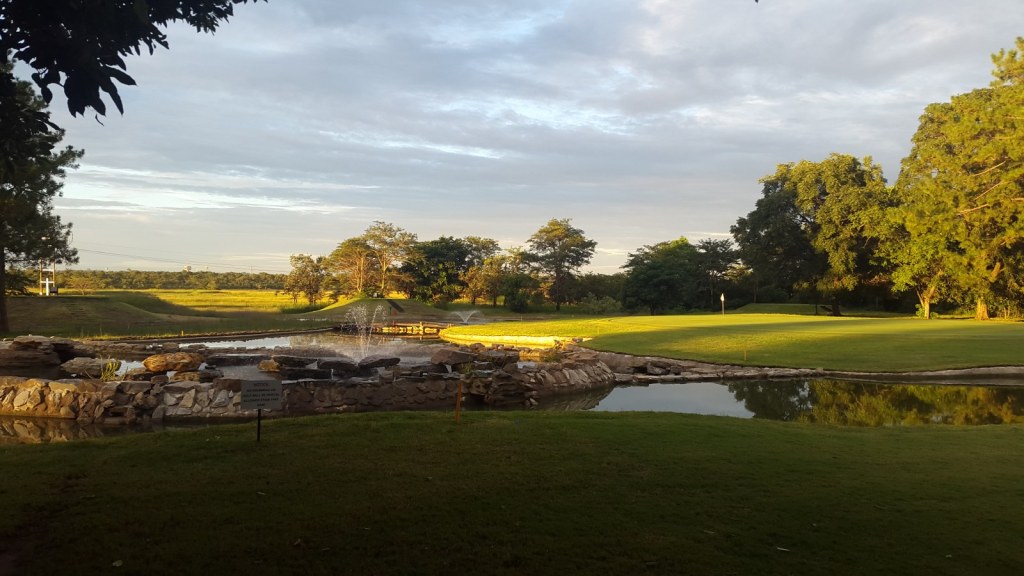
A visit to Pilansberg should include a round of golf at the world-famous Gary Player country club. It is an 18-hole par-72 course with a 5 km running trail. With its USA PGA specifications it rivals the best of the world and is also home to the annual Nedbank Golf Challenge. (It was formerly known as the Million Dollar Challenge). If you want to see the legends of golf in action, the best time to visit is November every year.

3 – Mankwe Dam and a hot air balloon flight
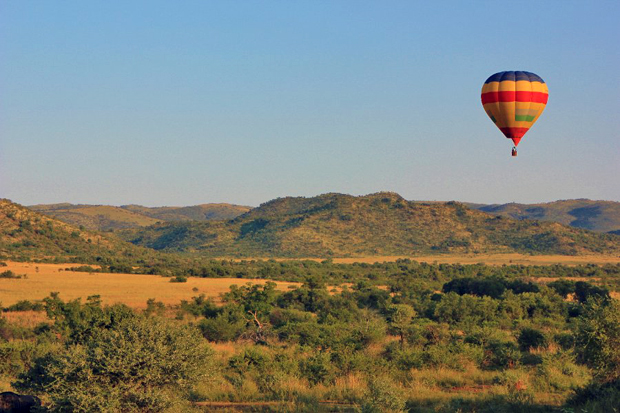
Mankwe hot air balloon

Apart from the natural beauty of the dam, Mankwe is more known for its hot air balloon trips. A trip will set you back in the region of ZAR4250.00 (March 2020), but will be well worth your while. Nothing beats the spectacular views from the air. Your trip will be concluded with some sparkling wine or orange juice on landing and an enjoyable game viewing drive back.

2 –Maze of the Lost City
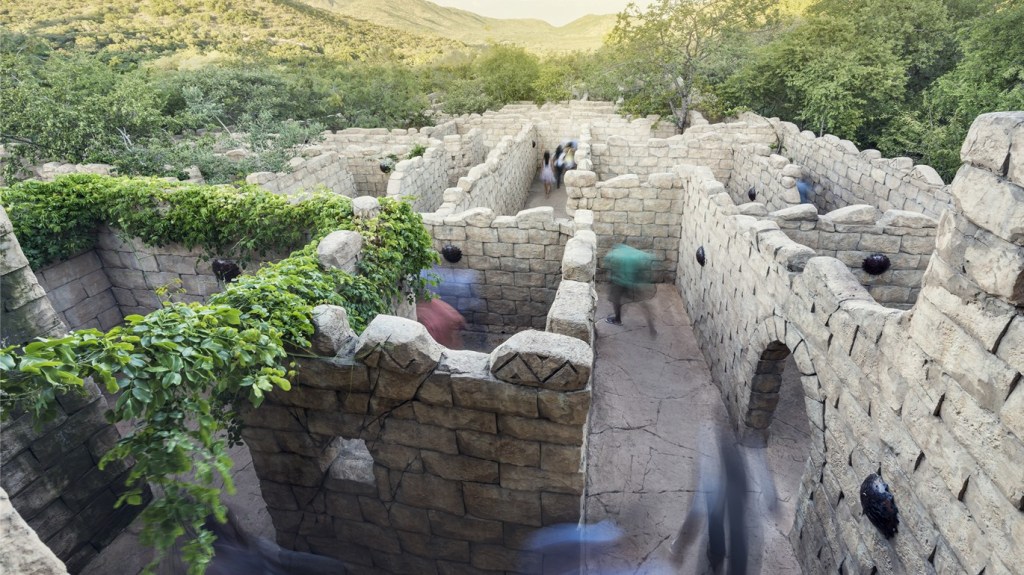
Blurred image of people walking through the maze at Sun City Resort

The Maze of the Lost City is an artificially created illusion of an ancient archeological discovery. Constructed from artificial stone and wood it is accessible via a 100-meter-long suspension bridge. It offers some spectacular views of the resort and the surrounding areas. At night flaming torches light the path to the maze bar which always has cold craft beer on tap. Entrance fees is set at ZAR140.00 for an adult. (March 2020)

1 – Game drive in Pilansberg National Park
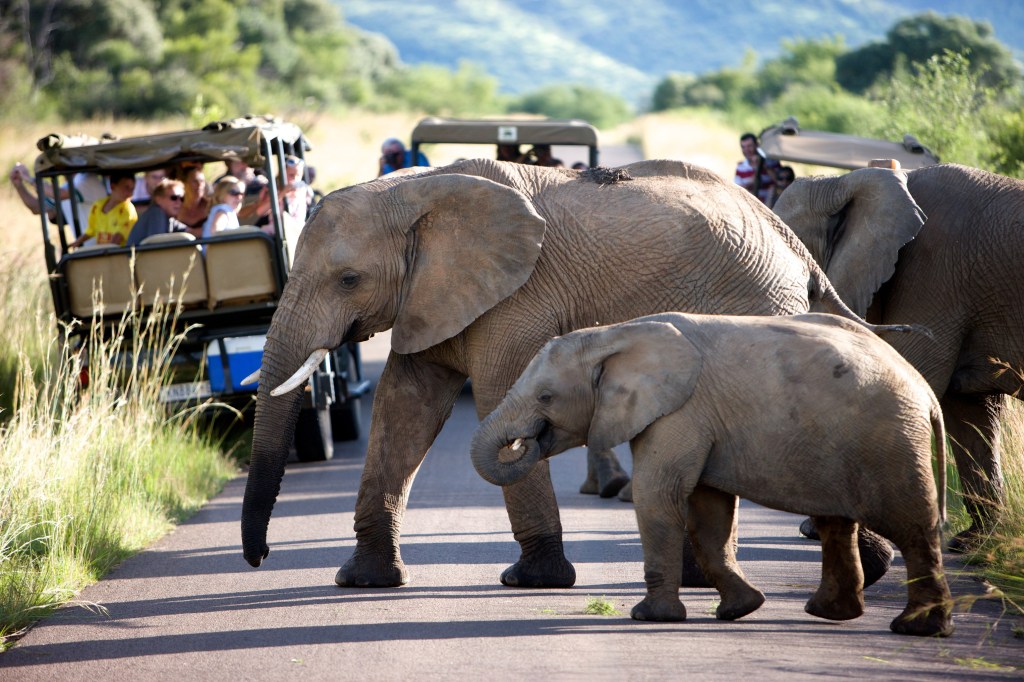
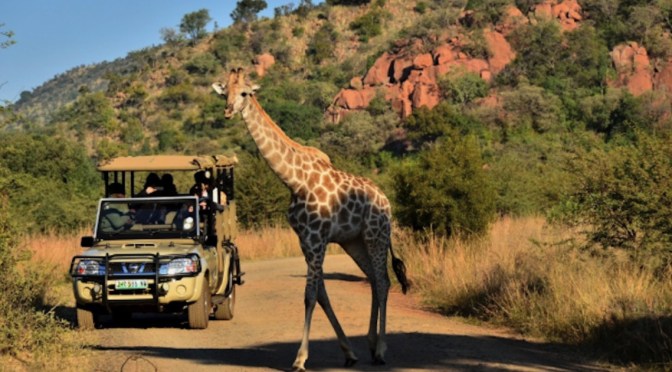
Pilanesberg National Park Game Drive.

Top of the list is undoubtedly a game drive in the Pilansberg National Park. The park was established in 1979 in what was called ‘Operation Genesis’ at the time. Some 6000 animals were relocated to the park! That included four of the big five. Lions was successfully introduced in to the park in the 90’s. The result is a spectacular game viewing experience in an open safari vehicle. There are a large variety of lodges each with its own game viewing schedules to choose from.

Other Noteworthy Tourist Attractions in Pilansberg

Vaalkop Dam Nature Reserve
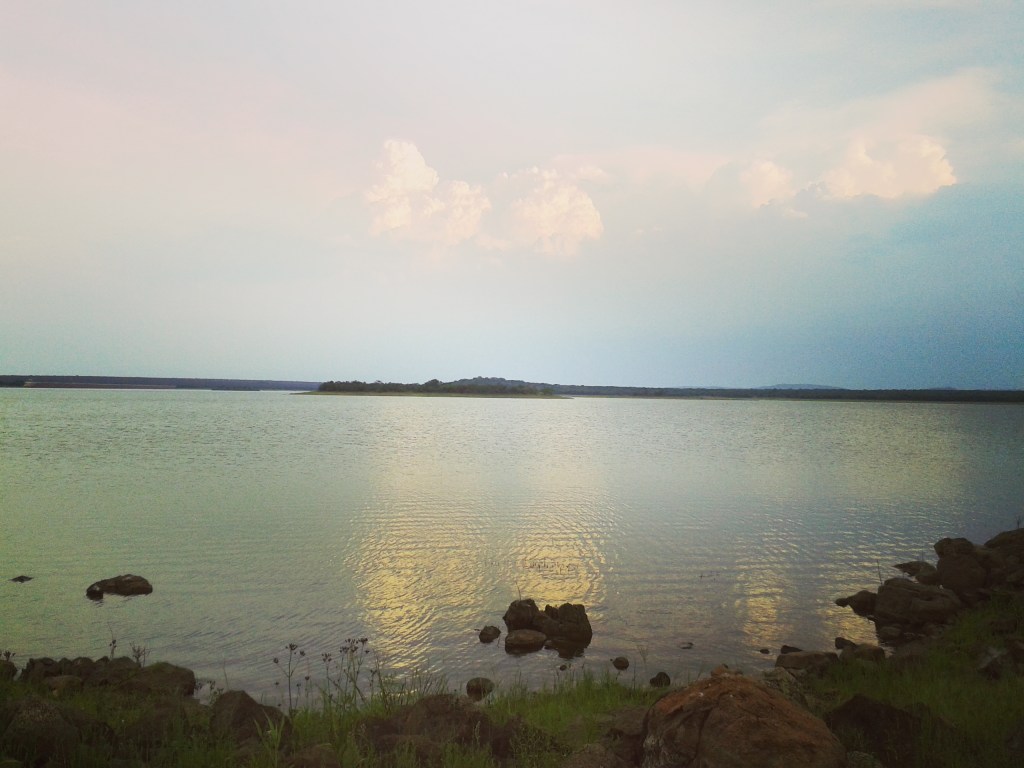
The dam is only 30 kilometers from Sun City and is an ideal spot for canoeing and fisherman. It is a birdwatcher’s paradise which include species like the spotted eagle-owl, the barn owl and the African crake amongst others. Hiking, cycling and boat rides are also on offer.

Royal Bafokeng Stadium
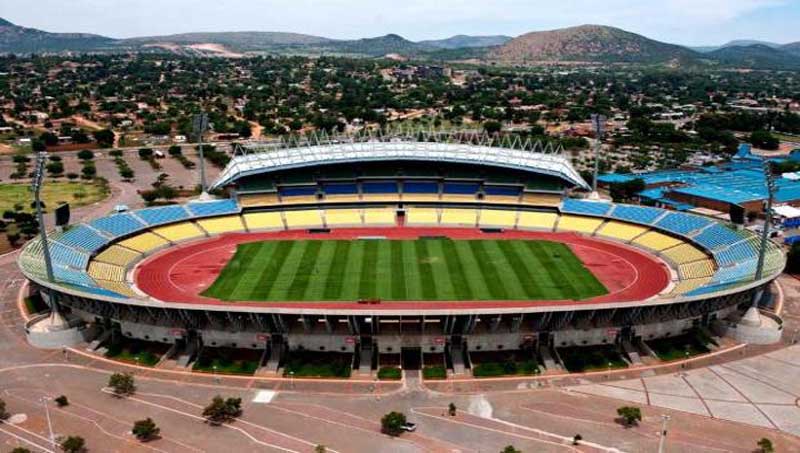
The stadium is the only community owned stadium in South Africa. Located in the town of Rustenburg, on your way to Pilansberg, it is well worth a stopover. The stadium was built in 1999 in preparation of the FIFA WORLD CUP that was hosted by South Africa. It is home to the Platinum Stars Football Club.

Motseng Cultural Village
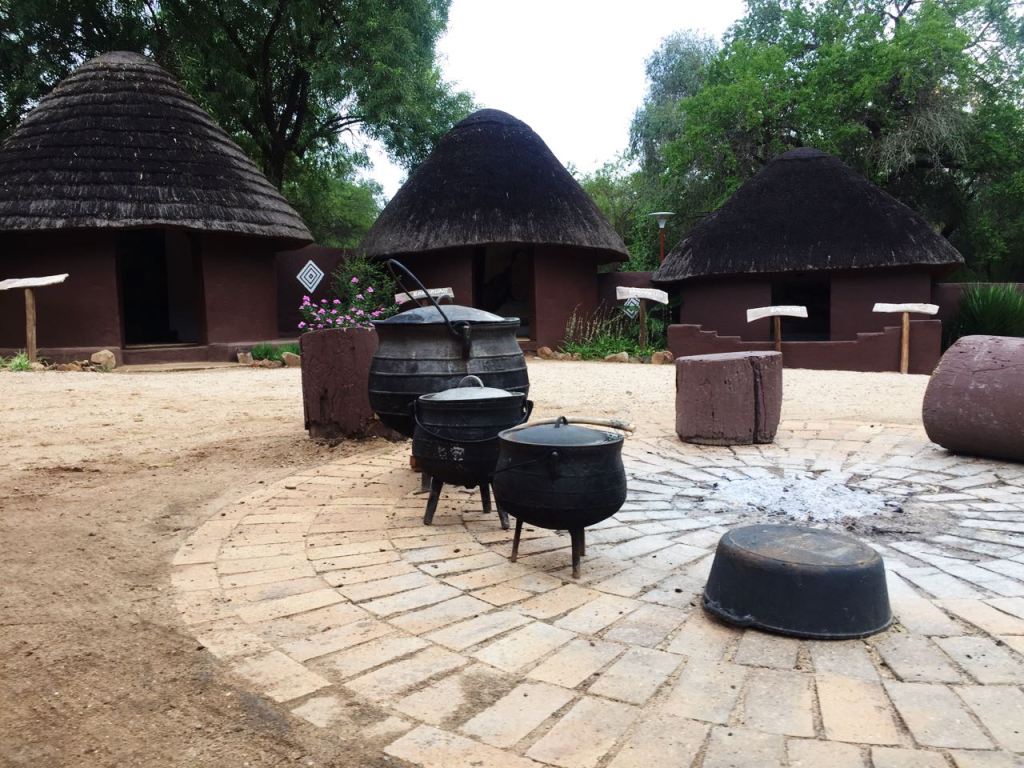
The village is within walking distance of the Sun City Resort in Pilansberg. It is the place to experience African (Tswana) culture, tradition and customs. Tourist will be treated to traditional song and dance and a true traditional African meal.

Historic Rustenburg
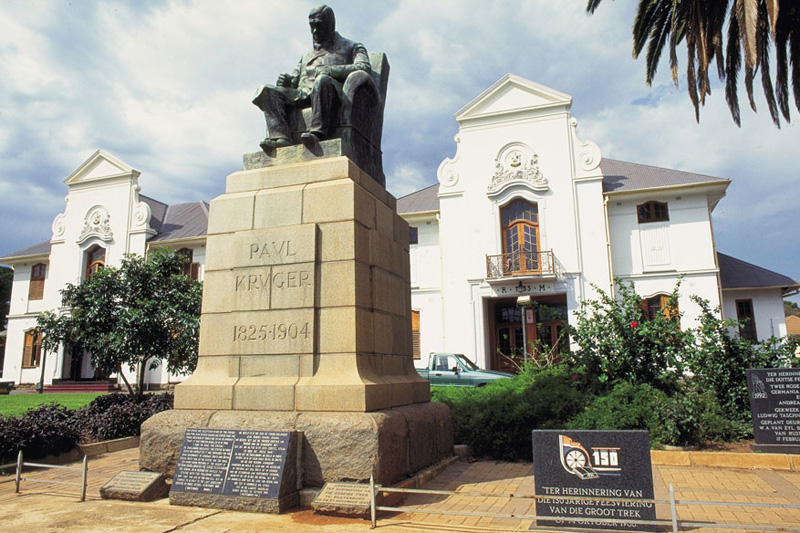
Rustenburg with its historic buildings is worth a visit, but the best is to travel with a tour guide. Try to avoid taxi ranks and congested areas while visiting. The city features a list of historic buildings and landmarks. Amongst those are the Lutheran Church and school, other historic churches, the Kruger statue, the Syringa Tree Stump Monument and the Gandhi Memorial.

Pilansberg Quad biking Adventure

Quadbiking

For the biking enthusiasts a quad biking adventure should be on your agenda. The adventure trail takes place in the Letsatsing Game Park. The tours depart from the Sun City Welcome Center.  An experienced tour guide will accompany you on this game viewing trip which has a duration of between 1 to 2-hours.

Join Falcon Safari’s Top Tour to Pilansberg (South Africa)

Falcon Safari is one of the leading and most trusted tour operators in Africa. Book your trip to Pilansberg (South Africa) today.
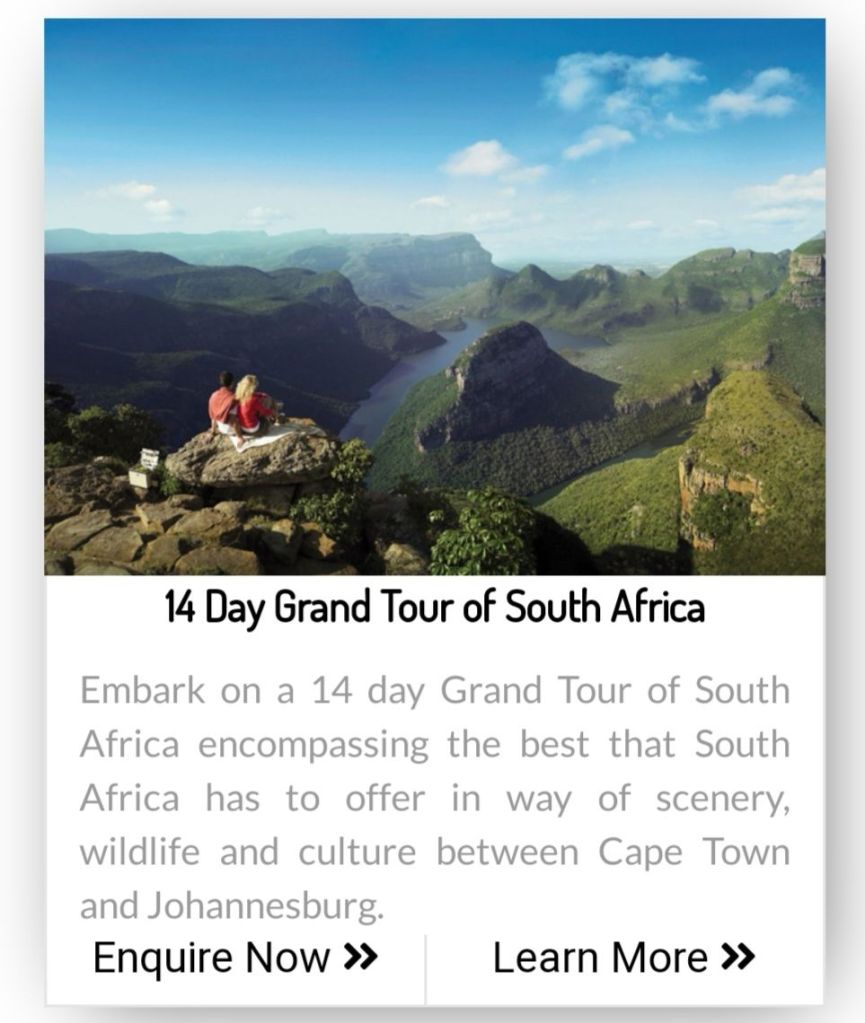
Touring the Pilansberg and Sun City will be a memorable experience with the South Africa of yesterday, today and tomorrow interwoven.

ENJOYED THIS BLOG?

Let us know in the comments below. We would love to hear from you.

                        ****************
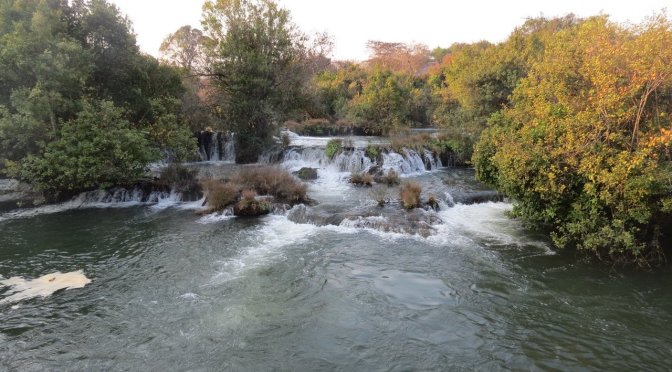
Travel Zambia – Top Tourist Attractions in Zambia, Zambia Facts & Best Zambia Travel Information

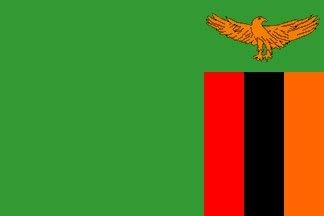
The Zambia Flag
Zambia Population: 17.09 Million (Population Growth 3%) – 2017
Zambia Capital: Lusaka
Zambia GDP: US$25.8 Billion (2017)
Zambia Currency: Kwacha (US$1 = ZMW15.28 (As at 08.03.20) (USD Preferred)
Zambia Time Zone: CAT (GMT+2)
Zambia Driving Side: Left
Zambia Calling Code: +260 –
Language: English

Zambia, with a mostly mild subtropical climate, is regarded as one of the pearls of Africa. Its a country with a natural friendliness that always welcomes tourists.

Zambia is located on a high plateau, with the lowest point above sea level being the Zambezi River to the south, at 329 meters. The highest point is the sandstone Mafinga Hills in the Northeastern part of the country at 2,339 meters.  In between are a myriad of tourist attractions.

A SHORT-COMPREHENSIVE GUIDE TO TRAVEL ZAMBIA

Where is Zambia?

Zambia is a landlocked country in the middle of Central and Southern Africa. Zambia shares borders with no less than eight countries: Mozambique (East), Malawi and Tanzania (North and East), the DRC (North-West), Angola, and Namibia (Westwards) and Zimbabwe and Botswana to the South. Zambia’s capital city is Lusaka, with a bustling international airport.

5 Interesting Facts of Zambia

  • Zambia has unique borders with eight countries. That is the second most in Africa. Only the DRC has more with nine.

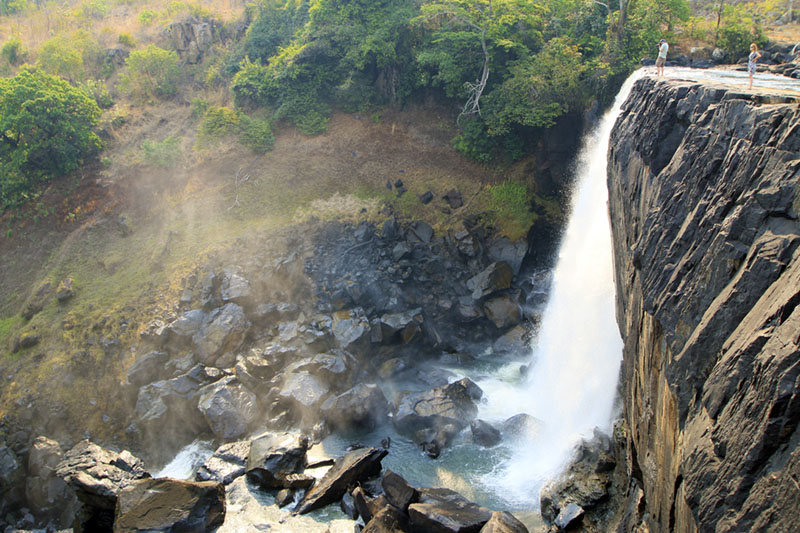
  • When you think of Zambia, the Victoria Falls springs to mind, but the country has another 17 spectacular waterfalls.
  • Zambians, with the help of international pressure, negotiated a bloodless independence gained on 24 October 1964, a unique occurrence in Africa in the sixties.

  • Zambia is home to the ‘Inzwa,’ the flying termites which provide spectacular displays during rainfalls. Other termite species built enormous mounds, some of the biggest in Africa.

  • Zambia has abundant copper reserves (70% of Africa’s reserves), which is their main export product. Zambian copper exports equal to US $6.8 million of Zambia’s income and form some 75% of the country’s export.

Visa for Zambia

It is advisable to get a visa BEFORE traveling to Zambia. Visas are available from Zambian missions overseas, or you may apply online at the following web address: https://eservices.zambiaimmigration.gov.zm/#/app/services/Visa

Processing time: 3 to 5 working days

Visa for Zambia – Exempt Countries

Validity: Visitors who hold ordinary, valid passports and originate from any of the below-listed countries can enter Zambia without a visa. Your passport will need to have at least two blank pages.

Anguilla Antigua and Barbuda Bahamas Barbados Belize Bermuda Botswana Cayman Islands Channel Islands Cyprus Dominica Dominican Republic El Salvador Falkland Islands Federated States of Micronesia Fiji French Guiana Gibraltar Grenada Guadeloupe Ireland Isle of man Jamaica Kenya Kiribati Lesotho Malawi Malaysia Maldives Malta Marshall Islands Martinique Mauritius MayotteMontenegro Montserrat Mozambique Namibia Nauru Niue Norfolk Island Palau Pitcairn Islands Reunion Romania Ross Dependency Saint Helena Saint Kitts and Nevis Saint Lucia Saint Vincent and Grenadines Samoa Seychelles Singapore Solomon Islands South Africa Suriname Swaziland Tanzania Tokelau Tonga Trinidad and Tobago Turks and Caicos Island Tuvalu Uganda Vanuatu Virgin Islands Zimbabwe

Visa for Zambia – Validity & Cost

Validity:

  • Single visas are valid for 90 Days.
  • Double and multiple visit visas are also valid for 90 days.
    (The exception is for USA citizens who will enjoy validity of 3 years.)

Cost:

  • Single and transit visas: US $50 (Transit visas are only applicable to land transits.)
  • Double and multiple visas: US $80
  • Day Trippers: US $20 (For Victoria Falls visitors, residing in Zimbabwe, etc.)
  • KAZA Uni-Visa: US $50 (Details below)

Visa for Zambia – Visit Visa Prior To Arrival

Tourists from the following countries will require a visa PRIOR to arrival:

Afghanistan Albania Algeria Armenia Azerbaijan Bahrain Bangladesh Benin Bulgaria Burkina Faso Cameroon Central African Republic Chad China Côte d’Ivoire Egypt Equatorial Guinea Ethiopia Gabon Gambia Guinea Guinea-Bissau India Indonesia Iran Iraq Jordan Kosovo Kuwait KyrgyzstanLebanon Liberia Libya Mali Mauritania Morocco Nepal Niger Nigeria North Korea Oman Pakistan Papua New Guinea Philippines Qatar Saudi Arabia Senegal Sierra Leone Somalia South Sudan Sri Lanka Syria Taiwan Tajikistan Timor-Leste Togo Tunisia Turkmenistan Uzbekistan Yemen
Countries to apply for vis

Zambia Entry Points

The main entry points into Zambia are:

  • Lusaka, with its large international airport, is the main entry point for inland tourists.
  • Tourists that intent to visit the Victoria Falls only, are advised to take a direct flight to Livingstone 470 km to the south, to avoid daily Lusaka traffic congestion.
  • Victoria Falls Bridge – Applicable to day-trippers that want see both sides of the Victoria Falls.

Visa for Zambia – African Passport Holders

The government of Zambia is said to soon introduce a ‘Visa on Arrival’ to all African passport holders. African passports will be issued to citizens of most of the 55 African countries on the African continent. The need for Africans to obtain a visa will be phased out. This initiative is similar to the European Union and was first launched on 17 July 2016 in Kigali, Rwanda.

Visa for Zambia – The New KAZA UNIVISA

Launched on 28 November 2014, the KAZA UNIVISA is a tourist visa that allows tourists to visit both Zambia and Zimbabwe with one visa, multiple-entry. The cost of the KAZA UNIVISA costs $50 and covers entry for the famous Okavango Zambezi Transfrontier Conservation Area (KAZA TFCA) that covers 5 African countries, Angola, Botswana, Namibia, Zambia, and Zimbabwe. Apply for your KAZA UNIVISA online.

Read More (https://www.zambiaimmigration.gov.zm/kaza-univisa/)

The Capital of Zambia

Lusaka is the capital city of Zambia. The capital city is located in the center of the southern part of Zambia. Lusaka is regarded as a modern, fast-growing city. It is alive with ever-increasing modern shopping malls of South African and European origin and ongoing building projects.

Crime is minimal, but petty theft does occur. The city’s growth attracts people from all over the country. But rest assured, most of them are friendly and are trying to make an honest living by selling their wares on the streets and public markets. The lousy thing probably is that there is no influx control and that the roads and municipal facilities are hardly adequate for a large number of inhabitants. There are no official bus services, but a range of minibus taxis, wrecks, and good dial-up taxis are available from the airport. To avoid getting lost, obtain a city map at the airport before attempting sightseeing with a guide, or travel with your tour guide!

Zambia Population

Zambia has a population estimated at 18.3 million (2020) based on earlier census’s and is ranked at number 65 on the World Population Bank Rankings.

A Short History of Zambia

The first westerner to set foot in what is now called Zambia was the well-known explorer David Livingstone in 1851. He was the first man to see the ‘Mosi-oa-Tunya’ or the later named Victoria Falls and had the town of Livingstone named after him. Cecil Rhodes obtained mining concessions as far back as in 1888, but it only became a British protectorate in 1924.

Lusaka became the capital city in 1935. In 1953 the Central African Federation was formed consisting of Northern and Southern Rhodesia (Zimbabwe) along with Nyasaland (Botswana). Negotiations for independence was completed in 1963. The Republic of Zambia was formed on 24 October 1964 with Kenneth Kaunda as the first President. Today Zambia is a stable country that welcomes tourists from all over the world.

The Best Time to Travel Zambia

The best time to travel Zambia is during the dry months from June to November when it is the best time for game watching. March is a great time for birdwatching, and May probably the best time to visit the Victoria Falls.

How to Travel to Zambia

Tourists can fly directly to the Kenneth Kaunda Airport in Lusaka, Zambia. Lusaka is linked to all major African continental entry points such as Addis Ababa in Ethiopia, Nairobi in Kenya, and Johannesburg, South Africa. Most of the world’s major airlines have flights or link-ups to these airports regularly. Most African airways have flights directly to Livingstone for those tourists who are only on their way to the Victoria Falls.

Is Zambia Safe to Travel?

Zambia, in general, is a safe place to travel, but like any other tourist destination, being a tourist makes you a target for opportunists.

How To Stay Safe While You Travel In Zambia:

  • Travel with a tour guide or a recommended guide. Safety is in numbers.
  • Like most of Southern Africa, load shedding is a part of life. Most tourist destinations have back-up generators. Sill, avoid walking alone in the dark at night; don’t become a mugger’s target.
  • It probably safe to rather avoid the Zambian and DRC border areas around Lake Mweru. There’s always a chance that the internal conflict in the DRC may spill over the border into Zambia.
  • Malaria and Tsetse Flies are an ongoing problem and a nuisance in certain areas, including the Victoria Falls. Take the necessary anti-malaria medication and have insect repellants at hand.
  • Always be on the alert for con artists and never leave your traveling gear unattended.

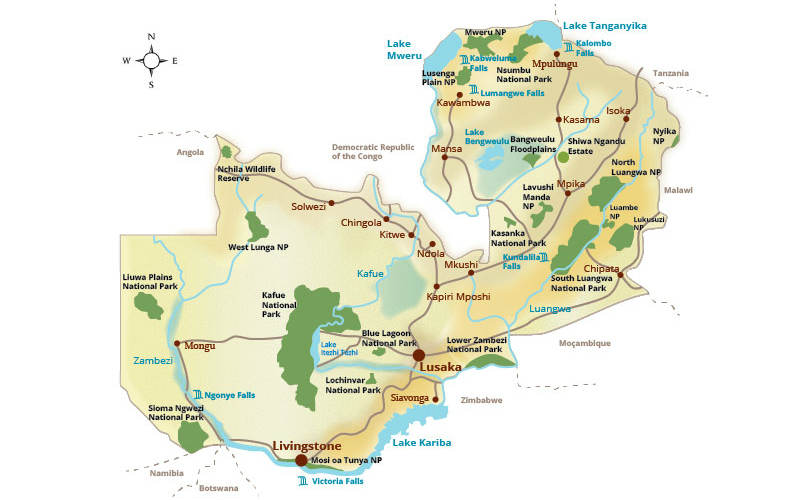
Map of Zambia

A map of Zambia. Note the location of Lusaka, the capital city of Zambia, with an estimated population of 2.7 million people in 2020.

The Top 10 Tourist Attractions in Zambia

10 – Choma Town And District

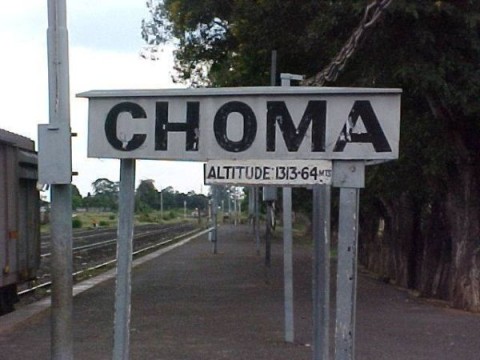
Choma is the hometown of the Tonga tribe in the southern part of Zambia. The town is the commercial hub in the south of Zambia and offers a sizeable market-related industry with a cultural museum. The town and districts provide hiking and biking trails, and farm visits as well as game viewing.

9 – Lusaka

The capital city of Zambia, Lusaka, has a lot to offer tourists such as the National Museum, shopping malls, markets and a visit to the Kalimba Reptile Park, the Lusaka National Park, and the Munda Wanga Environmental Park.

8 – Kasama City & District Tour

Kasama is the capital city of Northern Zambia and home to the Bemba people. Amongst hiking and biking, tourists can visit the Chishimba waterfalls where quarreling is forbidden, the Mwela Rock Paintings, and the Chambeshi Monument.

7 – Lower Zambezi National Park

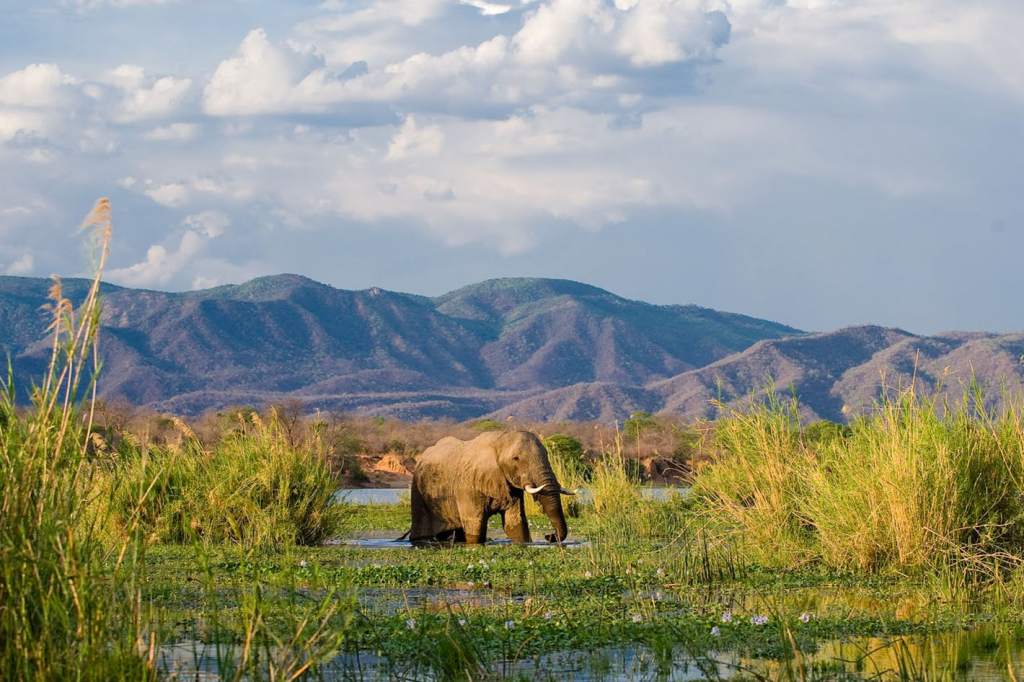
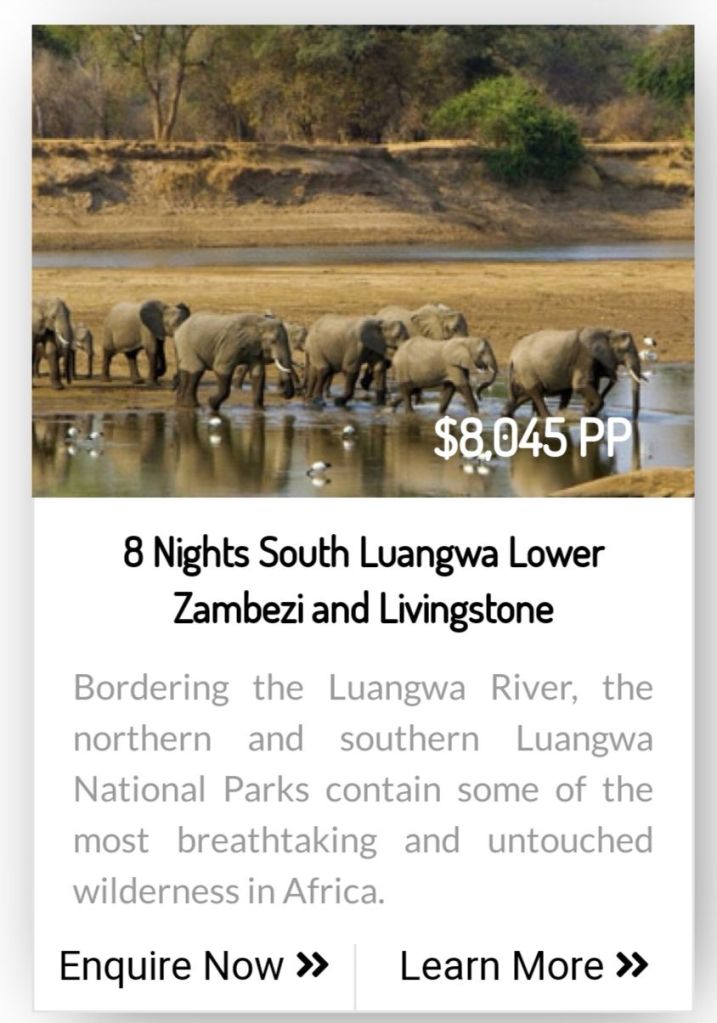
The Lower Zambezi National Park is located on the banks of the Zambezi River in the remote eastern part of Zambia. Wildlife viewing and boat and canoe trips are among the favorite activities available to tourists. The park is known for its large elephant herds and some 400-bird species.

6 – Liuwa Plain National Park

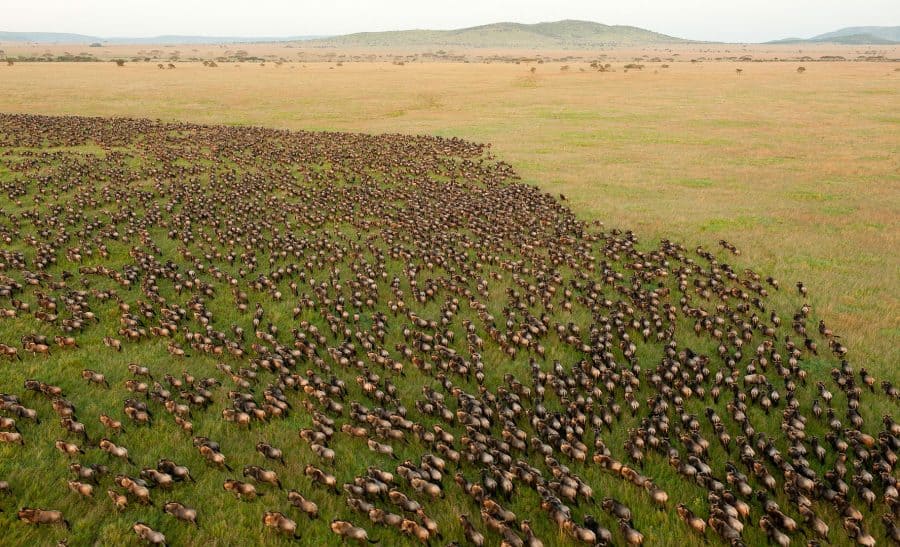
The Liuwa Plain National Park differs from other parks in Zambia due to its unique location in the beautiful, grassy plains in the northwest. It has a hot tropical climate and is the place to be if you want to see and experience the migration of thousands of Wildebeest.

5 – Blue Lagoon National Park

This unspoiled gem of a park was a defense force preserve and only recently opened to the public. Located some 120 km west of Lusaka, the Blue Lagoon National Park, with its vast floodplains, is a birdwatcher’s paradise. Other inhabitants include river pythons that hunt the largest concentration of Lechwe water-loving antelopes.

4 – The Kafue National Park

The Kafue National Park is Zambia’s oldest and largest game reserve. Activities include game and bird watching, boat and hiking safaris, as well as hot air balloon flights.

3 – Lake Tanganyika

The longest freshwater lake in the world, Lake Tanganyika, is on the northeastern border of Zambia and offers boat trips, fishing, island explorations and game viewing (including crocodiles).

2 – Lake Kariba

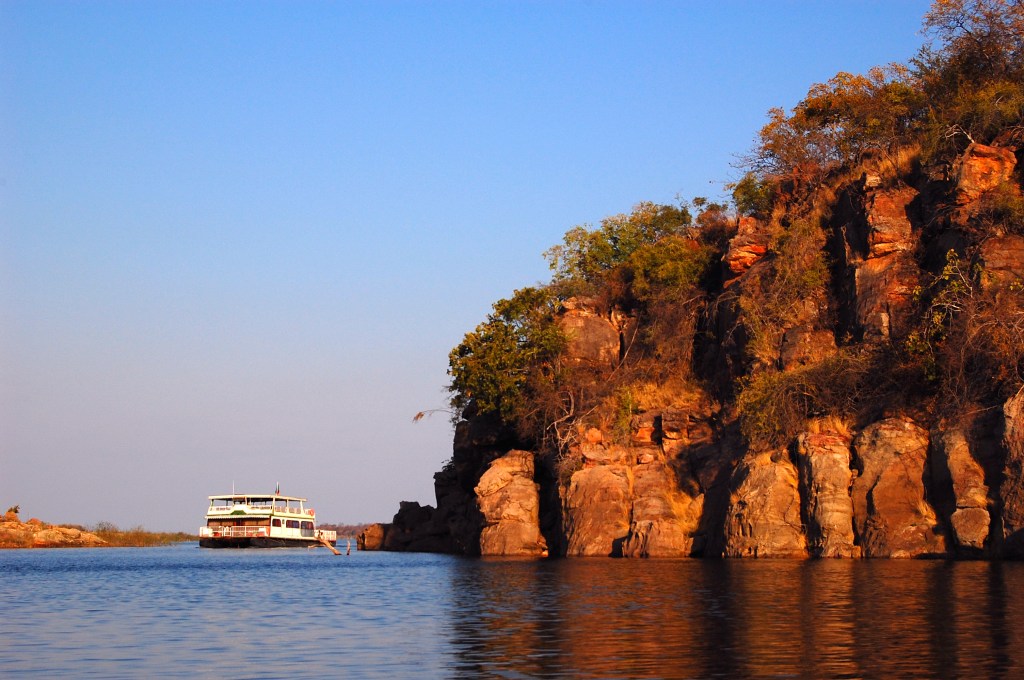
Lake Kariba is the largest human-made lake in Africa and offers a wide range of activities such as houseboat trips, big game viewing, fishing, and watersport.

1 – The Victoria Falls & Livingstone

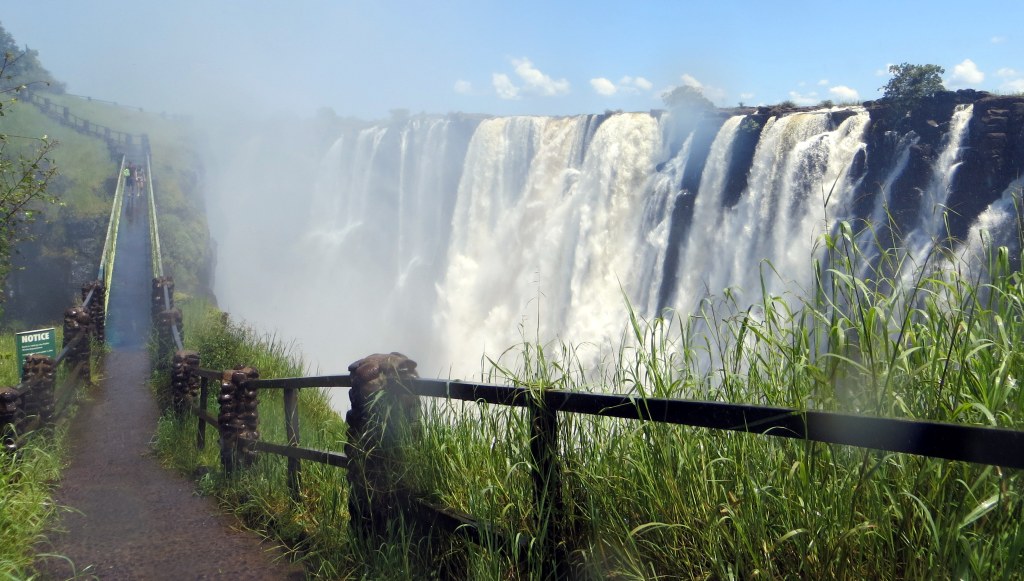
The Victoria Falls and Livingstone are still the number one tourist attractions for visitors to Zambia. Attractions include the Victoria Waterfall, the water spray, the Devil’s Pools, bungee jumping, and helicopter flights. The town of Livingstone in itself has its own set of historic tourist attractions.

Other Noteworthy Tourist Attractions in Zambia

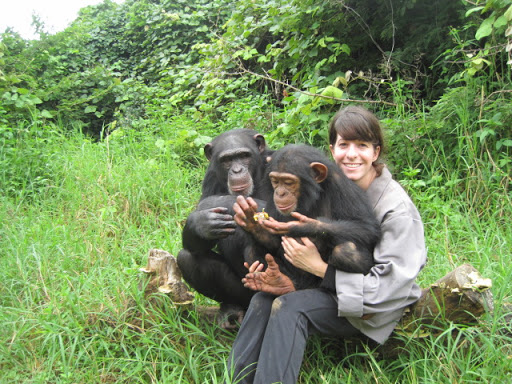
Chimfunshi Wildlife Orphanage – The Chimpanzee sanctuary is located on the Kafue River some 60 km west of Chingola. The orphanage needs the support of tourists for its ongoing existence.

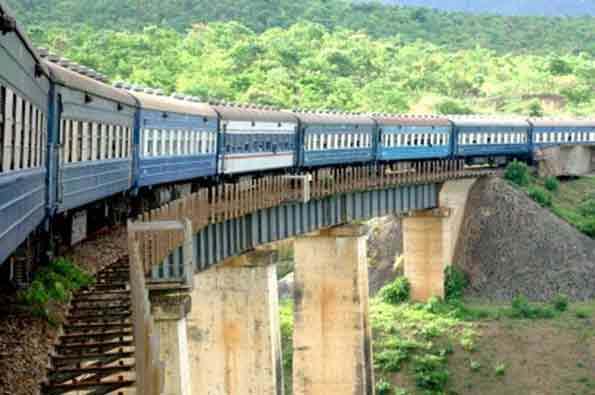
TanZam Railway Tour – This the rail link between Zambia and Dar-Es-Salaam. It’s important to note that the TanZam Railway Tour is not a comfortable or luxurious tourist attraction. Still, you’ll be sure to experience some breathtaking scenery through the Mikumi National Park and Selous Game Reserve.

Solwezi – Should you have an interest in archeology, Solwezi is the place to visit. Solwezi is known for its Stone Age rock carvings in the adjacent canyons and caves.

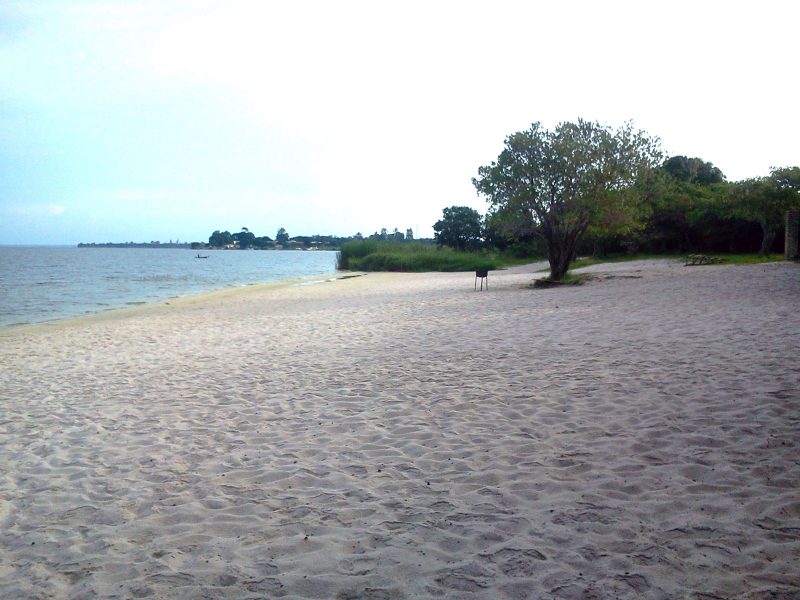
Lake Bangweulu and Samfya Beach – Not your ordinary coastal beach, but a beautiful place to visit never the less. The adjoining extensive wetlands offer game viewing and excellent bird watching opportunities. The water is so pure you can drink it.

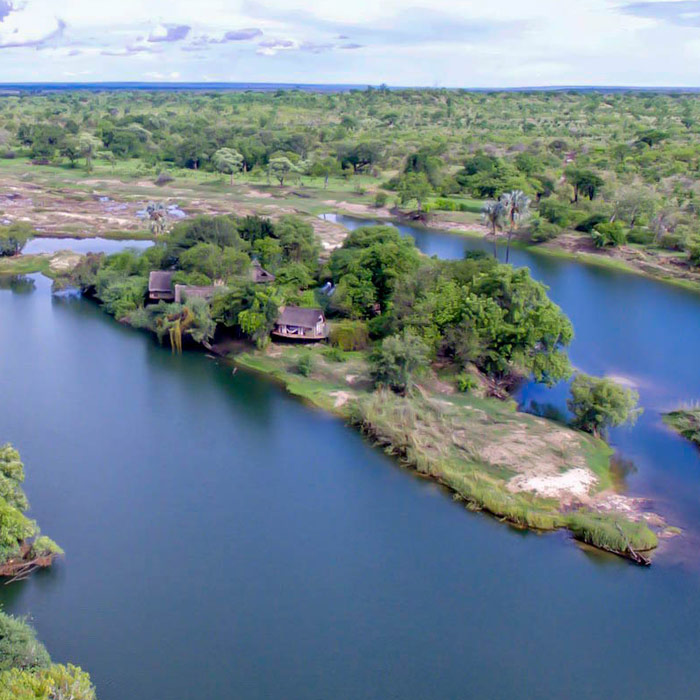
Sindabezi Island and the Tongabezi Resort – Close enough to the Victoria Falls, the small resort offers a discerning experience of nature and the accompanying river wildlife. Romantic dinner trips on a ‘sampan’ (flat bottom wooden boat) will appeal to visitors with love in the heart.

Lake Kashiba (‘Small Lake’) – Lake Kashiba in Zambia is located in the Ndola copper belt. Although it’s known as a scuba divers nightmare (because no one has ever reached the bottom), it is a must-visit for diving enthusiasts.

Mosi-oa-Tunya National Park – Located along the upper Zambezi River, the Mosi-oa-Tunya National Park game reserve is a UNESCO world heritage site. It offers excellent opportunities to those armed with a camera only.

Kitwe – Is the capital of the copper belt Provence, and Zambia’s third-biggest city with a buzzing one million-plus mostly Bemba inhabitants. Kitwe is the main access point to the Mindolo Dam, the Chembe Bird Sanctuary, and the Mwekwera Falls.

Ndola – The city is also located in the copper belt is the mercantile center of Provence. Places to visit include the Slave Tree with its termite damage, and Lake Chilengwa with its unique absence of a feeding source.

Sioma Ngwezi National Park – Although heavily depleted by ruthless poaching, the Sioma Ngwezi National Park is on an upward curve. Facilities are being upgraded, and the park offers game drives, game walks, and bird watching.

The Top 3 Tours in Zambia

Falcon Safari is one of the leading and most trusted tour operators in Africa. Have a look at any of the Falcon Safari tour packages operated by Falcon Safari to Zambia listed below:

Travel Namibia – Top Tourist Attractions in Namibia, Namibia Facts & Best Namibia Travel Information

Travel NamibiaTop Tourist Attractions in Namibia, Namibia Facts & Best Namibia Travel Information

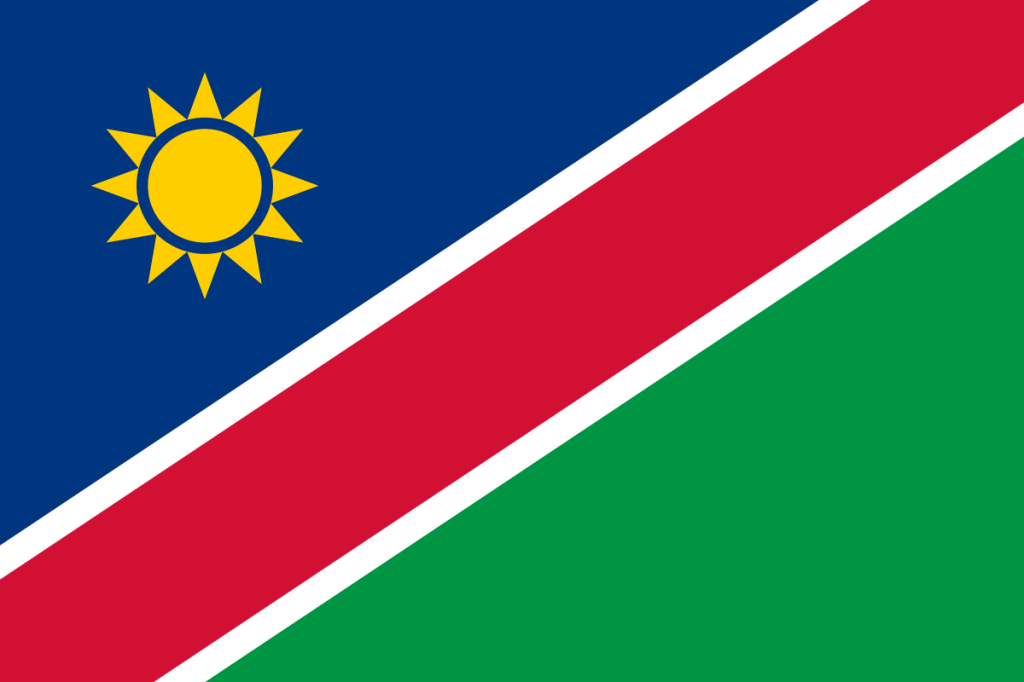
The Namibia Flag
Namibia Population: 2,606,971 (2017)
Namibia Capital City: Windhoek
Namibia GDP: $27.505 billion
Namibia Currency: Namibian Dollar (NAD) and South African Rand (ZAR)
Namibia Time Zone: UTC +2 (CAST)
Namibia Driving Side: Left
Namibia Calling Code: +264

A trip to Namibia, the country where mysteriously stranded boats line the Skeleton Coast, and the red sand dunes of the Namib desert stands gracefully tall against the blue sky, is the experience of a lifetime.  

If you’ve ever thought of visiting Namibia, there is no time such as the present to do so. Many a visitor find Namibia to be a country with a raw and rare beauty that is so breathtaking, it leaves the mind in awe and the heart forever changed.

In this short but comprehensive guide to travel Nambia, you’ll find information featuring the top tourist attractions in Namibia, visa info, the best time to travel to Namibia, a short history of Namibia, as well as top tour package suggestions.

Get your safari pants ready, your camera batteries charged, and hop on that plane to Namibia!

A SHORT-COMPREHENSIVE GUIDE TO TRAVEL NAMIBIA

Where is Namibia?

The Republic of Namibia is a Southern African country, which borders South Africa on the east and south, Zambia and Angola to the north, and Botswana to the east.

5 Interesting Facts of Namibia

  • Namibia is the driest country in Sub-Saharan Africa and does not receive more than xxx rainfall per year.
  • Namibia was first inhabited by the San people, Damara and Nama, but in the 14th century, Bantu speaking people immigrated to the area and is today the majority.
  • Tourism contributes majorly to the Namibian economy. Up to 14.5% of the GDP is derived from tourism.
  • Namibia is known as a prime ecotourism destination, with the Namib desert known as a must-see.
  • Extreme sports such as skydiving, 4 x 4 trips through the Namib desert, and sandboarding are top tourist attractions in Namibia.

Visa for Namibia

Getting a visa for Namibia is pretty straight forward. Tourist, business, and other short- and long-term visas are available to tourists, diplomats, and business people who have a valid passport with a minimum of 6-month validity.  

Visa for Namibia – Exempt Countries

Validity: 3-Months within 1-Year

Visitors who hold ordinary passports and originate from any of the below-listed countries can enter Namibia without a visa.

  • Angola
  • Armenia
  • Australia
  • Austria
  • Azerbaijan
  • Belarus
  • Belgium
  • Botswana
  • Brazil
  • Canada
  • Cuba
  • Denmark
  • Eswatini
  • Finland
  • France
  • Germany
  • Hong Kong
  • Iceland
  • Indonesia
  • Ireland
  • Italy
  • Jamaica
  • Japan
  • Kazakhstan
  • Kenya
  • Kyrgyzstan
  • Lesotho
  • Liechtenstein
  • Luxemborough
  • Macao
  • Malaysia
  • Malawi
  • Mauritius
  • Moldova
  • Mozambique
  • Netherlands
  • New Zealand
  • Norway
  • Portugal
  • Russia
  • Seychelles
  • Singapore
  • South Africa
  • Spain
  • Sweden
  • Switzerland
  • Tajikistan
  • Tanzania
  • Turkmenistan
  • Ukraine
  • United Kingdom
  • United States
  • Uzbekistan
  • Zambia
  • Zimbabwe

Visa for Namibia – Visa On Arrival

Validity: 3-Months

Cost: N$1,000 (USD $28 – 30)

The main entry points into Namibia is Hosea Kutako International Airport or Walvis Bay Airport where visitors can obtain a 3-month Visa on Arrival for Namibia. Countries that qualify for a Namibia Visa on Arrival:

  • Benin
  • Bulgaria
  • Burkina Faso
  • Burundi
  • Cape Verde
  • Cambodia
  • Cameroon
  • Central African Republic
  • Chad
  • Chili
  • Comoros
  • Cote d’Ivoire
  • Czech Republic
  • Djibouti
  • Equatorial Guinea
  • Eritrea
  • Gabon
  • Gambia
  • Guinea
  • Guinea-Bissau
  • Hungary
  • Liberia
  • Madagascar
  • Mexico
  • Nicaragua
  • Nigeria
  • Poland
  • Romania
  • Rwanda
  • Sao Tome & Principe
  • Sierra Leone
  • Slovakia
  • South Korea
  • Thailand
  • Togo
  • Tunisia
  • Turkey
  • Uganda
  • United Arab Emirates
  • Venezuela
  • Vietnam

Visa for Namibia – African Passport Holders

The government of Namibia is said to soon introduce Visa on Arrival for all African passport holders. African passports will be issued to citizens of most of the African countries on the African continent to out phase the need for Africans to obtain a visa for the 55-states in Africa. This initiative is similar to the European Union and was first launched on 17 July 2016 in Kigali, Rwanda.

The Capital of Namibia

Windhoek is the capital city of Namibia and is situated right in the middle of the country in the Khomas Highland plateau area. It is also the largest and most densely populated city in Namibia, with 325,858 people calling it home.

The capital city of Namibia was first settled by indigenous pastoral communities since the area was known for its permanent hot springs. In 1840, a Captain of the Orlam by the name of Jonker Afrikaner settled here and built a stone church. Since then, Windhoek has grown into what it is in modern times today.

Namibia Population

After Mongolia, the Namibia population is known to have the second-lowest population density in the world. According to a 2017 survey, there are on average 3.08 people per km2. In total, the Namibia population is only 2,6 million (2017).

A Short History of Namibia

German South-West Africa, (as Namibia was known in the 18th century), was annexed by German Chancellor Bismarck in 1884, and declared a German Colony. That was done on the advice of Adolf Lüderitz, the founder of the small, coastal town of Namibia, Lüderizbucht.

The Germans feared British colonialization following the annexation of the main harbor town Walvisbay in 1878. Namibia’s local tribes, the Herero’s and Namaqua’s, fought a gallant war against the Germans but were no match for their superior weaponry.

During World War I, South Africa invaded the territory in 1915 and occupied Namibia on behalf of the British Commonwealth. The occupation lasted some 75 years.

The first 50 years were relatively peaceful, but during the final years before Namibia claimed independence, it became an all-out struggle between South Africa and SWAPO, the countries biggest liberation movement.

Namibia gained independence on 21 March 1990 under the leadership of Sam Nujoma, who also became the countries’ first president.

In 1994, the ‘lost’ territories of Walvisbay and the adjacent twelve small islands were handed back as well.

The Best Time to Travel Namibia

The best time to travel Namibia is during the winter and spring months, which is from June to October. Since Namibia can get quite hot, traveling between June to October is advised, since the temperatures are then around 18 – 26 degrees Celsius, depending on where you’re traveling.

Day time in Namibia is extremely pleasant during winter and spring, but night times can be cold, as is prone in desert type climates. It’s best to pack both short-sleeve and warmer clothes.

Is Namibia Safe to Travel?

Yes, Namibia is safe to travel. Comparted to other war-torn or dangerous countries in Africa, Namibia is one of the few countries on the continent with a politically stable government and where it’s safe for tourists to travel.

That said, there are the usual safety concerns and precautions everyone should take when traveling in Namibia, as would apply in any country in the world.

How To Stay Safe While You Travel In Namibia:

  • Join an organized tour with a known tour operator.
  • Do not drive around at night by yourself.
  • Avoid dark alleys or unknown, unsafe looking areas in towns/cities.
  • Stay in a group rather than traveling alone.

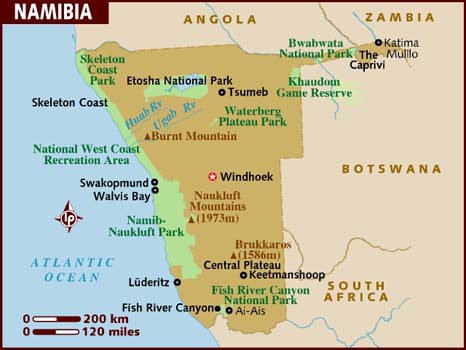
Map of Namibia

A map of Namibia. Note the location of Windhoek, the capital city of Namibia with a population of 325,858 people. Windhoek is situated at the very center of the country.

The Top 10 Tourist Attractions in Namibia

10 – Epupa Falls

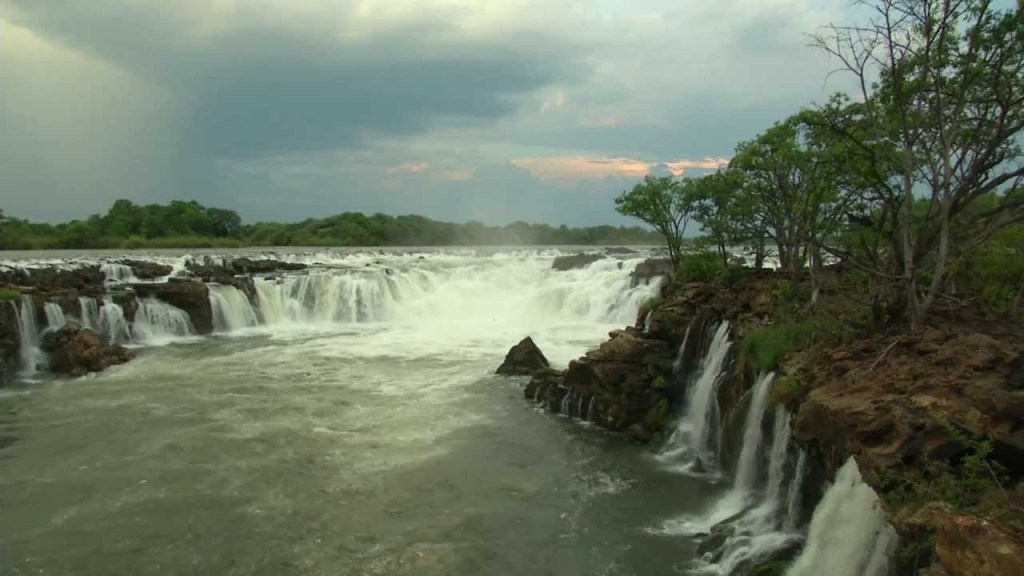
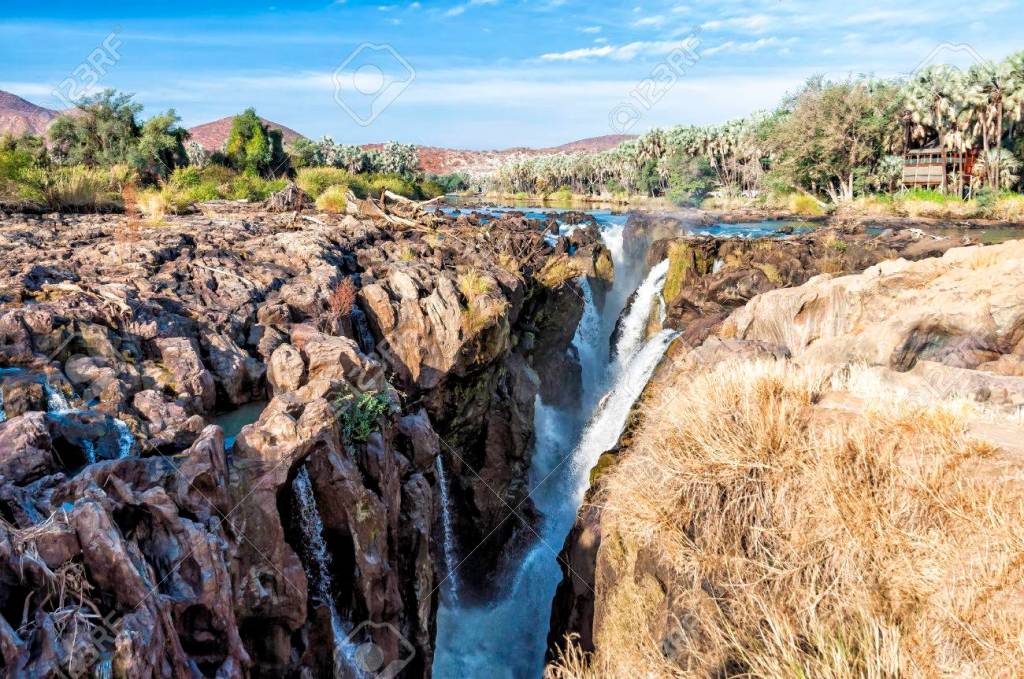
The Epupa Falls (also known as Monte Negro Falls in Angola) are created by the Kunene River on the border of Angola and Namibia, in the Kaokoland area of the Kunene Region. The river is 0.5 km wide and drops in a series of waterfalls spread over 1.5 km, with the greatest single drop being 37 m. The name “Epupa” is a Herero word for “foam”, in reference to the foam created by the falling water. https://en.wikipedia.org/wiki/Epupa_Falls

At the border between Angola and Namibia is the Cunene River. It’s here that the beautiful Kaokoland area of the Kunene Region of Namibia is situated, and where the 0.5 km wide Cunene River gives birth to the Epupa Falls spreading to over 1.5 km. The highest drop point is 37 meters.

Accommodation: Kapika Waterfall Lodge, Omarunga Camp Lodge, Epupa Camp Lodge & Epupa Falls Campsite Lodge

Popular Activities: Guided tours to the Epupa Falls and Himba Villages, whitewater rafting, bird watching, crocodile watching excursions, sightseeing the famous Baobab, and Mopane trees.

9 – Twyfelfontein

Image result for twyfelfontein

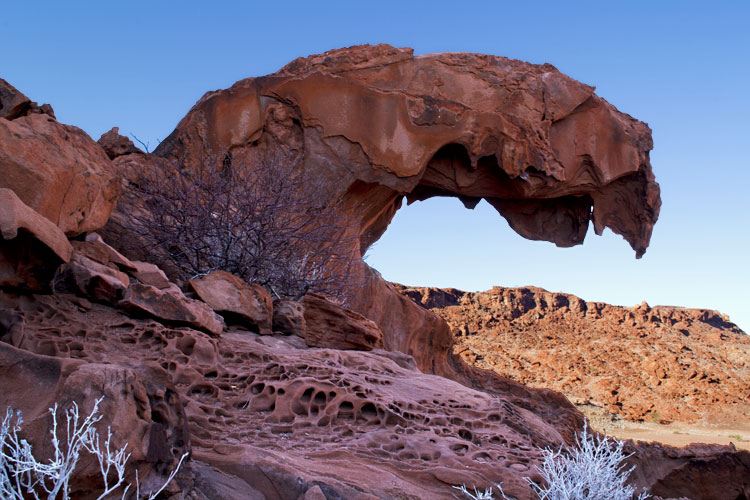
Twyfelfontein is home to one of the world’s largest concentrations of rock petroglyphs in Africa, and is a protected UNESCO site. Even if you’re not into rock art, you’ll find the Twyfelfontein rock art site situated in what was formerly known as Damaraland (today Kunene), absolutely breathtaking. The rock art is located in a valley that is flanked by a stunning sandstone mountain, with an aquifer that runs underground where a spring originates. It’s this spring from which Twyfelfontein (translated Doubt Spring) then also got its name. Twyvel in the Afrikaans language means ‘doubt,’ and fontein refers to ‘spring.’ Many thus speculate that the spring got its name due to the area receiving minimal annual rainfall (<150 mm per year).

8 –  Skeleton Coast

Image result for skeleton coast

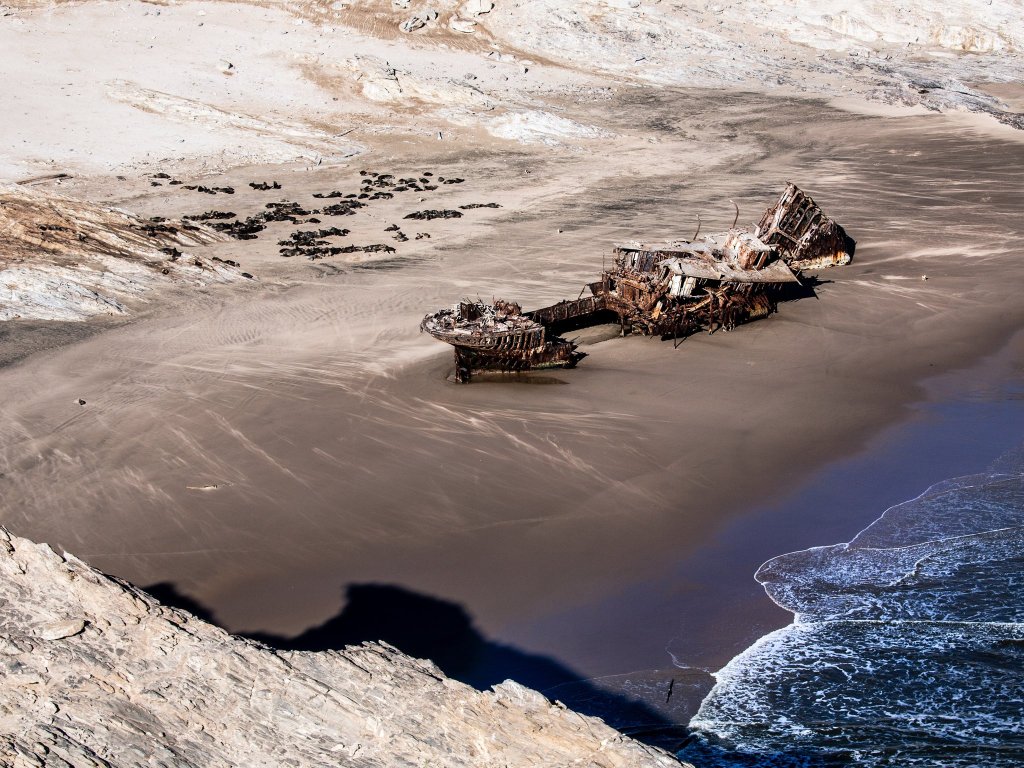
A trip to Namibia is incomplete without visiting the world-famous Skeleton Coast. The Skeleton Coast is also a national park and includes the 500 km coastal strip on the western part of Namibia. It is a barren, desolate desert coastal area with unique beauty. During autumn (May to June), the area covered in rolling fog, which may give a visitor a spooky chill along the spine. Autumn tends to be windy and is not ideal for wildlife viewing.

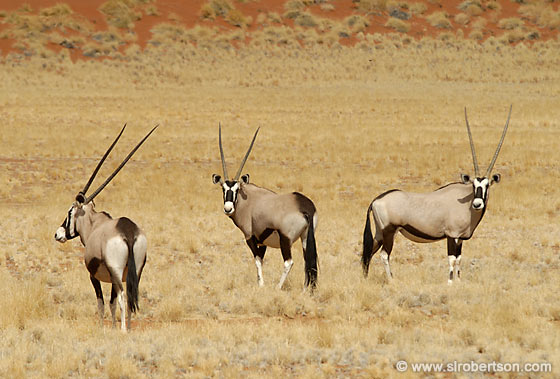
Close to river mouths and surrounding areas, wildlife is found at regular intervals. Amongst the wild, you will find Kudu, Springbok, and even Oryx. The brown hyena forms the clean-up crew. Amongst the birdlife, you can expect to see Ostridge and white pelicans as the most common amongst others. Marine life consists of large colonies of Cape Fur Seals and the occasional dolphins.

7 – The Caprivi Strip

Image result for caprivi strip

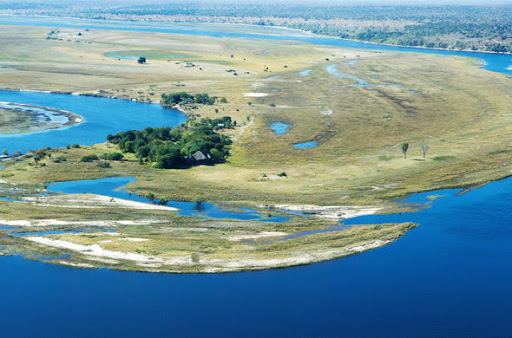
The Caprivi Strip (Caprivizipfel in German or Okavango Strip during colonial times), a salient (elongated protrusion not surrounded by water) of Namibia, starts in the north-east and protrudes east for close to 450 km (280 miles). On its southern flank, you’ll find Botswana, and north, Angola and Zambia. Zimbabwe borders its eastern tip for only about 100m. The Caprivi Strip is a spectacularly beautiful natural area, with various wildlife living there, including the critically endangered Wild African Dog.

6 – Swakopmund

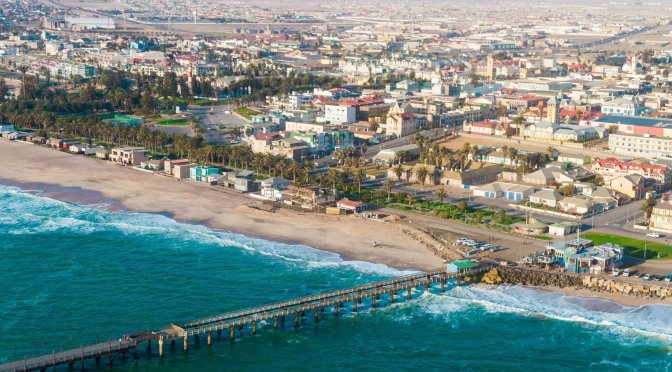
Image result for swakopmund

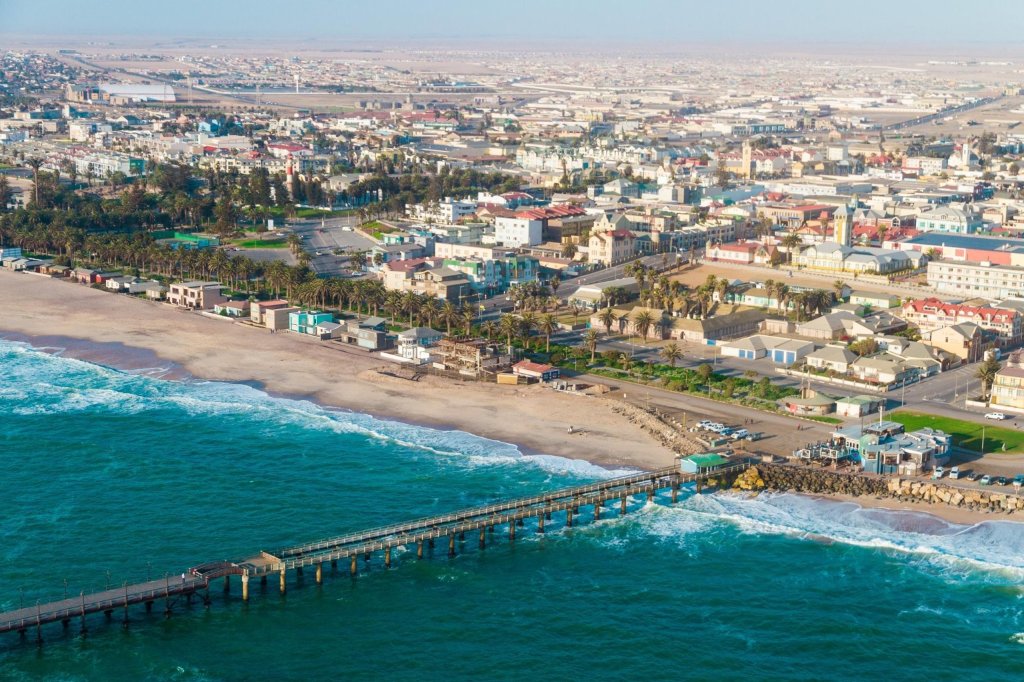
The coastal town of Swakopmund is situated about 200 km from the Skeleton Coast but is a worthwhile destination. Swakopmund is well-known for the Namibian national flower, the Welwitschia, and its so-called moon landscape areas.

5 – Cape Cross

Image result for cape cross

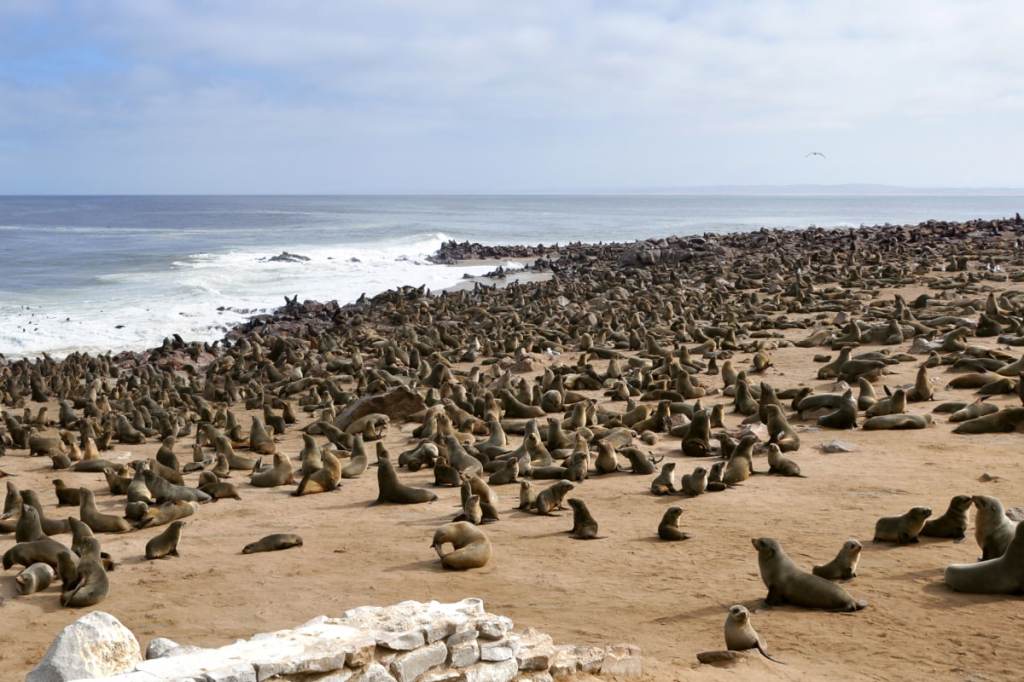
On the west coast of Namibia, you’ll find Cape Cross, a small headland in the South Atlantic, Skeleton Coast. One of the worlds’ largest colonies of Cape fur seals calls Cape Cross home, which is today a protected area and reserve.  Visitors will be amazed at the thousands of seals. Wow!

4 – Fish River Canyon

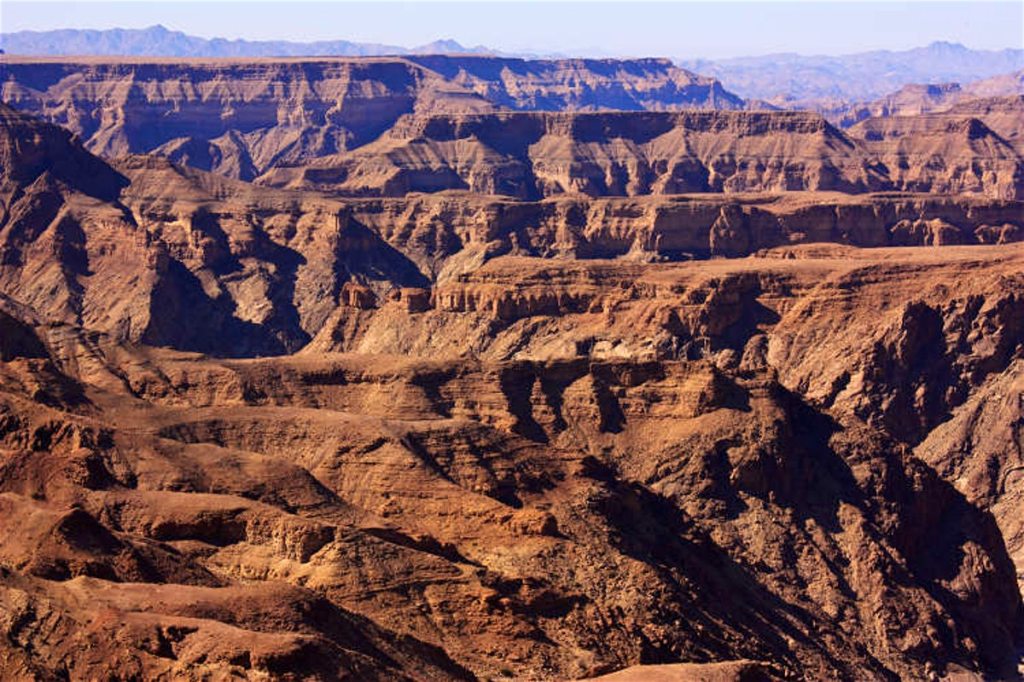
Known as the largest canyon in Africa, the Fish River Canyon of Namibia is a definite must-visit, and can stall among the giants of the world, including the famous Grand Canyon of North America. Situated in the south of Namibia, a mammoth ravine of 160 km (100 miles) runs deep through the dry, stone plateau. The canyon is 27 km wide and at it’s deepest points, 550 m deep. The longest river in Namibia, the Fish River (650 km), floods in the summer months and flows intermittently until it joins the Orange River of South Africa, 100 km from the Atlantic Ocean.

3 – Etosha National Park

Image result for etosha national park

One of the largest salt pans on earth (so big it can be seen from space), is located in the Etosha National Park of Namibia. Situated in the northwest of Namibia, the park covers an area of 22,270 km2, while the Etosha pan area is 4,760 km2, about 130km long, and 50 km wide. Do to hypersaline conditions, few species can survive or live there, but it’s worthwhile to note the discovery of extremophile micro-organisms that live comfortably in the pan’s salty ecosystem. During the summer season that brings rain, the salt pan fills briefly with water but is most often dry. A vast number of wildlife, including endangered animals, can be found at the Etosha National Park. Overall, an amazing experience of peace and tranquility for tourists.

2 – Circles of Namibia

Image result for circles of namibia

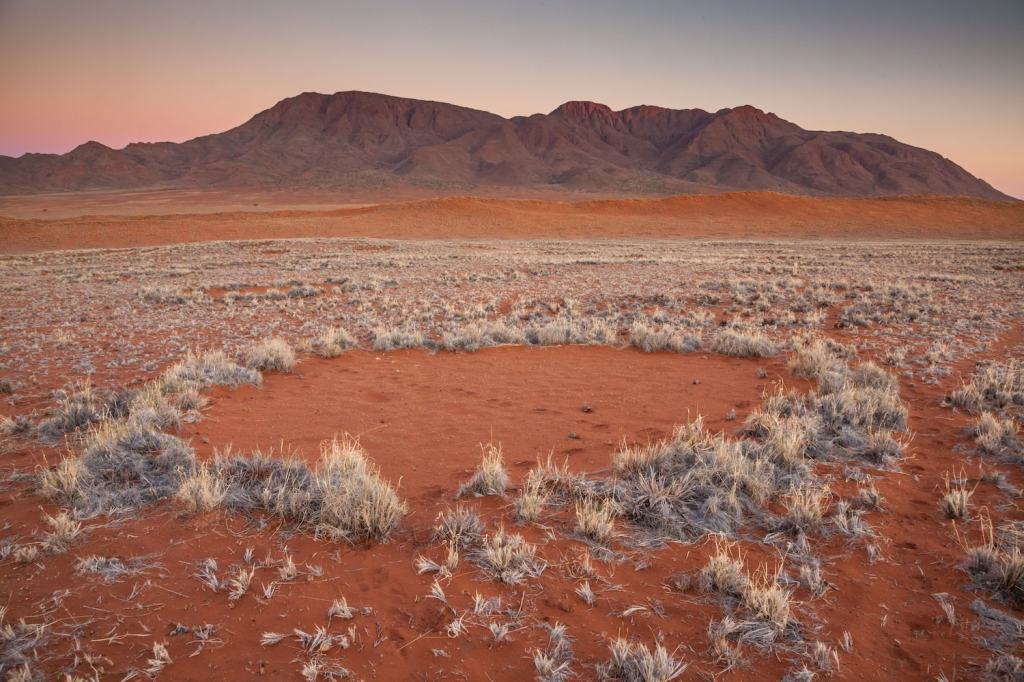
Within the Marienfluss valley of Namibia, the strangest circles can be found that have amazed and puzzled scientists for years. Dubbed the Fairy circles of Namibia, you’ll notice that circular forms line the monospecific grassy landscape in the Marienfluss valley, and is from 2 to 15 meters in diameter. Fairy circles only occur in two places in the world, namely Namibia and Pilbara, Western Australia.

1 – The Namib Desert, Including Sossusvlei, Spitzkoppe & Kolmanskop

Image result for namib desert

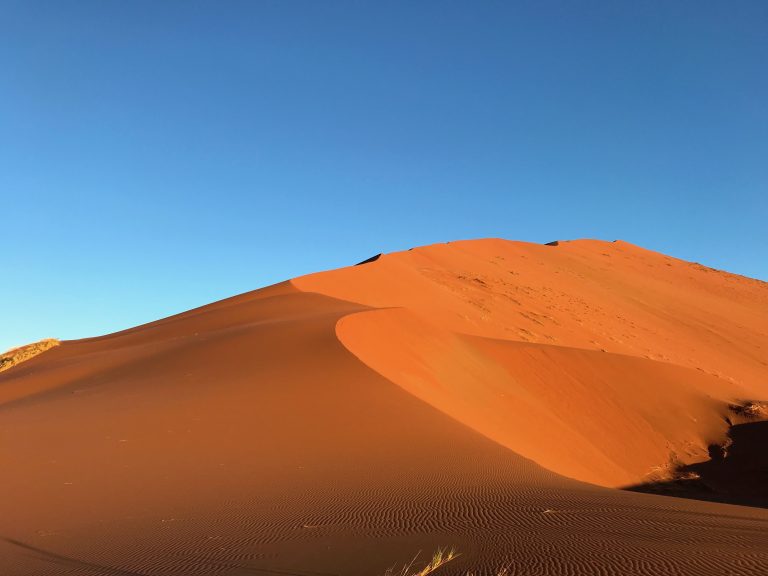
The word Namib is of Khoekhoegowab origin and means ‘vast place’, and rightly so. The Namib desert is a phenomenon and absolute must-see when visiting Namibia. The desert is an astronomical coastal desert that is 2,000 km in length, situated alongside the Atlantic ocean. It stretches over three countries, Namibia, Angola, and South Africa. It’s always been arid in this area, for almost 55 to 80 million years at estimate, and scientists think it might be the oldest desert in the world.

If you want to truly immerse yourself in a trip to Namibia’s famous Namib desert, ensure to set aside between 5 – 10 days since there is a treasure-trove of areas to see. These include visiting Sossusvlei, Spitzkoppe, and Kolmanskop.

Image result for sossusvlei

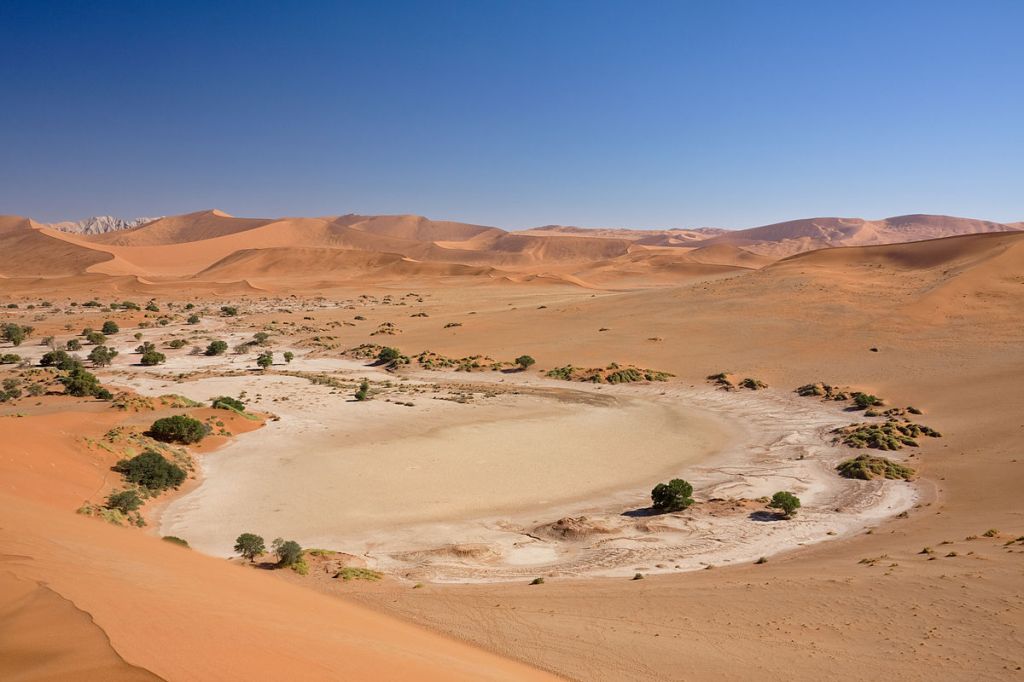
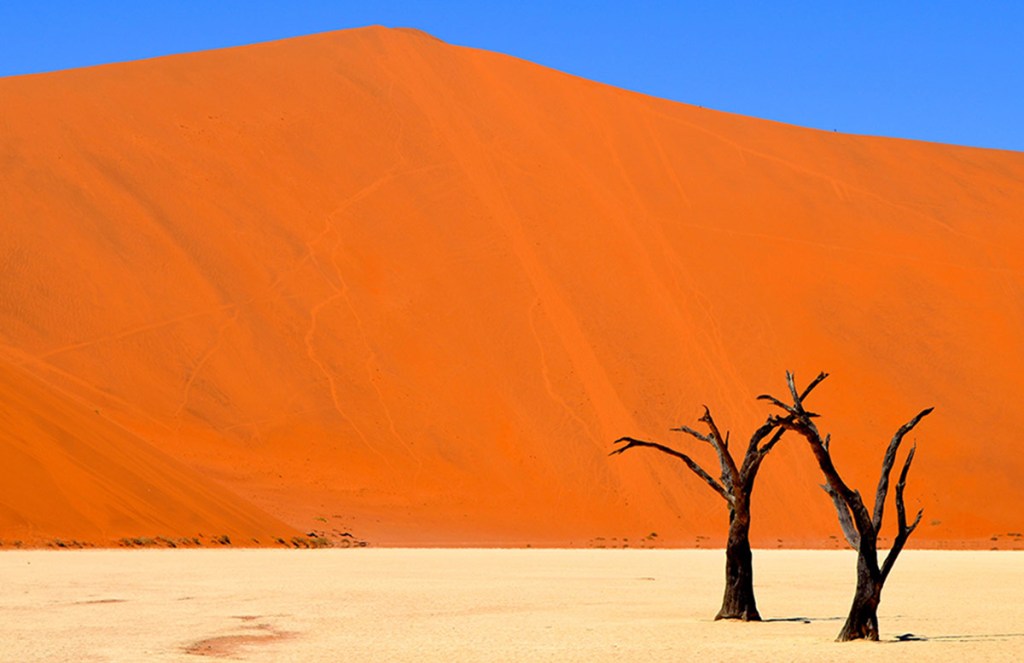
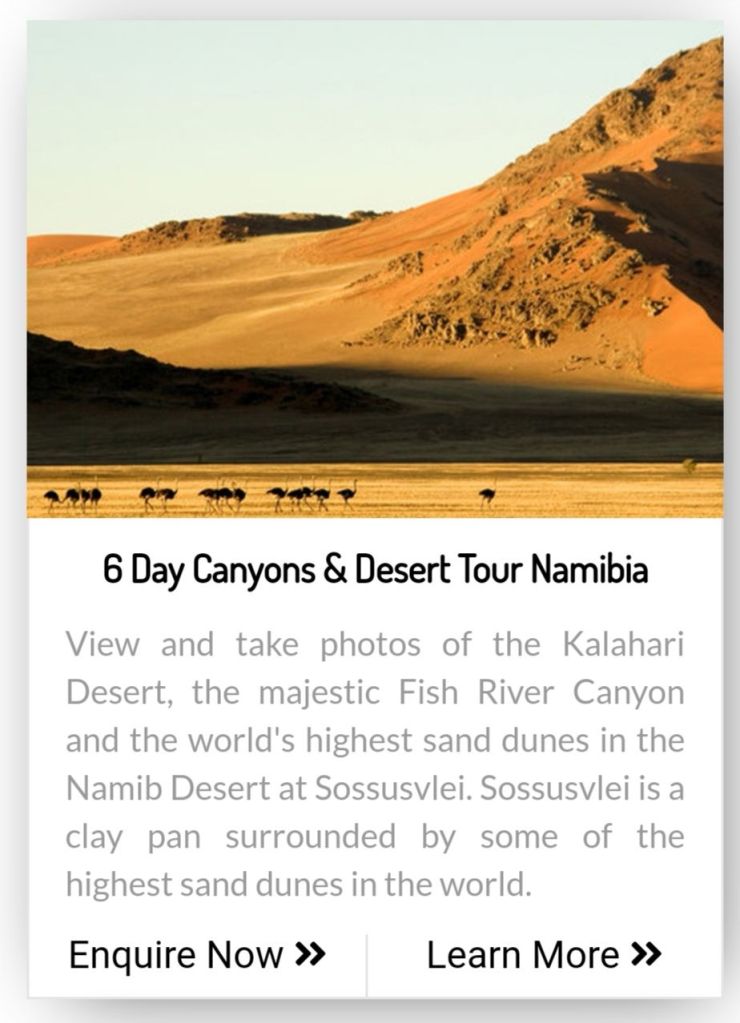
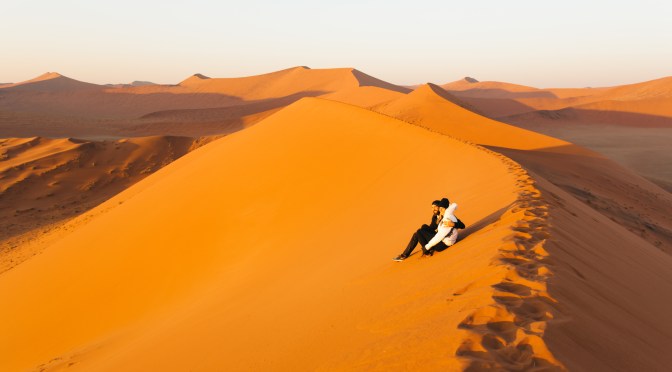
Sossusvlei, often referred to as ‘dead-end,’ is located in Southern Namibia. The area has flat clay pans and is surrounded by some of the highest dunes in the world. The dunes have a unique color ranging from pink to orange and a deep red. The famous Dune 7 is 400 meters in height and a challenge for man and machine. If you are reasonably fit, you can try and walk to the top.

Image result for spitzkoppe
OLYMPUS DIGITAL CAMERA

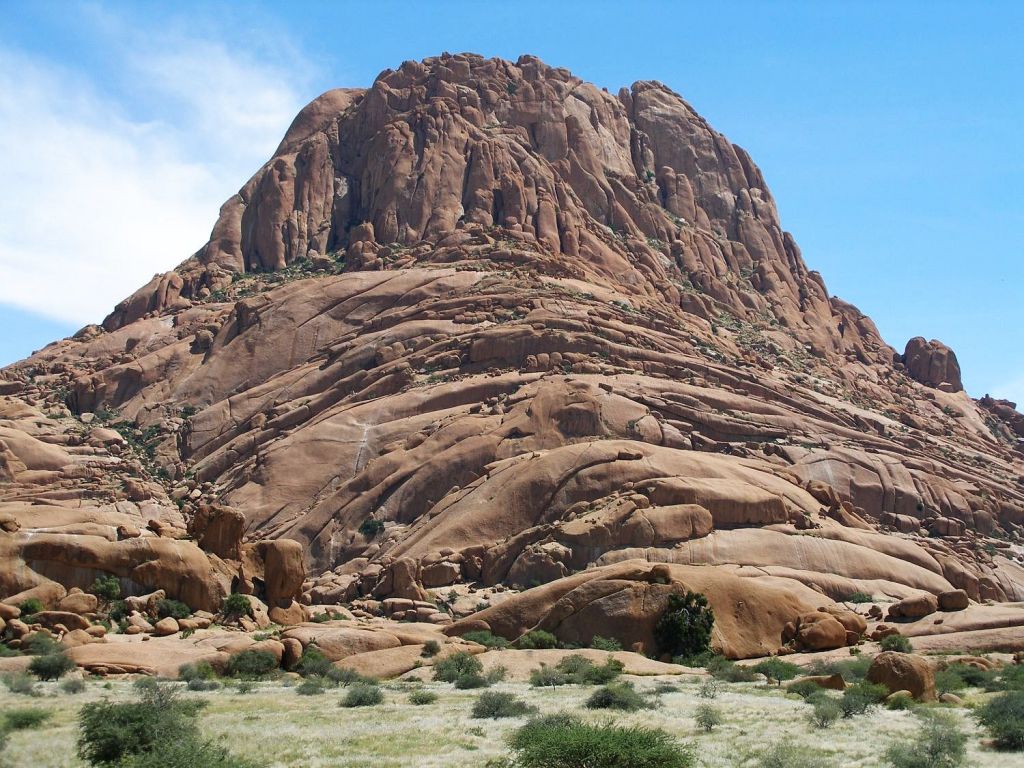
Spitzkoppe, a group of bald granite peaks, (otherwise known as inselbergs), are more than 120 million years old. The highest peak (kop) rises 1,728 meters above sea level and is located between Swakopmund and Usakos in the Namib desert.

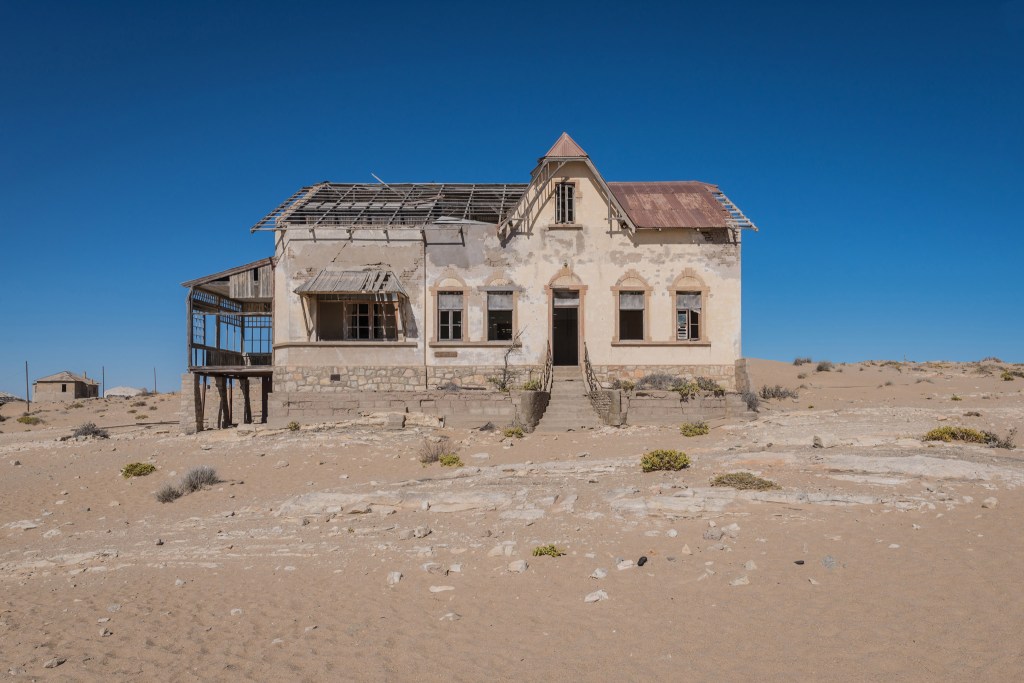
Eerily alone, hauntingly beautiful is Kolmanskop, a ghost town situated between the desert dunes of the Namib desert. Back in the day, it was a prospering mining town, but due to the decline of the diamond field and after World War II, more and more people left. Today, it is one of the top tourist attractions in Namibia while on a safari through the Namib desert.

Other Noteworthy Tourist Attractions in Namibia

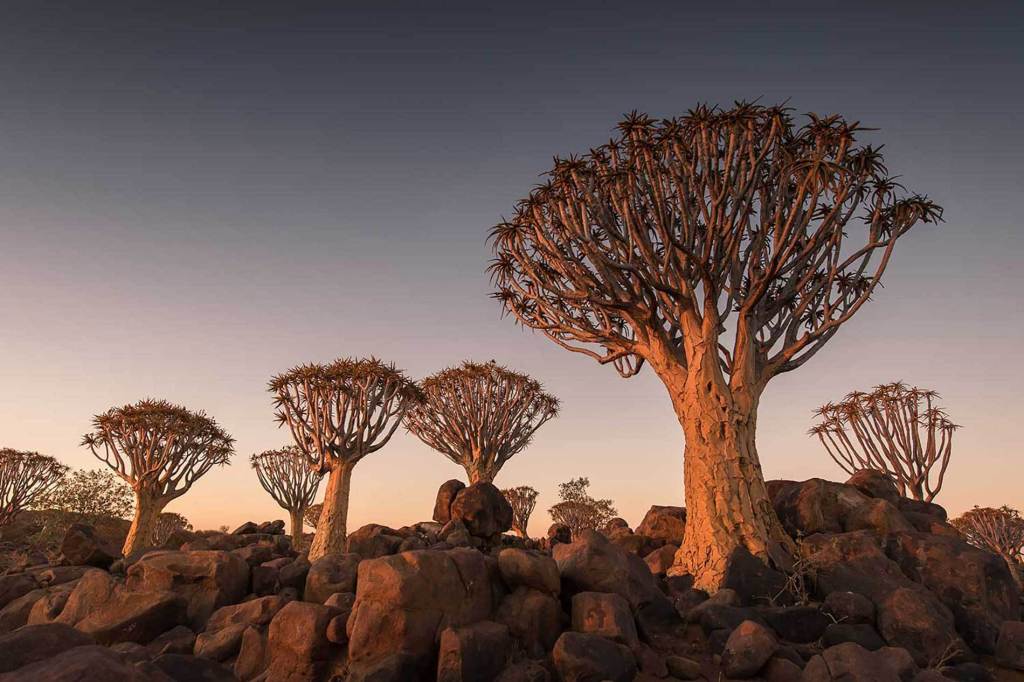
  • Quiver Tree Forest
Image result for quiver tree forest
  • Bwabwata National Park
Image result for bwabwata
  • Naukluft Mountains
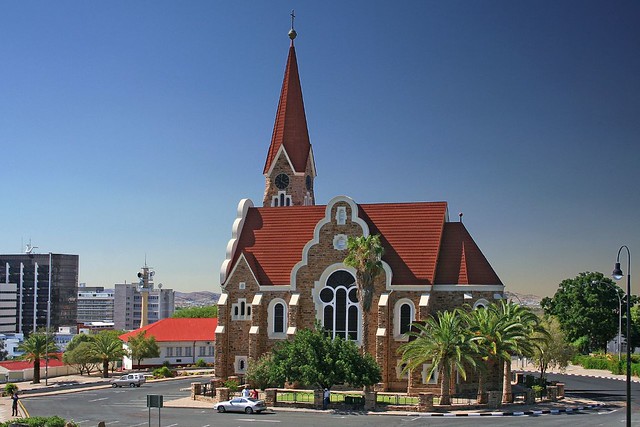
  • Christ Church in Windhoek
Image result for christ church windhoek
  • Nkasa Rupara National Park
Image result for nkasa rupara national park
  • Namib-Naukluft Nationalpark
  • Deadvlei
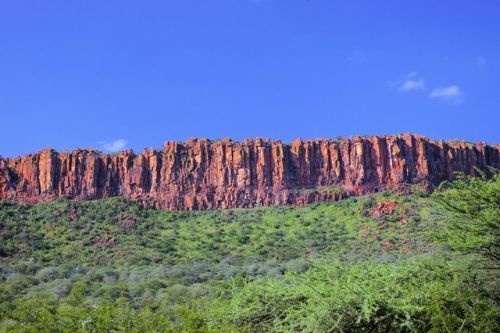
  • Waterberg Plateau Park
Image result for waterberg plateau
  • Brandberg Mountain
Image result for brandberg mountain
  • NamibRand Nature Reserve
Image result for namibrand nature reserve
  • Muduma National Park
Image result for mudumu national park
  • Sperrgebiet
Image result for sperrgeibit
  • Khaudum National Park

The Top Tours in Namibia

Falcon Safari is one of the leading and most trusted tour operators in Africa. Have a look at any of the Falcon Safari tour packages operated by Falcon Safari to Namibia listed below:


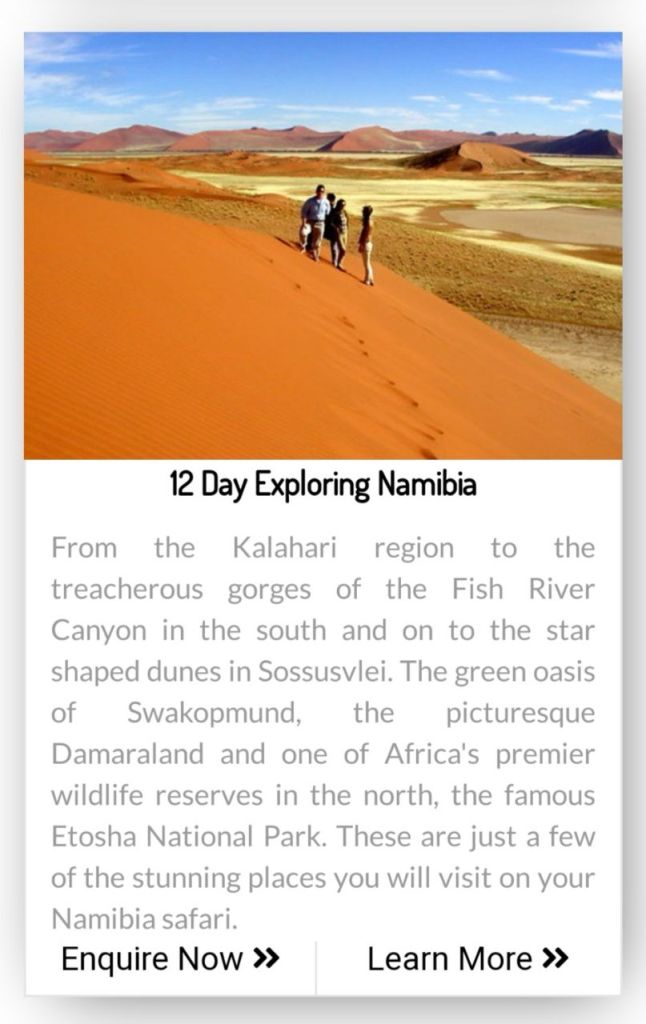
12 Day of Exploring Namibia.
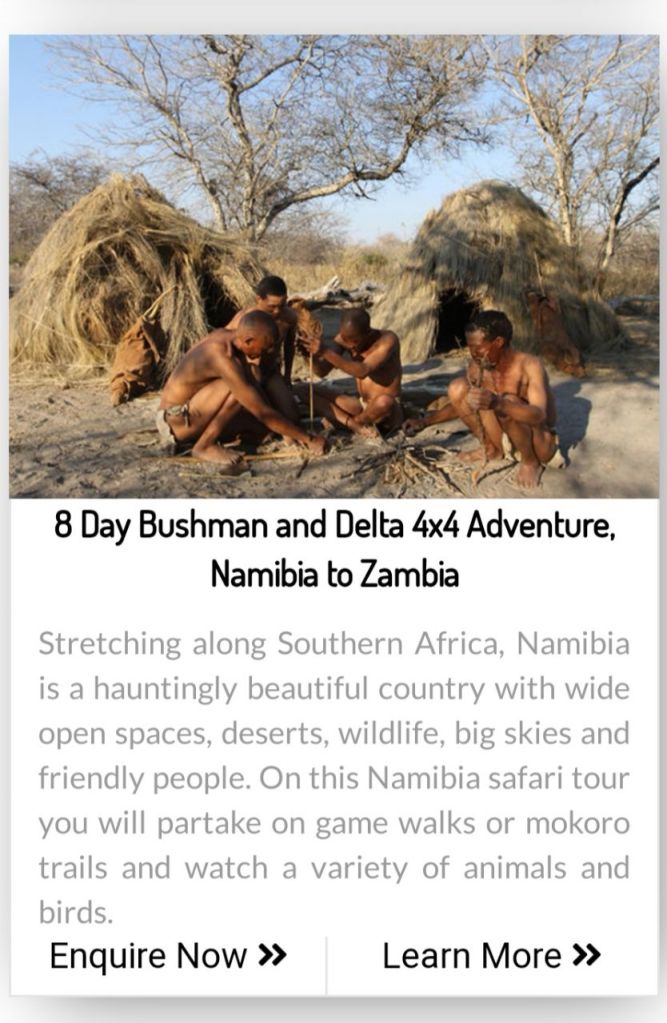
Knowing the Bushman Life
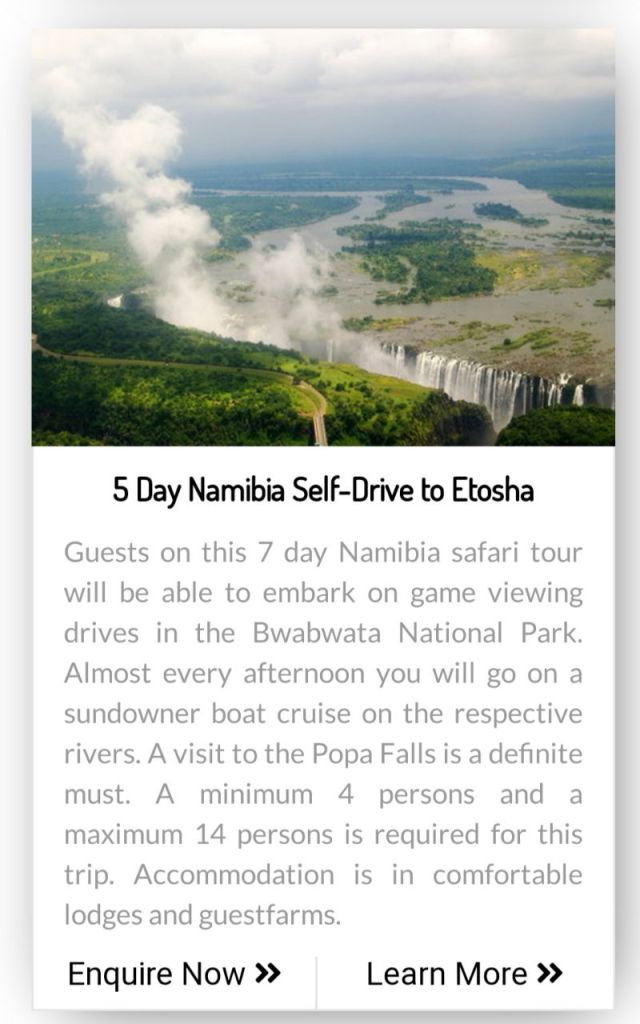
Enjoy the POPA falls, game viewing and the best of Bwabwata National Park


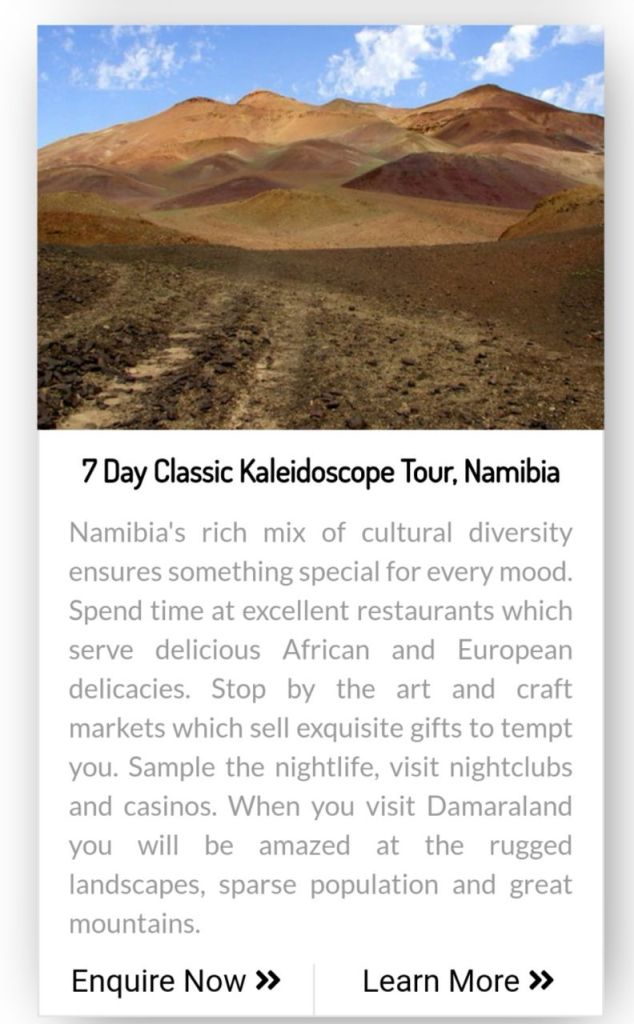
Canyonys and Desert tour.
Classic cultural diversity tour

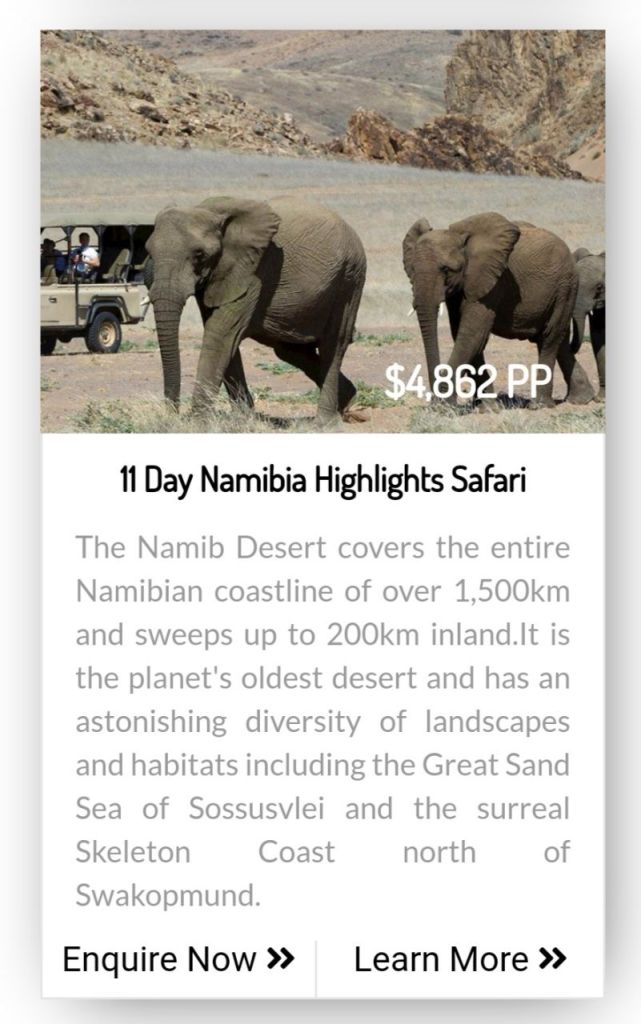
Namibai Safari in 11 Days
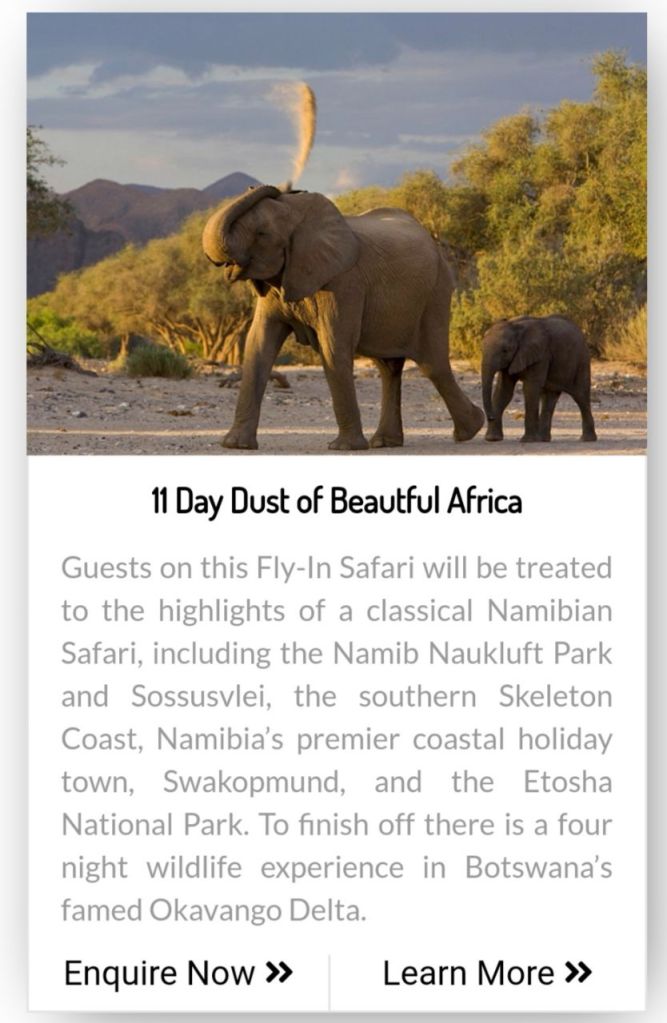
The Beauty of Africa

Zimbabwe, Home to a natural wonder and wildlife species

Located in the heart of Southern Africa, Zimbabwe is known for its aesthetic landscape and wildlife making it a must visit tourist destination on the Africa continent. Its unique heritage and culture is found in all cardinal points around the country with historic and tourist sites evenly spread throughout Zimbabwe. Zimbabwe experiences a very temperate sub- tropical climate with four different seasons all year round.  The best time to visit the beautiful country of Zimbabwe would be during the months of May to October (winter and spring).

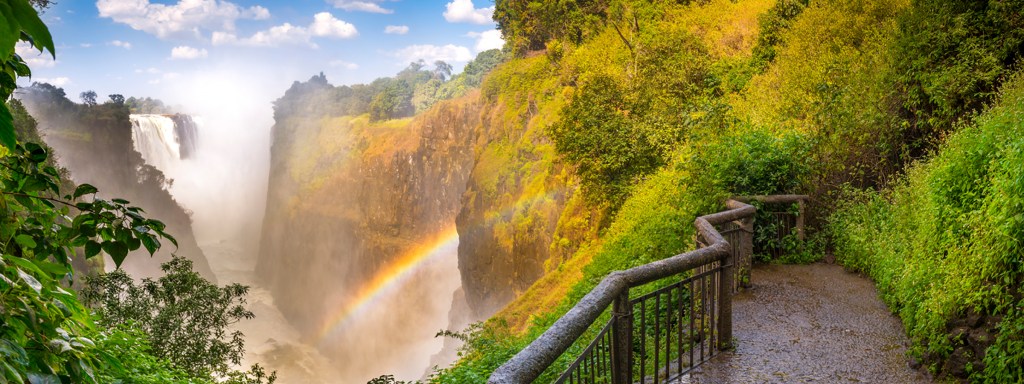
Home to one of natural seven wonders of the world, the Victoria Falls located in the western part of the country. The vicinity is home to Zimbabwe’s largest national park, Hwange National Park it is home to teeming wildlife ranging from elephants, white rhinos, buffalos, giraffes, wildebeest and various antelopes. Dusk and dawn Game drives can be booked in order to see the wildlife and have a tour around the National park.  The Victoria Falls and Hwange area is famous for its reptile species particularly the Nile and Albino crocodile that is found in the Zambezi River. The area is filled with crocodile farms that allow tourists to see and touch them. The beauty of this area does not stop there, as the town of Victoria Falls is abundant with world class affordable resorts.  

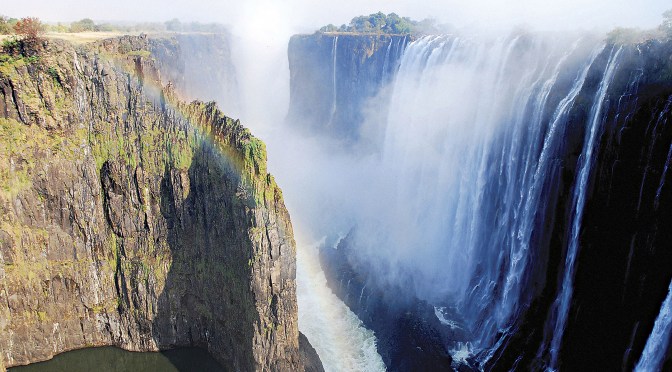
The Victoria Falls. Zimbabwe

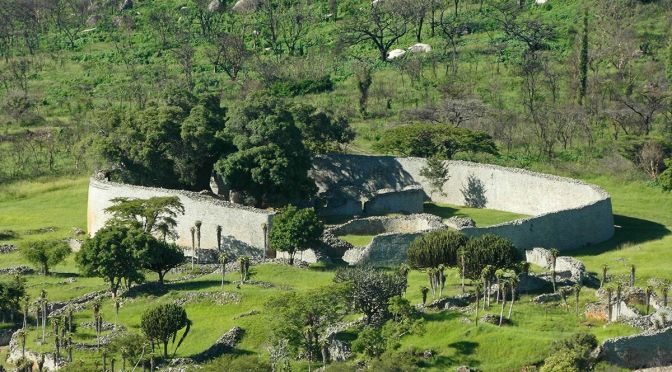
In the south eastern part of Zimbabwe lies one of the world’s archaeological marvels and heritage sites, the Lost City of Zimbabwe common known as the ruins of the Great Zimbabwe. This tourist and historic monument is where Zimbabwe derives its name from and it was built in the 11th century during the late Iron Age. Refreshing hikes around the ruins showcases the historic stone architecture and craftsmanship of a city that was built no mortar making it a marvel.

A visit to Zimbabwe will allow one to experience all the perks of being on the African continent. The landscape gets better and breath taking as one goes to eastern Zimbabwe. The Eastern Highlands is home to the highest points in Zimbabwe starting from Mount Nyangani with a scenic view at its’ summit to the evergreen tropical Mountains of Chimanimani. The mountains are suitable for hiking and seeing nature such as the Mtarazi waterfalls, streams, deep valleys, hot springs and geysers are profuse in the area.  To add a cherry on top of the cake, the world renowned Leopard Rock Hotel is based in the Eastern Highlands offering 4-star hotel and chalet accommodation at the pleasure of nature’s peace tranquil atmosphere.

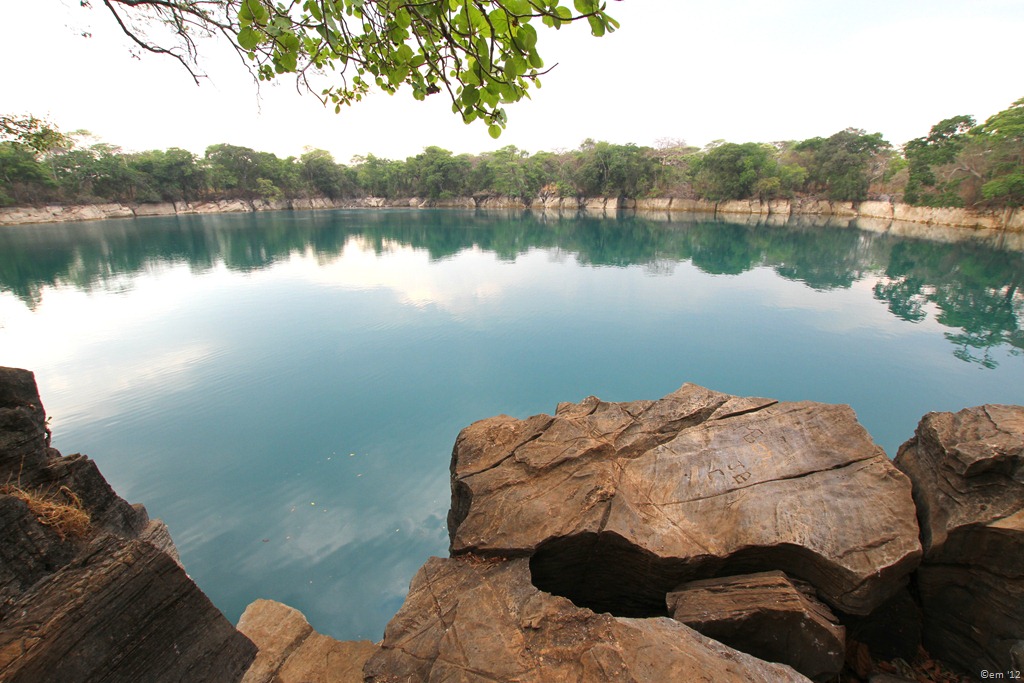
The Chinhoyi Caves located an hour away from the capital Harare, is a serene site to see as they showcase one of natures’ blue water Sleeping pools.  The Sleeping pool can be seen from the ground but the scenic view is best as one walks through the caves. For those that might be adventurous, the sleeping pool can be used as a place to scuba dive as the pool is said to be very deep.

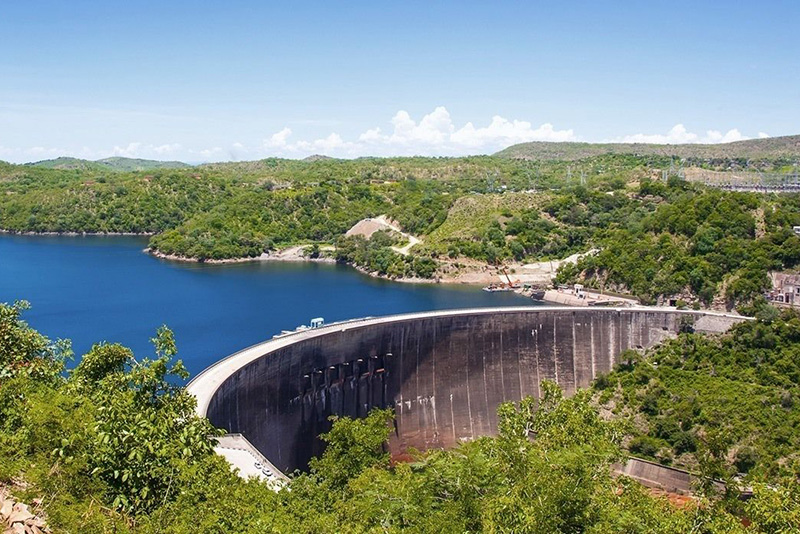
A tour around Zimbabwe would not be complete without visiting the Lake Kariba. Famous for its sunset and sunrise boat cruises, fishing and resorts built along the Lake. The Lake has various Islands along it as it lies 1300 kilometres upstream from the Indian Ocean bordering both Zimbabwe and Zambia. Lake Kariba is Africa’s largest man made dam, the dam wall is a must visit for anyone visiting the area. It is undoubtedly the perfect location to have a houseboat as the weather is always warm and tourist friendly. Lake Kariba will surely give you an ambiance to remember with vast safaris and vast wildlife surrounding the area. The must see resorts is the magnificent Bumi Hills which is only accessible by air. Extravagant views and fantastic wildlife are the order of the day at this location.

The Largest man made dam in Africa. Lake Kariba.

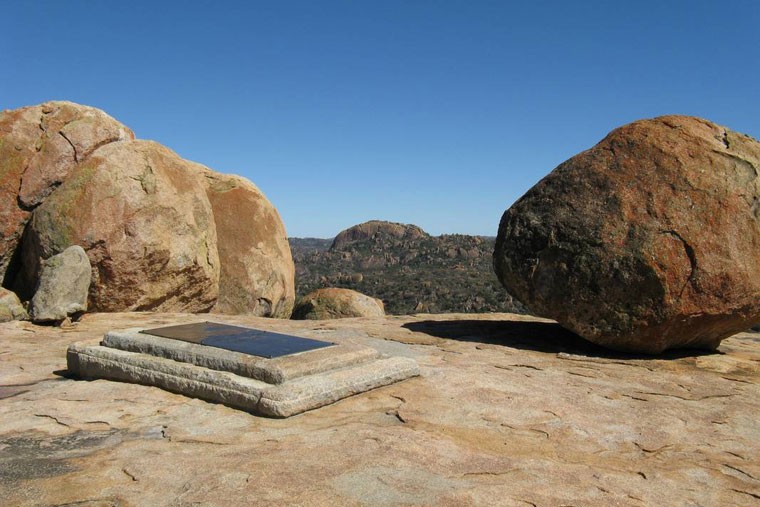
Bulawayo, Zimbabwe’s second largest city houses various tourist attractions. One of them is the Tshabalala Game Reserve which found en-route to Matobos. This Game reserve hosts various antelopes, rhinoceros and giraffes. Matobo National Park is where leopards and rhinoceros can be spotted and is the perfect location for camping, water sports and safaris. It is synonymous for its historical heritage as the famous explorer Cecil John Rhodes was laid to rest at this location. Chipangali Wildlife Orphanage is also situated in Bulawayo, the wildlife orphanage has various wild animals ranging from cheetahs, lions, leopards to exotic birds and snakes. Lastly, the Khami Ruins similar to the Great Zimbabwe but much smaller can be found on the outskirts of Bulawayo.

Cecil Rhodes’ grave in Matobo.

Zimbabwe takes tourism to another dimension as it is one of the few African countries that have an active trophy hunting industry. The abundance of wildlife makes Zimbabwe one of the best trophy hunting locations in the world as the valuable hunts are available. Trophy hunting in Zimbabwe is carried out in various national parks across the country.

Wildlife, National Parks and safaris are part of the real Zimbabwean Tourism experience as the country is blessed beyond doubt with numerous tourist attractions. Zimbabwe’s unique geographical location is a tourists’ pleasure as the country is bordered by South Africa, Botswana, Namibia, Zambia and Mozambique making it the hub of tourism in southern Africa.

In all these, as Falcon Safaris we are delighted to be Your Guide to African Adventure.

ENJOYED THIS BLOG?

ENJOYED THIS BLOG?

Let us know in the comments below. We would love to hear from you.

                        ****************
Embarking On an Experienced Tour Company

Falcon Safaris is a competent organizer of travel arrangements, from Zimbabwe to destinations all over the world. Falcon Safaris has also had the pleasure of bringing tourists to Zimbabwe and Africa from other parts of the world. Falcon Safaris, through its competent and dedicated staff, has managed to provide excellent services to its customers, increasing the perceived value of the company products and services

Falcon Safaris enjoys a cordial relationship with other industrial players (such as hotels, airlines, and other providers). This allowed us to obtain excellent rates, which we always received with pleasure from our esteemed customers.

We are here to work with you to upgrade your dream tour, help you plan and reserve your business vacation, make it easy for you to set up your company conference or event, crack the glaze through a team-building in your office or take you on a fun holiday that helps you to relax and relax. Regardless of your budget, big or small, Falcon Safaris is your ideal partner for a memorable experience. Why don’t you contact us today for exceptional travel services?

Our professional team and integrity are our pride. Our 3E’s are efficiency, efficiency, and experience. We sell African Safaris. We provide safaris. We operate safaris tours from Kenya, Uganda, Tanzania, and Rwanda to different parts of the world inbound and outbound tour operators. The professional workers and integrity team are the joy. We offer safaris for the Americas, Australia, Europe, and Africa, the Middle East, and Southeast Asia.

Kenya National Park. credit World Travel Guide.

Africa offers everything if you want to schedule a dream honeymoon, a thrilling African adventure trip, the ultimate African safari, or a unique family vacation. African safaris, eco-tourism, and adventure travel give beautiful eyes to you. Even our tours are tailored to the preferences of our guests–and there will never be two trips the same. We have something that will meet your needs, regardless of your special interest. All we need to do is pack up your bags and make sure you are on an African holiday. We plan the road, provide maps, and cover all the specifics Let Us Be You Guide to African Adventure.

Falcon Safaris is managed by people who personally know and work there on the African continent and who know the people and the places. It is run by people who were born and raised in Africa who come back year after year–not only to refresh their skills but mostly because of their love and passion for their areas.

Image result for falcon safaris
Just another day in the National Park.

Our safaris are of high quality, and we have the right equipment for your safari experience to optimize. Most of the travel is done in 4/4 vehicles, and our window seat ensures easy visibility and touring in the fields of photography. We work by listening to your holiday needs rather than offering what is best for our customers. Our extensive experience in adventure travel allows us to understand your needs and provide practical advice.

ENJOYED THIS BLOG?

Let us know in the comments below. We would love to hear from you.

                        ****************
Travel Tips For those coming to Namibia

Travel Tips,like the following,can be taken into consideration:

Namibia is a peaceful, democratic country and is relatively crime free. However, as in any other place in the world there are undesirable elements.

By following basic advice it is possible to avoid most potential problems. It is advised that you carry a record of the numbers of your passport, airline tickets and travellers cheque’s. These should be kept in a safe place. Please note expensive jewellery should not be taken on safari.

Do not flash lots of money, an expensive camera or jewellery. Take note of onlookers and keep your possessions in sight at all times to avoid opportunistic theft. Make use of your hotel safety deposit box for expensive items. Never leave baggage or personal items unattended, especially at airports. It is best not to wander around the streets after dark.

If you are travelling in a car, do not leave your purse or bag lying on the passenger seat in clear view – rather keep them in the car boot. Do not consider picking up hitchhikers.

Currency :
1 Namibian Dollar (N$) = 100 cents The Namibia Dollar (N$) is fixed to and equals the South African Rand (ZAR) 1:1. The South African Rand is legal tender in Namibia and is accepted throughout for payment. Currency Exchange : www.xe.com

Credit Cards : 
International Visa and Master Card credit cards are generally accepted throughout Namibia. Holders of other credit cards are advised to clarify with a commercial bank whether their card is acceptable in Namibia. VISA cards are not accepted at petrol filling stations.

Voltage : 
220/240 volts AC. 3-Pin Plugs are used

Communications : 
IDD is available. Country code: 264

Local Time: 
Summertime is GMT + 2 from the first Sunday in September to the first Sunday in April.
Wintertime is GMT + 1, from the first Sunday in April to the first Sunday in September.

Banking Hours : 
09h00-15h30 Monday-Friday
09h00-11h00 Saturday

Shopping Hours :
08h00-17h30 Monday-Friday
08h00-13h00 Saturday

Passport & VISA Requirements : 
All visitors are required to carry a passport that is valid for six months beyond the intended length of stay. Nationals of certain countries do not require visas. It is advisable to check for the latest visa and entry requirements.

Health Precautions : 
Due to the hot dry climate Namibia is virtually free of tropical diseases, therefore health certificates are not normally required. However, vaccination requirements change from time to time. We suggest you consult your local doctor or health department.

Malaria exists in the northern area throughout the year, but you can reduce the risk of malaria by using prophylactics, which should be started before arriving in Namibia and with your doctor’s guidance.

If you are on prescription medication, please ensure you have an adequate supply, to last the duration of your stay and a copy of your prescription(s).

The Southern Africa sun is harsh, therefore we advise that you apply highest (SPF ’20) sun block liberally prior to going on walks, swimming etc.

Accessibility : 
By Air: Namibia is directly accessible by regular international flights from Europe by Air Namibia & LTU and neighboring countries from Johannesburg, Cape Town, Maun, Victoria Falls, and Luanda by Air Namibia, South African Airways, British Airways/Comair and SA Express.

By Road: Namibia is directly accessible by the regular Intercape Mainliner bus service from Johannesburg, Cape Town and Victoria Falls.

Airports : 
International Airports – Hosea Kutako International Airport, previously Windhoek International Airport; Walvis Bay Airport

International & Domestic Airports: 
Hosea Kutako International Airport – 45km east of Windhoek, previously Windhoek International Airport, caters primarily for international air traffic, while Eros Airport, situated within the municipal boundaries of Windhoek, handles domestic and regional flights.

All major Namibian tourist destinations have airports, landing strips and/or heliports to accommodate holidaymaker’s traveling by air.
Although Namibia has over 300 known airfields, travellers are cautioned not to land at unlicensed airfields, as the condition is not always known. Aircraft fuel is usually not available at the landing strips, and landings must be arranged in advance.

Transport : 
Domestic transport services available include Intercape Mainliner bus service and scheduled commercial flights.

Private transport available includes hired car , 4×4 vehicle or light aircraft.
Please note: Sense of Africa discourages clients from using public transport.

Road Conditions

A two-wheel drive vehicle is adequate for a self-drive holiday. The country has  a  well  established  road network, of which some 5 450 km is tarred and 37 000km consists of gravel and earth roads, providing access to the majority of towns, parks, nature reserves and tourist attractions in the country. Road conditions are good and well signposted.Two major development projects, the Trans-Caprivi Highway and the Trans-Kalahari Highway, provide access to Botswana, Zambia, Zimbabwe and South Africa and link Namibia with other Southern African Development Community (SADC) countries for trade, travel and communication.

What to Buy :
Finely crafted jewellery, precious and semi-precious gemstones, karakul jackets, indigenous crafts, Namibian brewed beer and locally manufactured chocolates and exotic leather goods.

Water :
Tap water is safe to drink throughout the country, except for isolated rural areas, where the consumption of filtered or bottled mineral water is recommended.
(Remember water is as precious as diamonds in this drought-stricken land.)

Accommodation : 
Advanced bookings are highly recommended, especially outside of major centres and are absolutely essential in July, August, September, October, November and December.

The accommodation type in Namibia varies from hotels, guesthouses, pensions, guest farms, tented camps and lodges.

Lodges and safari camps tend to be on private ranches and offer both standard and luxury accommodation.

National parks offer camping, self-catering huts or chalets .

Dietary Requirements : 
Special dietary requirements are catered for throughout Namibia.
Most restaurants offer selections for vegetarians, depending on their forte.
Note : It is important to give advanced notice to places where you intend staying.

Tips & Gratuities :
Some restaurants do include service charges; otherwise 10 per cent of the billed amount is adequate. The same applies to hotel service personnel.

What to Pack :
Cotton rather than synthetic clothing is recommended for Namibian summers. This can be bought at shops in Windhoek that specialise in lightweight safari wear. Winters are usually mild to warm, which calls for light clothing in  the  middle  of  the day, and a sweater or jacket for evenings and early mornings when it can become quite cold. It is often cold and windy at the coast, for which warm clothing, including a windbreaker, is necessary. An important item is comfortable walking shoes. Swimsuits are required for public beaches or swimming pools. When packing, remember to include binoculars, a sun-hat, sunglasses, sun block, bathing towel, moisturiser, lip-ice and mosquito repellent. Points for electric shavers (electric current 250VAC) are available at major hotels and most state-owned rest camps and resorts. It is advisable to bring battery-operated or conventional razors when visiting remote areas. Camping equipment can be hired in Windhoek.

Photographic Equipment :
Ensure that you have sufficient film and spare batteries, as these may be difficult to purchase in some areas. A lens hood and ultra violet filter are advisable.
Dust-proof packing of your equipment is strongly recommended.

Important Note !!! : It is courteous to ask permission before photographing people. Please be sensitive. Not all African cultures are familiar with cameras. Rural folk will often shy away from having their picture taken. Some locals may ask a fee for having their photograph taken. It is recommended you avoid photographing anything relating to government and military, including personnel (soldiers and police) and buildings.

ON TOUR WITH FALCON SAFARIS IN CHOBE AND THE OKAVANGO DELTA

Just imagine a comfortable campfire with nightfall approaching. One by one, the evening sounds begin. In the distance, you can hear the roar of a wandering lion, then the laugh of a hyena. Hopefully, it is not laughing at you because the sound is normally an indication that it wants to be left alone. Then, close by, the howl of a jackal fills the night. The smell of food on a fire, the chat and laughter of friends and fellow tourists around you…

Suddenly, it is sunrise, and bird song awakens you. You hear the barking “aw” and “ih” of baboons and the gibber of apes. Our forebears (well, of some of us,) are waking up. In the distance, the bark of a zebra…

Then you realize that you are on safari with Falcon Safaris, the best tour operator in Southern Africa, and that you are in the Chobe National Park in Botswana.

WHY FALCON SAFARIS?

Well, that’s a very easy one to answer. Falcon is the prime full-service destination management company in Southern Africa. Fancy words, you muse? It applies to the best tour operator in the business, and you are on tour with them. Falcon Safaris offers choice packages that include traditional game viewing in open vehicles and comfortable overnight stops, as well the real thing: camping and campfires, the true way to experience Africa. 

THE CHOBE NATIONAL PARK

A Chobe National Park safari is one of the packages offered by Falcon Safaris. The park is located in the northern part of Botswana and borders the famous Okavango Delta. Some of Falcon’s Victoria Falls tour packages include visits to the park as well. Located along the Chobe River, the park consists of vast grassy plains, with the bushier Savuti marsh areas to the south. The Chobe river camp is a favourite with tourists. 

For more information visit: https://www.chobe-safari-lodges.com/  and http://www.chobe-national-park.net/

THE BIG FIVE

The big five are one of the reasons why most tourists want to visit a game reserve. You won’t be disappointed here. The park boasts one of the biggest elephant populations in Southern Africa. Led by a Falcon Safari guide, you will cross paths with buffalo herds, leopards and lions. The rhino, the fire fighter of the bush, is a bit on the shy side, and you may just miss it. With a bit of luck, you may see lions feeding on their kill or a leopard protecting its prey high up in a tree.

CHOBE WILDLIFE AND BIRD WATCHING

Wildlife is in abundance in the park, and it includes giraffe, zebra, kudu, springbok, impala and hartebeest. The river is well-populated with crocodiles, hippos and fish. For bird lovers, there is a kaleidoscope of birds to watch. Some 450 different species have been identified. Common species to see are the African darter, the saddle-billed stork and the squacco heron. The best time for bird watching with Falcon Safaris is from mid-November to April. This is the breeding season for the birds, and all migrant species are back “home”.

BABOONS

While everyone is on the lookout for the so-called big five, you may find yourself under observation by some close relatives. Big troops of African baboons are found all over Chobe. They like watching you as much as you like watching them. The biggest fun is to identify some of your family members amongst them. They live in close-knit family groups, with lots of children that need supervision and discipline, and you will find their almost-human behaviour great fun to watch. See if you are able to spot any of your uncles, aunts, neighbours or friends amongst them. Feeding them is a big no-no as it encourages them to raid tourists’ food supplies. Beware, they may try to steal your provisions if you allow them too close.

THE OKAVANGO DELTA

A Falcon Safari tour will include a visit to the Okavango Delta, a Unesco World Heritage Site. The delta borders Chobe and is basically a continuation of the nature reserve. It is subjected to seasonal flooding, with the main influx from the southern parts of Angola. The swampy flatland has its biggest inflow of water during the dry winter months and peaks around July. Scientists tend to regard the area as an oasis in a dry area rather than a natural wet-climate swamp. Receding water levels that follow the peak period attract large numbers of animals, which makes for excellent game viewing. Summer temperatures (November to early March) can reach 40 degrees, with a high humidity factor. The mid-year temperature pattern is mild by day with cooler nights.

OKAVANGO WILDLIFE

Falcon Safaris offers standard game viewing from open vehicles. Trips by motorboat or houseboat are also available. The delta attracts a wide variety of wildlife including the big five, the African bush elephant, blue wildebeest, springbok, sable antelope, impala, black and white rhinos, the Nile crocodile and yes, our cousins the baboons and some vervet monkeys.

Naturally, the delta supports a variety of fish species as well. Some seventy different species have been identified, including tiger fish and the well-known catfish. Fishing trips are available but need to be booked in advance. Tiger fish catches ranging between eight and ten kilograms have been recorded.

SNAKES

Most people don’t like snakes, and the feeling is somewhat mutual. That dates back to the time when the snake persuaded Eve to eat some of Eden’s export apples, with well-known consequences! Puff adders and cobras are amongst the snakes found in the area. Most snakes are likely to avoid humans. The exception is the puff adder, which, because it is slow-moving, prefers to lie still if there is danger. Puff adders bite when threatened and are responsible for up to 70% of all snakebites in Africa. Stay close to your Falcon guide and don’t try to entice or prod a snake with a stick or anything else, for that matter. 

YOUR FALCON SAFARI GUIDE AND TRAVEL TIPS

As for all tourist destinations, there are some precautions you will have to take and some items that will make life easier for you:

  • Malaria – The Chobe and Okavango areas are high-risk malaria areas, and you will be wise to take precautions. The swamps are rife with insects, and insect repellents are a must-have.
  • Sunblock and sunglasses are essential, especially in the November to February summer season with accompanying high temperatures. Use practical sunglasses that can be replaced at low cost should you happen to lose or break them. If you use prescription glasses, a safe option is to have a spare set available.
  • Well-worn hiking boots are another good investment. Well-worn is the keyword. You don’t want to hobble around with blistered feet. Remember to shake a boot before putting it on! It’s a nice hideout for spiders and scorpions.
  • Binoculars are a sound investment, and a good camera is a must for recording your memories.
  • Don’t overburden yourself with luggage, but do pack long-sleeved shirts and a hat, as well as a jacket for cooler nights if your visit falls within the winter months.
  • It is also useful to have a small battery-powered torch and a supply of meds for headaches, indigestion, etc.
  • Pack comfortable clothing, but remember it is Africa. Don’t pack camouflage or similar clothing and appear in public in it. You may just draw the attention of the police, and you wouldn’t like them to spoil your safari.

Speak to Falcon Safaris, the top tour operator for Southern Africa, for your planned Africa visit. Their top-class destination management team will make your African encounter a memorable one.

ENJOYED THIS BLOG?

Let us know in the comments below. We would love to hear from you.

                        ****************
ON TOUR WITH FALCON SAFARIS TO THE VICTORIA FALLS

They say that the best thing about an African safari is a sunset in Africa. And the only thing better than that is another sunset with your favourite drink on standby, or an African sunrise on a clear day. What better way to start your African encounter with Falcon Safaris, the best tour operator in Southern Africa, than with a visit to one of the seven wonders of the world, the Victoria Falls? This stunning Unesco World Heritage site is located on the border between Zimbabwe and the southern tip of Zambia, and your adventure begins when you land at Livingstone Airport.

WHY LIVINGSTONE?

Livingstone has a modern combined military / civilian airport with direct links to Johannesburg (South Africa), Nairobi (Kenya) and Addis Ababa (Ethiopia). The former Livingstone airport is now called the Harry Mwanga Nkumbula International Airport. Livingstone is a typical old, colonial-style town, with a modern business area at its heart and more rural African townships located to the south and east. The town derived its name from David Livingstone, the famous explorer and missionary who, in 1855, was the first white man to lay eyes on the Mosi-o-Tunya (“the smoke that thunders”) or what we now know as the Victoria Falls.  

LIVINGSTONE CITY MUSEUM TOUR

The Falcon Safaris’ full-service destination management team will guide you on a two-hour tour of the famous Livingstone Museum. You are not a history buff, you may say, but a visit will give you a taste of historic Africa. Exhibits include letters and other memorabilia from Livingstone himself, tribal and witchcraft artefacts, animal taxidermy, as well as a model African village. If you have a day to spare, allow Falcon Safaris to take you on a visit to the adjoining Mosi-oa-Tunya National Park, as well.

VICTORIA FALLS AND THE VICTORIA FALLS HOTEL

The main objective of your visit may be just to experience the Victoria Falls – to feel the spray on your body and hear the thunder of the water. Imagine a selfie with you in the foreground and a rainbow in the mist in the background. Don’t forget a picture of yourself with the statue of David Livingstone, too. The best views of the falls are from the Zimbabwean side, but make sure that you view it from both sides. Entrance fees range between $20 and $30. 

DEVIL’S POOLS

This is the ultimate swimming experience offered by Falcon Safaris. Keep in mind that the pools can be reached only from the Zambian side. Swimming in this natural pool will probably be the adrenaline rush of a lifetime. You can peek over the edge and see the largest waterfall in Africa. It is advisable to be a reasonably good swimmer if you intend to participate in this venture. Remember that you will have to swim across the Zambezi River. Stay close to the Falcon Safari guides at all times. This excursion costs between $100 and $170, depending on the season, and you will have to sign an indemnity.

BUNGEE JUMPING

No tour with Falcon Safaris would be complete without a walk across the bridge. For the daring and the young-at-heart, there is also the opportunity of bungee jumping from the bridge. The jump is regarded as one of the most scenic jumps in the world. Image the majestic backdrop and the river below. Don’t worry about the Nile crocodiles; they are not known for high-jumping, so you won’t become part of their diet. The fall of some 110 meters will live in your memory for a long, long time. Pictures are taken with each jump, and you can take your memories with you.

SUNSET CRUISES

As mentioned above, a sunset in Africa is a must-do, and there’s no better way to experience it than with a two-hour sunset cruise on the Zambezi River with Falcon Safaris. Take a transfer shuttle to the river and enjoy the magnificent views. Guides will be on hand to point out landmarks and describe wildlife encountered along the way. As this is a trip within a National Park, be prepared to pay certain fees.

HELICOPTER FLIGHTS

Breathtaking helicopter flights are available throughout the day. A typical flight takes the tourist over the falls, and the views are from both the Zimbabwean and Zambian sides. The flight lasts for about an hour and provides an unforgettable bird’s eye view of one of the seven wonders of the world.

HORSE RIDING FROM THE VICTORIA FALLS HOTEL

With Falcon Safaris, you will be able to experience the wild on horseback. A qualified guide will take you on a three-hour ride for some spectacular game viewing. Elephant, buffalo, kudu, and other wild animals are plentiful, and you will get the real feel of Africa. No experience is needed – you don’t need to be a cowboy to do this ride. But remember, a few hours on horseback will have some impact on your backside, and you may experience some stiffness the next day.

For more information on the Victoria Falls Hotel visit:

The Victoria Falls Hotel  and https://www.falconsafaris.com/

HIKING THE FALLS – THE BOILING POT HIKE

This is a dream hike winding down to the bottom of the falls where you can experience the spray of the falls and view nature’s boiling pot of thundering water. This hike is only available in the dry season between August and December, and you need to be reasonably fit and agile to undertake it. It’s relatively easy going down, but you have to hike back up again!

WHAT YOU WILL NEED FOR A TOUR WITH FALCON SAFARIS

Every person has different requirements. Falcon Safaris provides for most if not everything, but it is worth considering the following, as well:

  • Good-quality sunglasses. You may lose or break them during your activities, so rather go for practical glasses that won’t cost you an arm or a leg to replace.
  • If photography is your hobby, make sure that you have equipment that you can carry. It should also be waterproof because you will encounter a lot of spray and moisture.
  • The climate is ideal for mosquitoes. There is no truth in the rumour that they are so big that they will carry you away and suck you dry at home, but do take some strong insect repellent with you on the trip.
  • Malaria has mostly been eradicated in the Falls area, but some 15 cases are still being reported annually. The wise thing to do is to take prophylactics, especially if your trip falls between August and February.
  • Other “should haves” include good-quality, well-worn hiking boots, sunblock and a fold-up raincoat.
  • Lastly, remember to apply, with the help of Falcon Safaris, for a Kaza Uni-Visa. You will need it for the regular border crossings between Zimbabwe and Zambia.

A well-organized safari with Falcon Safaris, the premiere full-service destination management company in Southern Africa, will make your trip the memory of a lifetime. They say that once you have felt the African sun on your skin, you always want to come back for more.

ENJOY THIS BLOG?

Let us know in the comments below. We would love to hear from you.

                                    ****************
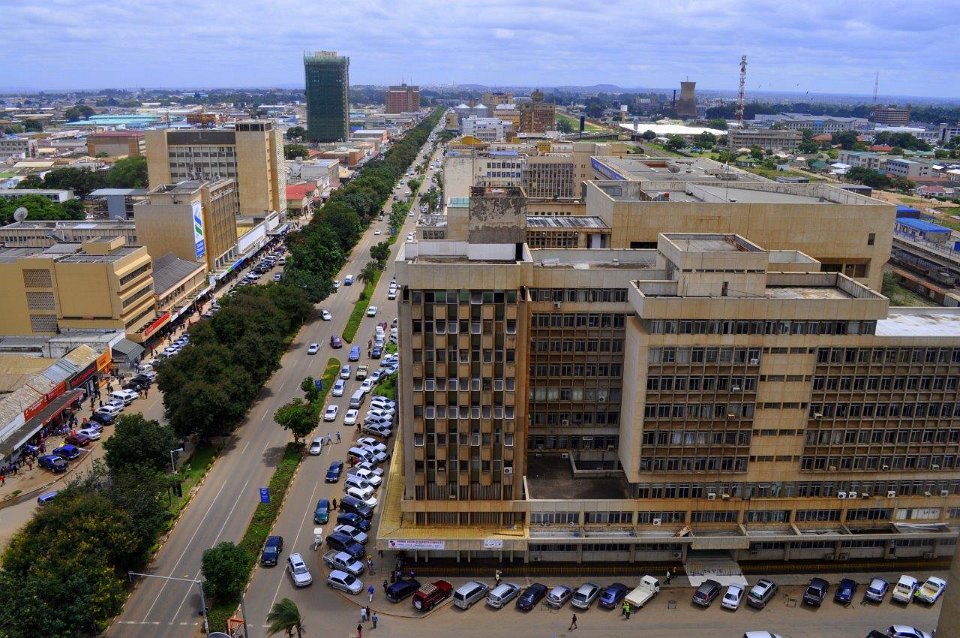
Unspoiled Wilderness of Botswana

“In certain parks you can watch some of the richest concentration of wildlife in the world, as undisturbed as it must have been for thousands of years, with no other vehicles or tourists to spoil your safari Botswana is the Premier Luxury Safari Destination in Africa” — A wilderness wonderland


Botswana is a land of unspoilt wilderness and unlimited wildlife. From the largest inland delta, the Okavango to the Kalahari desert, to the ancient super-lake of Makgadikgadi pans there is much to discover and experience. From the mystical hills to the thirstlands of the central Kalahari – Botswana is a beautiful land of contrasts. chobe elephants
It occupies 581 730km² of plateau with an average elevation of 1000 m. More than 100 000km² is devoted to game reserves and national parks. Over 80% of Botswana is a semi arid region of grassland or thorn trees with erratic rainfall.Beyond the narrow eastern corridor where the majority of the population is concentrated, Botswana is a largely roadless wilderness of savannahs, deserts, wetlands and salt pans. With its unique okavango delta and the wildlife wonderland of the Chobe national park, Botswana is one of Africa’s premier safari destinations.Botswana’s leaders took the view that high quality / low volume tourism was the best way to create a sustainable industry, while still preserving the environment. The high price, low impact has worked brilliantly April to August is one of the best times to visit Botswana, although it is winter the weather is still pleasant and it is dry. This however is also the busiest time as Europe and America have annual holidays. The least crowded times are June, early July and mid to late September. Summer is probably the worst time to visit as the rains damage roads and game is less visible Botswana safaris & tours. Our packages are tailor made and can be adjusted to suit. As FALCON SAFARIS we are a leading tour operator and we will gladly supply a quote with or without flights for any package tour of accommodation, transfers and activities for Southern Africa


dd Chobe, Linyati and Savuti Game Reserves
dd Moremi Game Reserves and Okavango Delta
dd Central Kalahari accommodation
dd 
dd Tour packages to Botswana Safari Tours
dd Honeymoon Safaris
dd Chobe National Park

We welcome you!

Welcome To Falcon Safaris Blog

Let us be your guide to African Adventure.

— Hamilton Mandizvidza.

We greet you and are delighted in sharing Southern Africa, a region with millions of welcoming smiles, wildlife paradise, incredible scenic beauty and the seventh wonder of the world, Victoria Falls, with our guests.We are a Tour Operator as well as a premiere full service Destination Management Company with over 15 years of combined in-house experience. We operate tailor made safaris, incentive and adventure travel in and around Zimbabwe, Zambia, Namibia, Botswana and South Africa. Whether it be car rental, a comprehensive travel itinerary or accommodation bookings, we will provide you with all your travel requirements, making Falcon Safaris a one-stop travel shop.