Category Archives: cultural experience

Travel to the Kruger National Park -Top Tourist Attractions, Facts & Important Travel Information

Elevation: 200 M (660 ft) East and 840 M (2760 ft) South west.
Location: Limpopo & Mpumalanga Provinces (South Africa)
Geology: Basal and granite interspersed with gabbro.
 
GENERAL TRAVEL INFO TO THE KRUGER PARK:
Currency: ZAR (South African Rand)
Time Zone: GMT + 2
Driving Side: Left
Calling Code: + 27

INTRODUCTION

Kruger National Park and South Africa are synonymous with each other. You can’t think of the one without the other springing to mind. The Kruger National Park borders Mozambique to the east and Zimbabwe to the north. The Limpopo National Park from Mozambique and the Gonarezhou National Park from Zimbabwe are now linked to complete the Great Limpopo, Trans-Frontier Park.

A SHORT-COMPREHENSIVE GUIDE TO TRAVEL TO THE KRUGER NATIONAL PARK (SOUTH AFRICA)

Where is the KRUGER NATIONAL PARK?

The KRUGER NATIONAL PARK is in the Limpopo and Mpumalanga provinces of South Africa, some 390 km (Numbi Gate) from the OR Tambo International Airport.

Some Interesting Facts of the KRUGER NATIONAL PARK

The Kruger National Park is the oldest national park in Southern Africa. (Established in 1895)
The Kruger National Park is home to one of Africa’s most successful hunters, the African wild dog. The wild dog’s success rate is estimated at some 80%.
Webcams are used to observe wildlife in the Kruger National Park.

Visa for Kruger National Park – South Africa

Below is a list of requirements when applying for a Visa to enter South Africa:

You will need to complete an ‘Application for a Visa’ form (BI-84).
Passport or travel documentation should be valid for a minimum of 30 days and have at least two blank pages.
Two color passport type photographs.
Documentation (Bookings and Reservations) confirming the purpose of your visit.
Minors and or children should in addition to above have documentation proving custody and consent.
A return or onward ticket.

Financial proof that you can support yourself with living expenses while staying in South Africa.

Visa for South Africa – Exempt Countries

Visitors who hold ordinary passports and originate from any of the below-listed countries can enter South Africa to visit the Kruger National Park without a visa.

Note: The red lines indicate current travel restrictions.

Visa for South Africa – Visa on Arrival

Validity: 30 Days

Cost: ZAR1,350.00

Citizens for the following countries will require a Visa when entering South Africa:

List – Courtesy of the Department of Home Affairs – South Africa (March 31st, 2020)

http://www.dha.gov.za/index.php/applying-for-sa-visa

Visa for South Africa – African Passport Holders

Most African countries, including the government of South Africa, is said to soon introduce Visa on Arrival for all African passport holders. African passports will be issued to citizens of most of the African countries on the African continent to out phase the need for Africans to obtain a visa for the 55-states in Africa. This initiative is like that of the European Union and was first launched on 17 July 2016 in Kigali, Rwanda.

How To Travel To The Kruger National Park

Prospective tourists will be landing at the OR Tambo International Airport in Johannesburg. The choice then will be to reach Kruger Park by air or by road.

Connecting flights can be taken to:Skukuza Airport, located at Skukuza, the main administrative center for the Park.
Kruger Mpumalanga National Airport, some 40 km south of the Numbi Gate.
Hoedspruit Airport for entry to the central regions of the park.
Phalaborwa Airport for entry to the northern part of the park.

A trip by road in a rental car can be a rewarding experience, should you have the time. Allow between 4 to 6 hours for south and central entry to the park and up to 7 hours for the northern gates, traveling by road. Gates are open from 05H30 and 06H00 and close daily from 17H30 to 18H00. The opening and closing times of gates are seasonally linked.

The Kruger National Park has no less than ten entry points by road:

Numbi Entrance Gate – South of the Park, (closest from OR Tambo Airport), entry via R538 from White River.

Crocodile Bridge entrance Gate – South of the Park, entry R571 from Komatipoort.

Malelane Entrance Gate – South of the Park, entry N4 from Malelane.

Paul Kruger Entrance Gate – South of the Park, entry via R40 from Hazyview.

Phabeni Entrance Gate – via the R536 from Hazyview,

Orpen Entrance Gate – Central entry point via R540 from Belfast.

Phalaborwa Entrance gate – Central and northern entry point via R71 from Polokwane and Tzaneen to Phalaborwa.

Punda Maria Entrance Gate – This northern entry point is via the R524 from Makhado.

Pafuri Entrance Gate – Northern entry point via R524 from Makhado and is an optional entry point to Punda Maria. (Most tourists enter via Punda Maria).

Giriyondo Entry Gate – Entry from the SA – Mozambique border

A Short History of the Kruger National Park

A motion for the establishment of a game reserve was introduced by one Louis van Wyk in the parliament of the old Transvaal Republic. A majority of one vote and the consent of President Paul Kruger resulted in the establishment of a government game reserve in March 1898. The final borders of the park were established in 1926 and include some 19400 square kilometers. It spans an area of 350 km from north to south and 60 km from east to west. The park was known as the Sabi Game Reserve from 1898 to 1926. A motion to formally establish and name the Kruger National Park was tabled in the South African parliament on May 31st, 1926. Although there was some political turmoil regarding the name, Act 46 of 1926 was unanimously accepted.

onal-park.html

The Best Time to Travel to the Kruger National Park

The best time to travel to the Kruger National Park is in the winter months from June to September. It’s also the best period for game viewing. Regular rain and dense vegetation make game viewing difficult in the summer months. Winters are mild with summer temperature rising above 40 Degrees.

Is the Kruger National Park Safe to Travel?

The Kruger National Park lies within a malaria zone, and it is advisable to take the necessary preventative medication. Wildlife viewing has some risk involved but you will normally be safe when accompanied by a ranger or guide. Poaching is alive and still occurring in the Park and any suspicious behavior should be reported to the park rangers. In general Kruger Park is safe to visit but don’t tempt fate, apply the normal safety rules like locking up your luggage and keeping copies of your documents! (See details listed below). The danger zones are Johannesburg and areas surrounding the OR Tambo airport. Beware of so-called citycentric crimes like mugging, pick pockets and hijackings.

How to Stay Safe While you travel In and around the Kruger National Park?

Useful travel tips and precautions:

Make sure that you have duplicate documents available and stash it separately.

Avoid travelling alone at night from OR Tambo. (Game viewing by night is allowed, but rather travel with a ranger or an experienced safari guide).

Only use transport approved by your tour operator.

Be vigilant around the airport and surrounding areas.

Take care to add the local Police and emergency numbers on your cellphone.

Don’t travel without travel insurance.

Always keep your valuables in a safe deposit box at your destinations.

Keep your luggage locked in your hotel or resort.

https://www.safaribookings.com/pilanesberg/safety#travelsafety

Map of the KRUGER NATIONAL PARK 
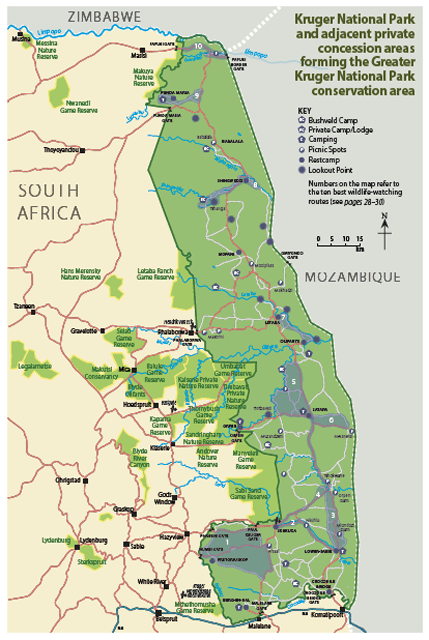

The Top Tourist Attractions in the Kruger National Park (South Africa)

This is probably one of the best places to see and experience wildlife in southern Africa in style as it was and will hopefully stay. There is a long list of camps, picnic sites, and resorts listed on the internet. Let us explore some of the popular ones:

The Big Five
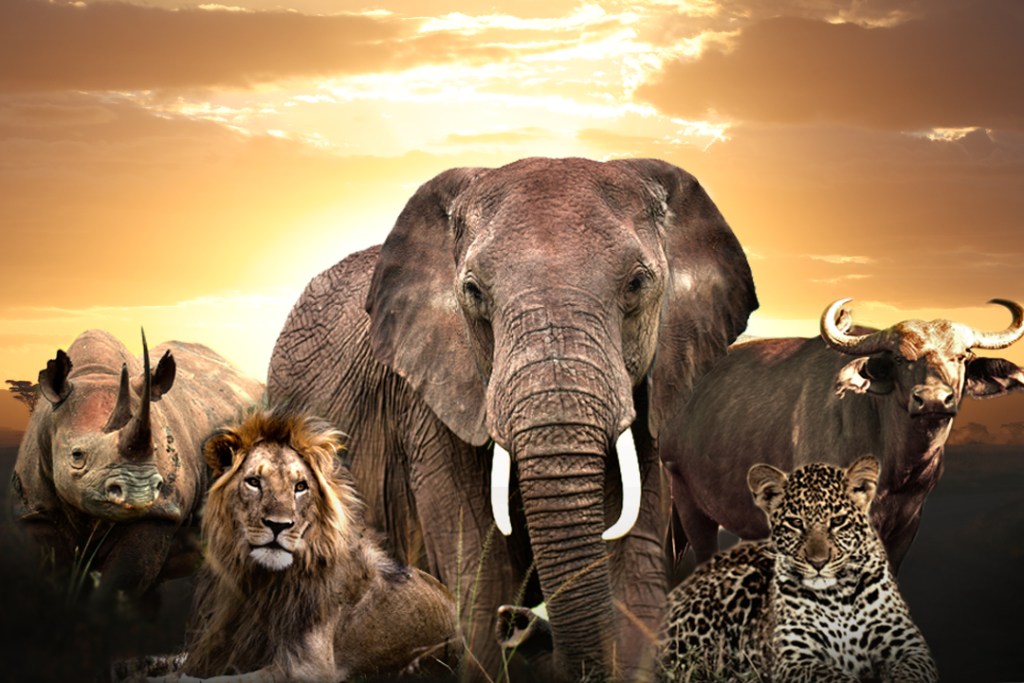
The Big Five.

Everyone wants to see the big five, the elephants, rhinos, buffalo, lions, and the leopards. Elephants and buffalos are the most likely to be spotted. But, with an experienced guide at your side, the chances are good to score five out of five. June to September is the best time for the self-drive enthusiast.

Explore A Large Amount of Wildlife

Wildlife in The Kruger National Park

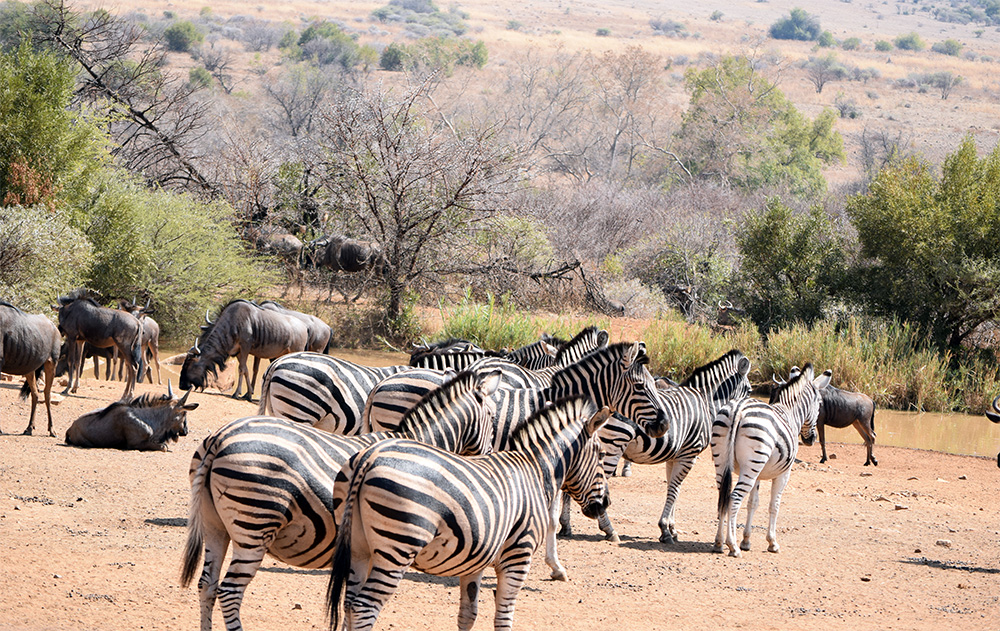
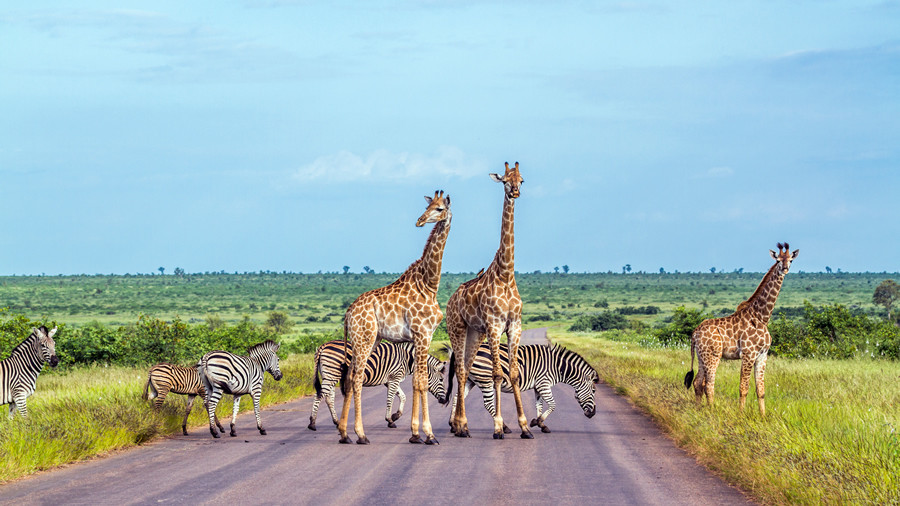
The are at least 145 mammal species to see in the Kruger National Park. Amongst them, you will find spotted hyenas, wild dogs, wildebeest, different antelopes, giraffes, Nyalas, zebras, crocodiles, hippos, and many others. If you are looking for some fun, be on the lookout for our close relatives the baboons. But don’t despair they will be on the lookout for you as well! Warthogs and meerkats are other fun animals to watch.

Birdwatching
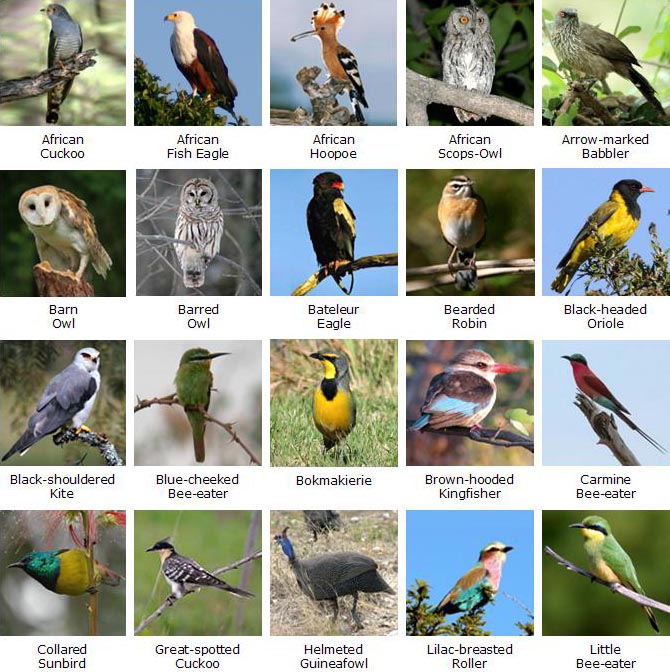
Birdwatching in The Kruger National Park

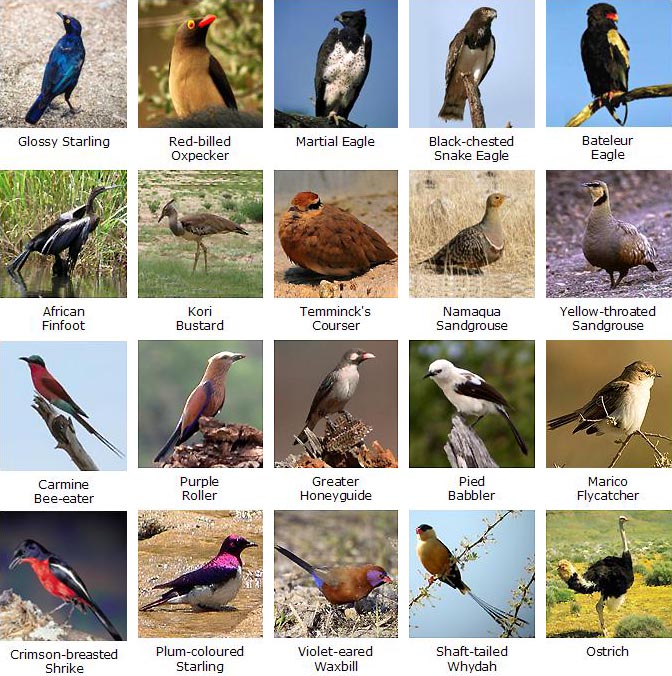
The Kruger National Park is a paradise for any birdwatcher. There are some 500 recorded species, including some 50 migratory species to be found. Some of the most well-known species to have on your watch list will be the White-fronted bee-eaters, Tawney eagles, Whitehead vultures, Bateleurs, Lapped faced vultures, spurfowls, cuckoos, African Finfoots, parrots, Saddle-billed storks, and many others. The Lake Panic Bird Hike close to Skukuza is a popular watching spot.

Trees And Other Flora
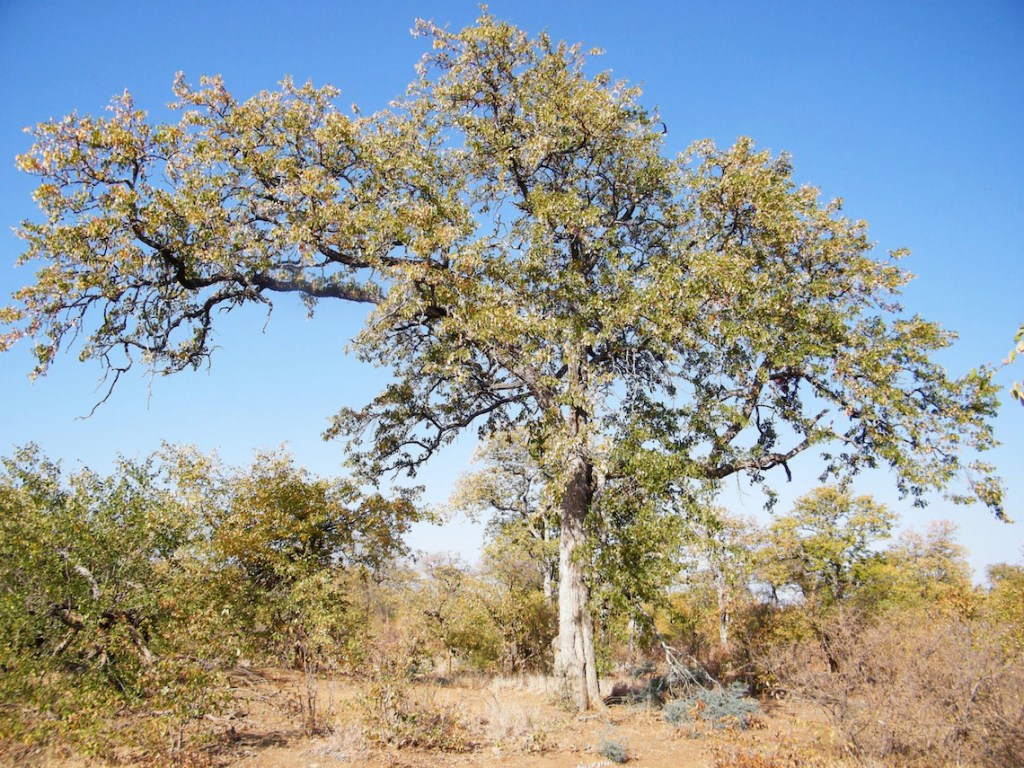
Trees in the Kruger National Park Colophospermum-Mopane

Not many tourists pay any detailed attention to the surrounding flora, but the Kruger National Park has more than 330 different tree species. Landmark trees, like the famous Baobab, are found to the east of the Satara camp. The Zulu Milk Berry and Cape Chestnut trees can be found on the Wolhuter hiking trail.


Bushman Rock Art & Paintings
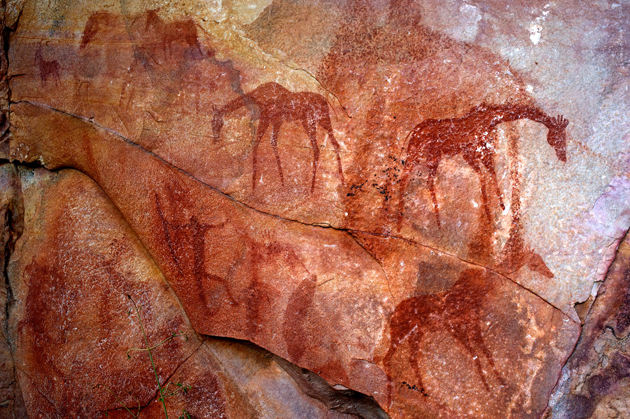
Kruger Rock Paintings

The Kruger National Park is home to some 120+ sites for this famous Khoi and San paintings, that were painted or sculptured between 1500 and 3000 years ago. Themes include wildlife, hunting, culture, ‘alien’ figures, 3-legged animals, figures with hollow bodies, and many others. Surveyor Con de Rosner revealed another 57 sites in 2007. The art is best appreciated with an experienced guide. Interested tourists will be advised to explore these on the above mentioned Wolhuter Hiking trail. 

Hiking in the Kruger National Park
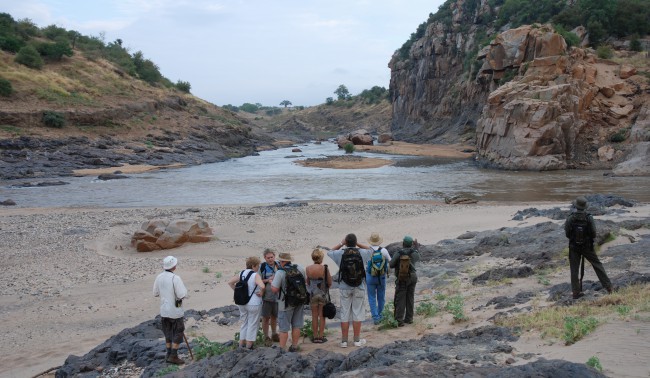
Hiking in the Kruger National Park

There is a long list of hiking trails offered in and out of the park. These include daily (5-hour trips) as well as up to three-night trails. Rangers take care to take the general fitness level of each group into account. Getaway magazine list the following as some of the best hiking trails: Nyalaland trail from Pafuri for birdwatchers, the Letaba elephant walk, the Satara Sweeney hike for birdlife like the Scopes Owl, Mozambican Nightjar, etc., and the Metsi-Metsi hike from Skukuza game viewing at its best. 

Cultural Tours
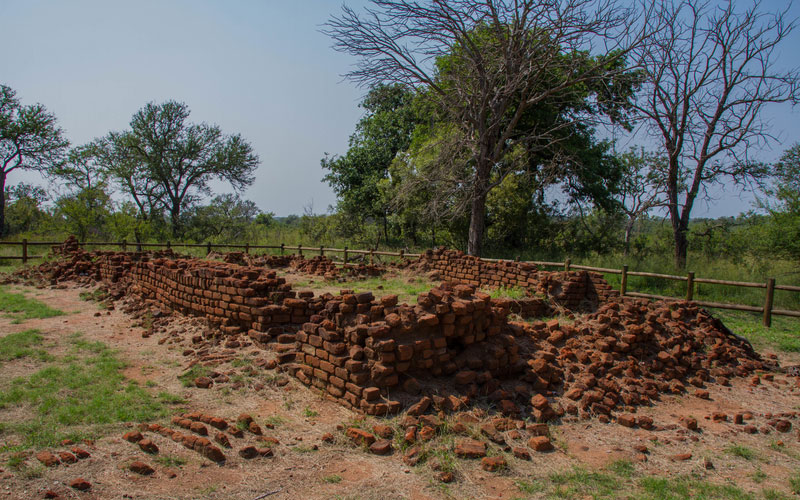
Albasini Ruins.

For those tourists with an interest in archaeology, there are some remarkable sites to visit. The most interesting one is probably the Stone Age Masorini ruins that include a fully restored village found close to the Phalaborwa gate. Another famous one is the Albasini ruins close to the Phabeni Gate. The ruins of the trading post belonged to one Joao Albasini, a Portuguese trader and adventurer who explored and set up trading routes in the region in the nineteenth century.

The Iconic Letaba Elephant Hall Museum
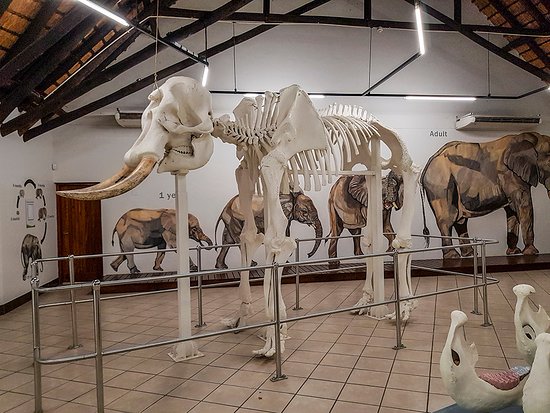
The Iconic Letaba Elephant Hall Museum

Make sure that you include a visit to the museum on your tour. Take note that entrance is FREE! The museum has amongst its exhibits a life-size elephant skeleton, tusks of up to 50kg each belonging to the famous ‘Magnificent Seven Elephants’, elephant skulls, and many more.

OTHER ACTIVITIES

Mountain bike safaris from the Olifants Rest Camp
Bush braais (BBQ’s) and Bush breakfasts
A round of golf on the 9-hole Kruger Park Golf Course at Skukuza
You can even pay a visit to the ‘Tropic of Capricorn’. It is located 12km north of Mopani Rest Camp. Wikipedia calls it “the circle of latitude that contains the subsolar point on the December (or southern) solstice.”
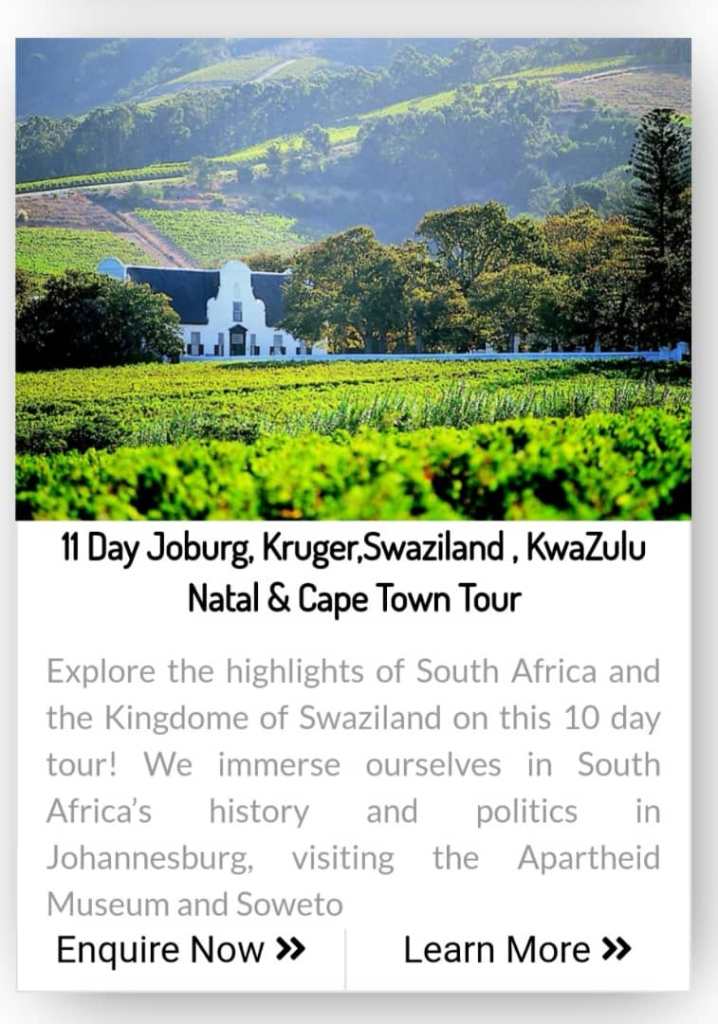
Top selling tour. 11 Day Johannesburg, kruger National Park, KwaZulu Natal and Cape Town Tour. credit Falcon Safaris


The best times to visit the Kruger National Park is probably the drier months from April to September, but whenever you decide to visit it will be a memorable experience that will stay with you for years to come.

ENJOYED THIS BLOG?

Let us know in the comments below. We would love to hear from you.

                        ****************
Travel Pilansberg (South Africa) – Top Tourist Attractions in Pilansberg, Pilansberg Facts & Top Travel Information

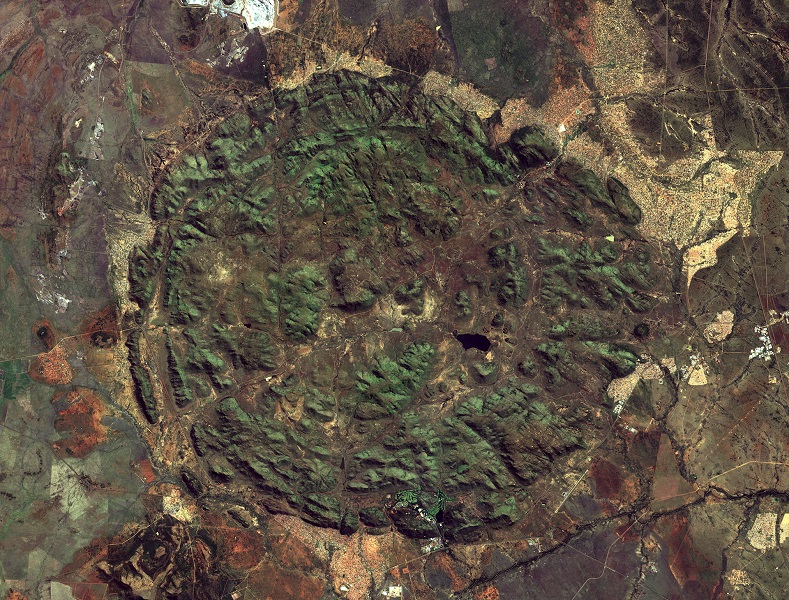
NASA picture of Pilanesberg with Vaalkop Dam on the right side.
 
Elevation: 1,687 m (5,535 ft)
Location: North West Province (South Africa)
Parent Range: Witwatersrand
Geology: Proterozoic
 
GENERAL TRAVEL INFO TO PILANSBERG:
Currency: ZAR (South African Rand)
Time Zone: GMT + 2
Driving Side: Left
Calling Code: + 27

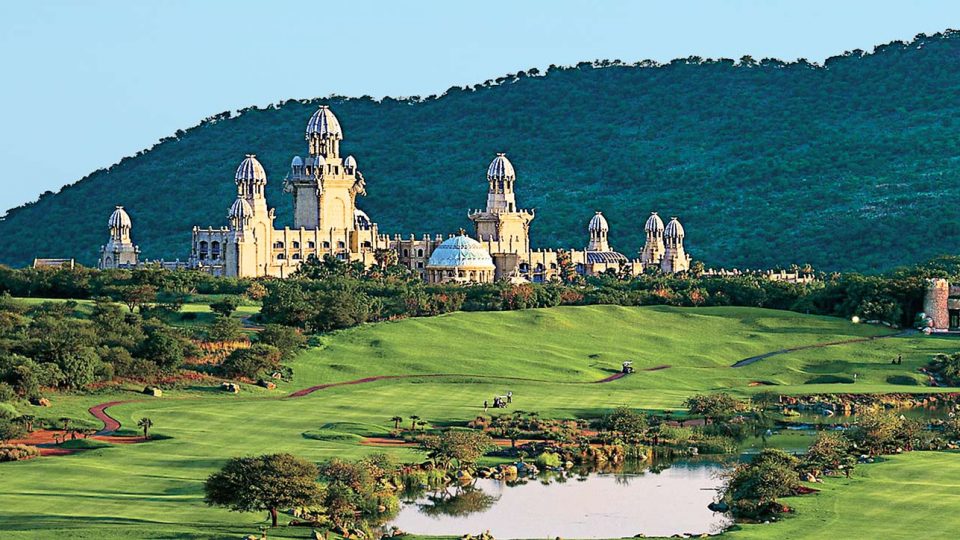
Mention Pilansberg, and two things spring to mind. The one is the famed South African Bushveld with its rare beauty and game, and the other one is Sun City. Sun City will trigger gambling in your mind and for the sports lovers, the annual Nedbank Golf Challenge taking place in November. Let us explore the Pilansberg region.

A SHORT-COMPREHENSIVE GUIDE TO TRAVEL TO PILANSBERG (SOUTH AFRICA)

Where is Pilansberg?

The Pilansberg mountain is in the Northwest Provence of South Africa some 170 km from the OR Tambo International Airport.

5 Interesting Facts of Pilansberg

The Pilansberg mountain range is in one of the world’s only three alkaline ring complexes in what was called a ‘homeland’ by the old Apartheid Regime in South Africa.

Pilansberg is home to Sun City, South Africa’s largest gambling and entertainment complex.

Pilansberg is home to the unique Ficus wasp that pollinates the up to 300-year-old Ficus fig-trees, found in the area.

One of Africa’s most successful hunters, the African wild dog is roaming the area. The wild dog’s success rate is estimated at some 80%.

Lions, roaming the Pilansberg conservation area, have in general a lifespan of some 12 years. The oldest lion found in Pilansberg was named Ketimetsi and had a recorded age of no less than 17 years! 

Visa for South Africa

Below is a list of requirements when applying for a Visa to enter South Africa:

You will need to complete an ‘Application for a Visa’ form (BI-84).
Passport or travel documentation should be valid for a minimum of 30 days and have at least two blank pages.

Two color passport type photographs.

Documentation (Bookings and Reservations) confirming the purpose of your visit.

Minors and or children should in addition to above have documentation proving custody and consent.

A return or onward ticket.

Financial proof that you can support yourself with living expenses while staying in South Africa.

http://www.dha.gov.za/index.php/applying-for-sa-visa

Visa for South Africa – Exempt Countries

Visitors who hold ordinary passports and originate from any of the below-listed countries can enter South Africa to visit Pilansberg without a visa.

https://www.dha.gov.za/index.php/immigration-services/exempt-countries

Visa for South Africa – Visa on Arrival

Validity: 30 Days

Cost: ZAR1350.00

https://www.vfsglobal.com/dha/southafrica/visa-fees-at-glance.html

List – Courtesy of the Department of Home Affairs – South Africa (March 31st, 2020)

http://www.dha.gov.za/index.php/applying-for-sa-visa

The main entry points into South Africa are:

SOUTH AFRICAN AIRPORTS

Airport
Bloemfontein International
Cape Town International
Durban International
Gateway International
OR Tambo International Airport
Lanseria International
Kruger Mpumalanga International Airport
Pilanesberg
Port Elizabeth
Upington
Main Entry points into South Africa.

List – Courtesy South African Department of Home Affairs

http://www.dha.gov.za/index.php/immigration-services/south-african-ports-of-entry

Visa for South Africa – African Passport Holders

Most African countries, including the government of South Africa is said to soon introduce Visa on Arrival for all African passport holders. African passports will be issued to citizens of most of the African countries on the African continent to out phase the need for Africans to obtain a visa for the 55-states in Africa. This initiative is similar to that of the European Union and was first launched on 17 July 2016 in Kigali, Rwanda.

The Breathtaking Beauty of Pilansberg

The Pilansberg, laying in an alkaline ring complex, was formed by the eruption of a volcano some 1200 million years ago. The Kwa Maritane Hills (place of the rock) at the ‘ringside’ is also home to a lodge with the same name. The breathtaking beauty of northwestern bushveld, with its traces of stone age Tswana habitation (near Rustenburg), is at its best in summer, but due to dense vegetation, it is not the ideal time for game viewing. It is home to the big five and boasts some unique species like the African wild dog, amongst others. Besides amazing game viewing trips and safaris offered by most tour operators, a visit to the Sun City complex and a hot air balloon ride should be close to the top of your to-do list.

A Short History of Pilansberg

Pilansberg was named after a Tswana chief called Pilane. It was located within the borders of what Apartheid South Africa called a homeland. Bophuthatswana (Place of the Tswana People) as it was then called, became an ‘independent state’ in 1977 as part of the regime’s policies. It was reintegrated into South Africa on April 27th, 1994 with the formation of a new free South Africa. It is also home to Sun City, South Africa’s largest gambling and entertainment complex. Ironically gambling was a taboo in South Africa under the apartheid regime, but not so in the ‘independent’ state of Bophuthatswana

The Best Time to Travel Pilansberg

The best time to travel Pilansberg is during the latter part of winter and early spring which is from the middle of July to October. It’s also the best period for game viewing. Regular rain and dense vegetation make game viewing difficult in the summer months. Winters can be cold and be touching zero with summer temperature rising above 30 Degrees. April, May and September are regarded as the best safari months.

How to Travel to Pilansberg

There are two ways to get to Pilansberg.By road – Travel with the N4 West and then follow the R556 northwards towards Rustenburg and Sun City. The R510 turnoff will take you to the Pilansberg National Park. The drive will take 2 to 3 hours depending on traffic which could be heavy at times.By air – There are regular flights to the Pilansberg Airport with SA Express. The flights are scheduled for Mondays. Wednesdays and Fridays and take-off for the short 40-minute flight is 10H30 SA Time.

Is Pilansberg Safe to Travel?

Pilansberg is a Malaria free area and no vaccinations are required. It is a safe area to visit and is relatively crime free. The danger zones are Johannesburg and areas surrounding the OR Tambo airport. Beware of so-called citycentric crimes like mugging, pick pockets and hijackings.

How to Stay Safe While you travel In Pilansberg?

Useful travel tips and precautions:

Make sure that you have duplicate documents available and stash it separately.

Avoid travelling at night.

Only use transport approved by your tour operator.

Be vigilant around the airport and surrounding areas.

Take care to add the local Police and emergency numbers on your cellphone.

Don’t travel without travel insurance.

Always keep your valuables in a safe deposit box at your destinations.

Keep your luggage locked in your hotel or resort.

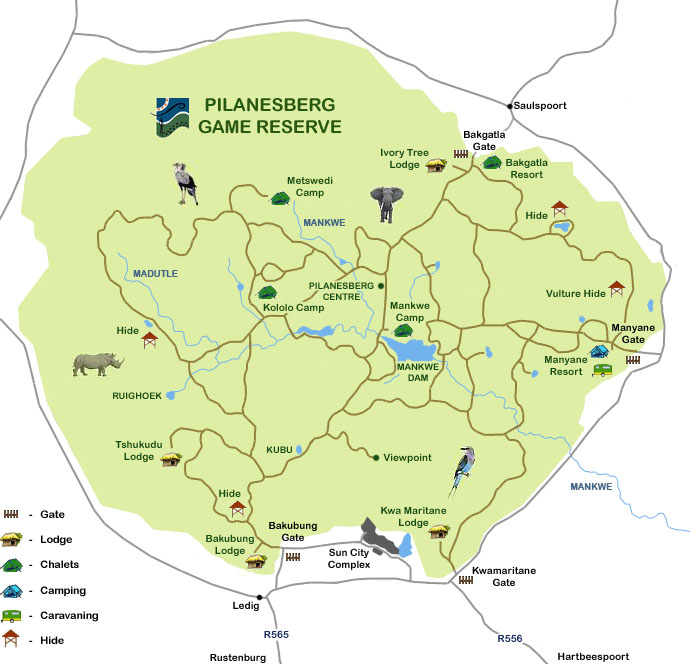
Map of Pilanesberg National Park.

The Top 10 Tourist Attractions in Pilansberg (South Africa)

10 – Picnic on the Hills

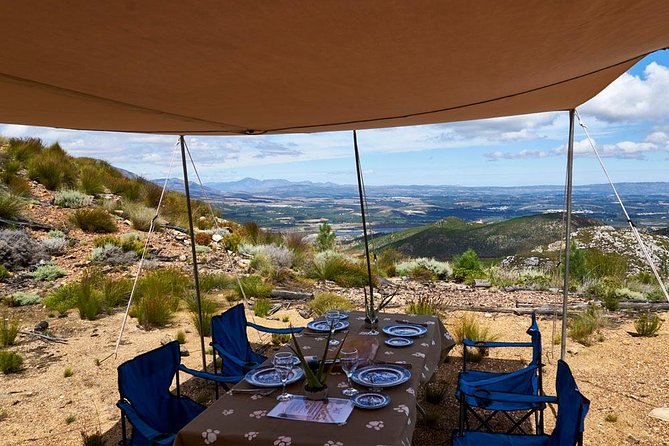
There are five picnic spots in the Pilansberg National park. The spots, high up the hills offers great views of the lake and the planes below. The Fish Eagle Picnic Spot is one of the best spots and overlooks the Mankwe dam. The picnic areas are safely fenced of and has toilet facilities. It also the best place to experience what South Africans called a ‘braai’ (barbeque).

9 – Pilansberg Hiking Trail

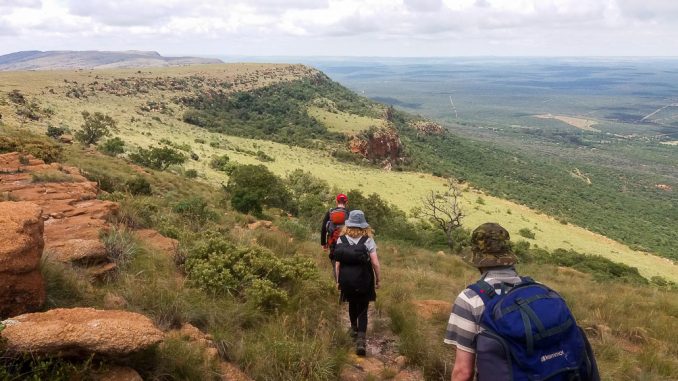
The trail provides a great opportunity for game viewing on foot. Hikes are normally 4 hours in duration. It is probably the best way to experience the overlapping Kalahari and lowveld vegetation that is alive with bird and insect life. Photographers will enjoy ample opportunities for great wildlife shots. You will have to reasonable fit and over 16 years of age for longer trips.

8 – Experience night live at Sun City.

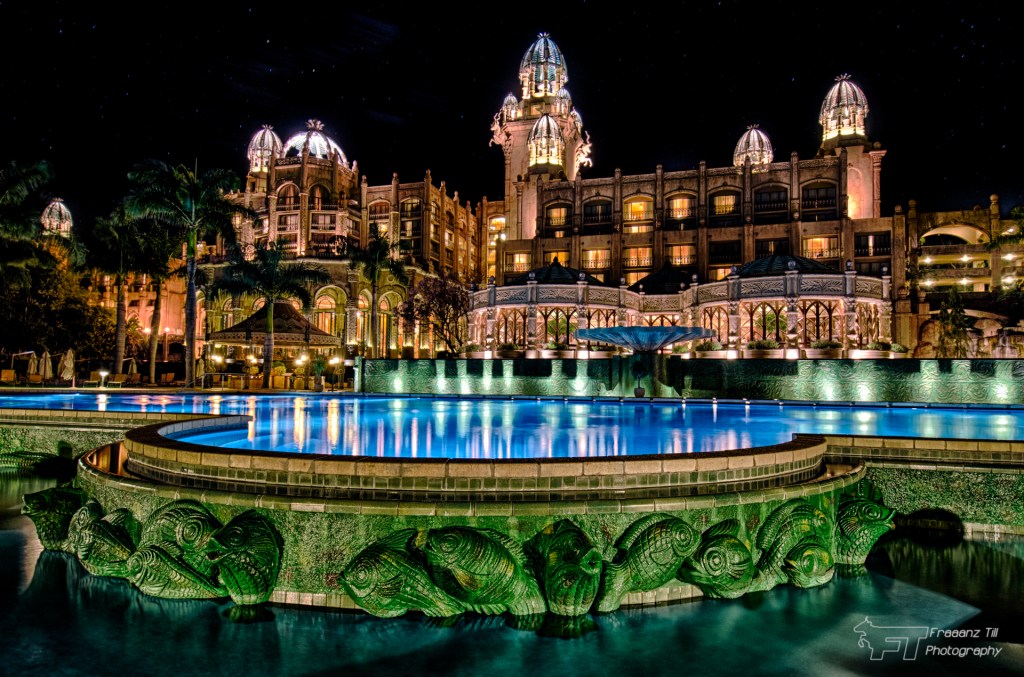
The casino is well-known for its gambling activities, but for nighthawks the complex offers a variety that will satisfy most. Dancers will enjoy the Encore, but those who just want to hang out with friends and may some pool in between, Vibes is the place for you. The review bar offers adult entertainment for those that are so inclined.

7 – Bird watching at Manyane

The Manyane Resort in Pilansberg is ideal for the pioneering type of tourist, those who won’t mind staying in thatched chalets or canvas tents. Daily activities include self-guided or ranger guided bird and game watching hikes. There is no shortage of fun activities like mini golf and is an ideal spot if the kids came along.

6 – Rovos Rail Golf Safari to Sun City

A trip by Rovos Rail offers a rather unique opportunity to get to your Pilansberg destination of the ‘beaten track’, so to speak. If luxury and good food is your style, this train trip is ideal for game viewing from a different angle. The trip is concluding with a visit to the Sun City and it is part of Rovos’s Golf tour safari packages.

5 – A meal at the Zebra Crossing

Apart from amazing food on the menu, the restaurant offers spectacular game viewing that can include, giraffes, warthogs, elephants and yes, zebras. It is the ideal stopover for lunch if you don’t mind to watch out for weird looking birds trying to steal food from your plate.

4 – The Gary Player Country Club

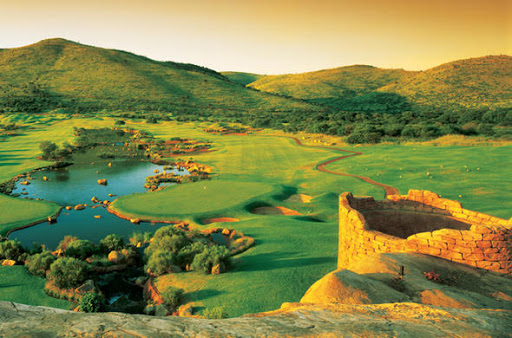
The world-famous Gary Player country club.

A visit to Pilansberg should include a round of golf at the world-famous Gary Player country club. It is an 18-hole par-72 course with a 5 km running trail. With its USA PGA specifications it rivals the best of the world and is also home to the annual Nedbank Golf Challenge. (It was formerly known as the Million Dollar Challenge). If you want to see the legends of golf in action, the best time to visit is November every year.

3 – Mankwe Dam and a hot air balloon flight

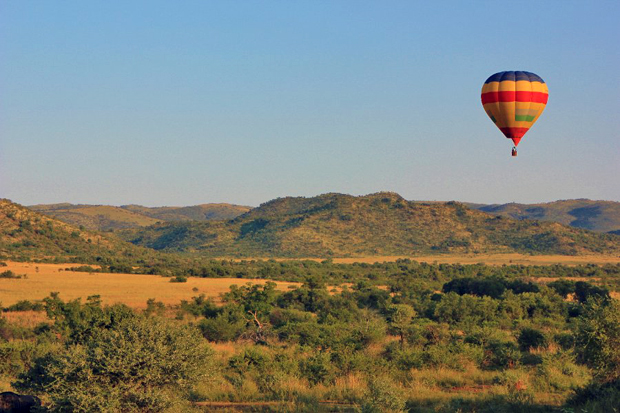
Mankwe hot air balloon

Apart from the natural beauty of the dam, Mankwe is more known for its hot air balloon trips. A trip will set you back in the region of ZAR4250.00 (March 2020), but will be well worth your while. Nothing beats the spectacular views from the air. Your trip will be concluded with some sparkling wine or orange juice on landing and an enjoyable game viewing drive back.

2 –Maze of the Lost City

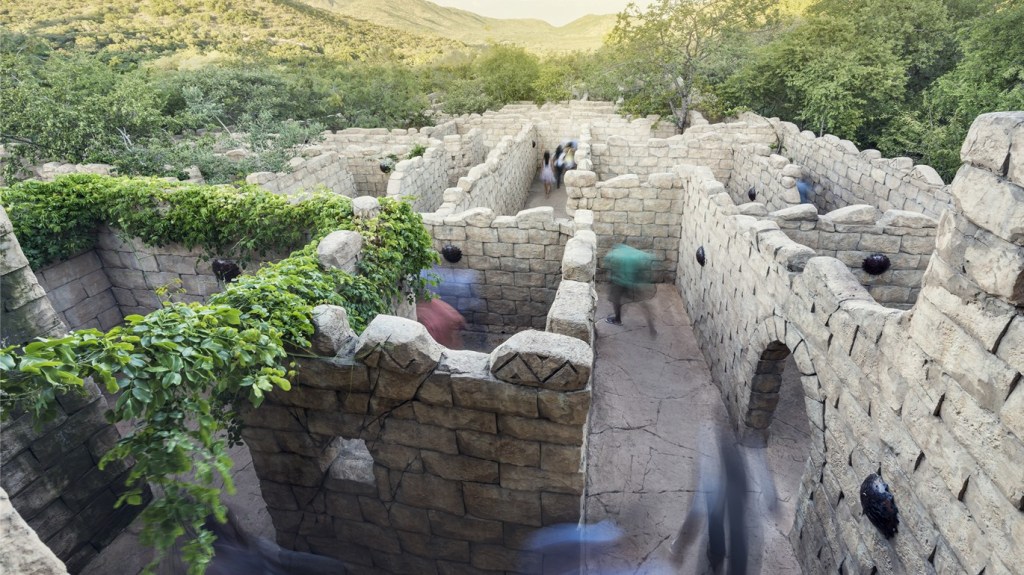
Blurred image of people walking through the maze at Sun City Resort

The Maze of the Lost City is an artificially created illusion of an ancient archeological discovery. Constructed from artificial stone and wood it is accessible via a 100-meter-long suspension bridge. It offers some spectacular views of the resort and the surrounding areas. At night flaming torches light the path to the maze bar which always has cold craft beer on tap. Entrance fees is set at ZAR140.00 for an adult. (March 2020)

1 – Game drive in Pilansberg National Park

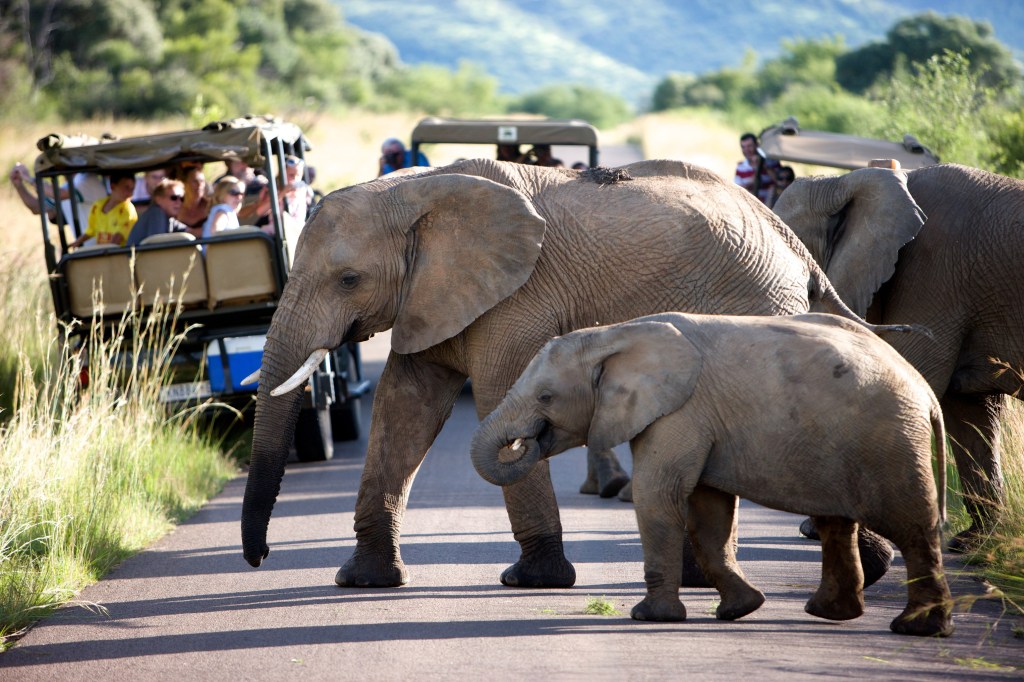
Pilanesberg National Park Game Drive.

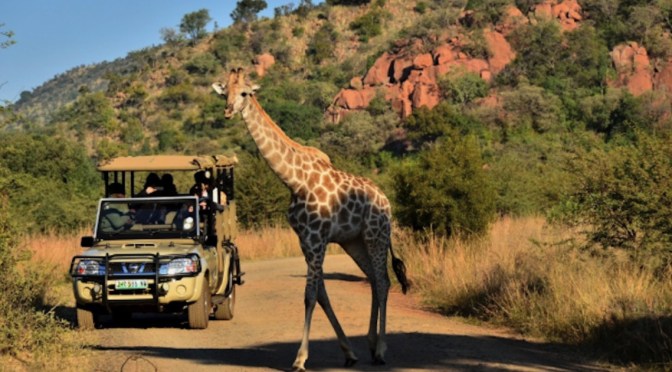
Top of the list is undoubtedly a game drive in the Pilansberg National Park. The park was established in 1979 in what was called ‘Operation Genesis’ at the time. Some 6000 animals were relocated to the park! That included four of the big five. Lions was successfully introduced in to the park in the 90’s. The result is a spectacular game viewing experience in an open safari vehicle. There are a large variety of lodges each with its own game viewing schedules to choose from.

Other Noteworthy Tourist Attractions in Pilansberg

Vaalkop Dam Nature Reserve

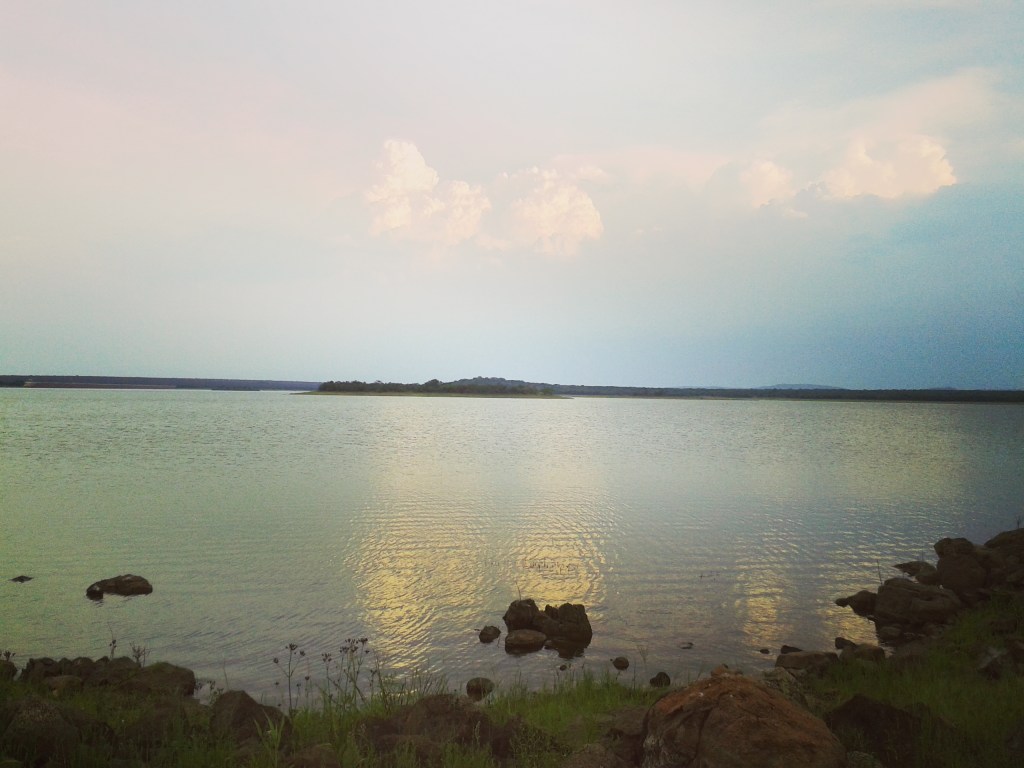
The dam is only 30 kilometers from Sun City and is an ideal spot for canoeing and fisherman. It is a birdwatcher’s paradise which include species like the spotted eagle-owl, the barn owl and the African crake amongst others. Hiking, cycling and boat rides are also on offer.

Royal Bafokeng Stadium

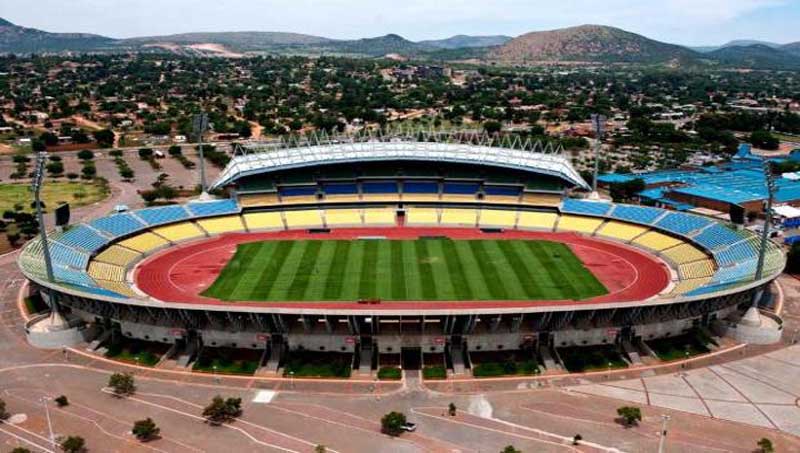
The stadium is the only community owned stadium in South Africa. Located in the town of Rustenburg, on your way to Pilansberg, it is well worth a stopover. The stadium was built in 1999 in preparation of the FIFA WORLD CUP that was hosted by South Africa. It is home to the Platinum Stars Football Club.

Motseng Cultural Village

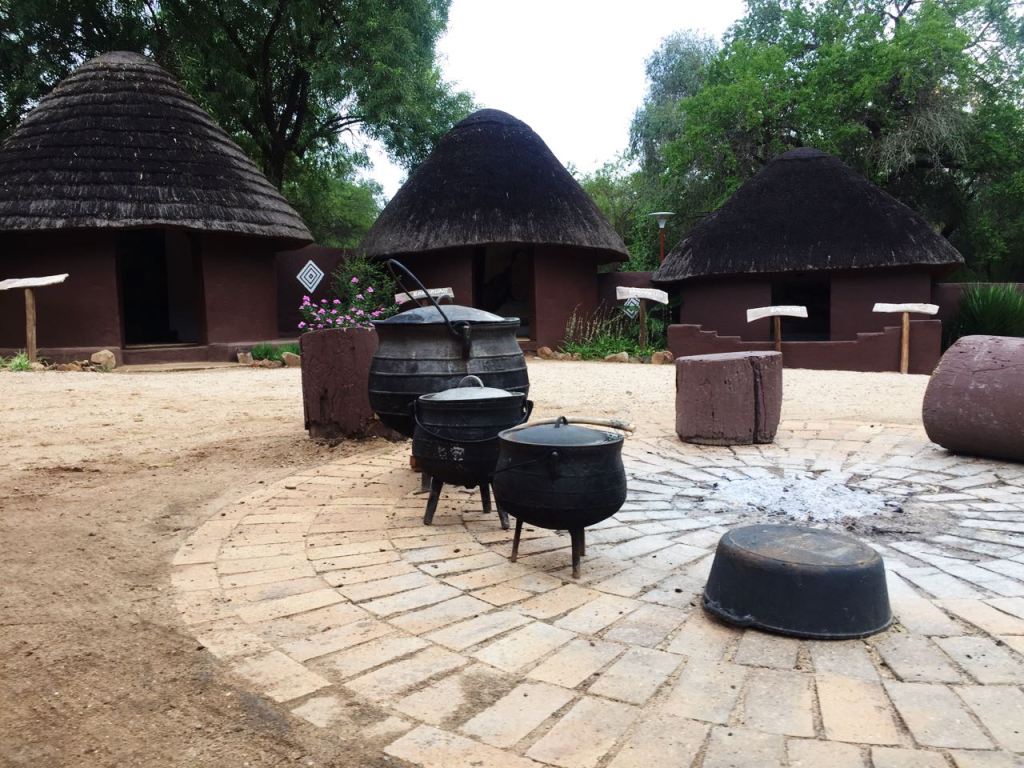
The village is within walking distance of the Sun City Resort in Pilansberg. It is the place to experience African (Tswana) culture, tradition and customs. Tourist will be treated to traditional song and dance and a true traditional African meal.

Historic Rustenburg

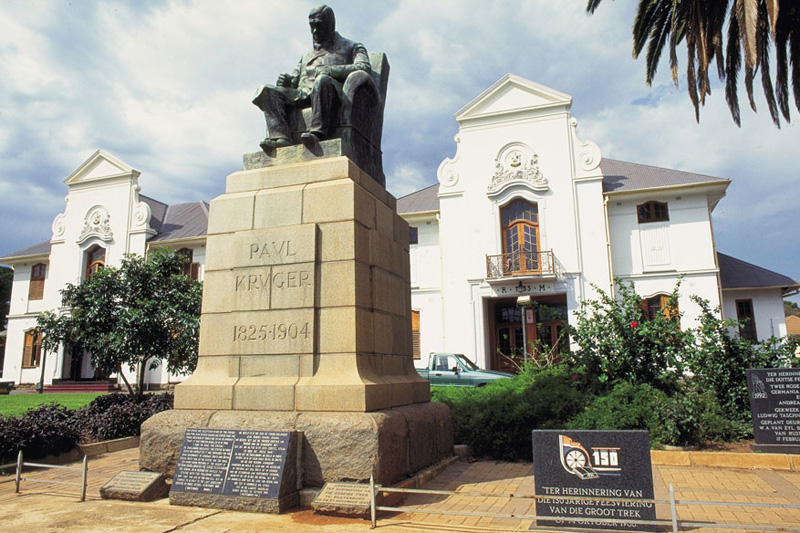
Rustenburg with its historic buildings is worth a visit, but the best is to travel with a tour guide. Try to avoid taxi ranks and congested areas while visiting. The city features a list of historic buildings and landmarks. Amongst those are the Lutheran Church and school, other historic churches, the Kruger statue, the Syringa Tree Stump Monument and the Gandhi Memorial.

Pilansberg Quad biking Adventure

Quadbiking

For the biking enthusiasts a quad biking adventure should be on your agenda. The adventure trail takes place in the Letsatsing Game Park. The tours depart from the Sun City Welcome Center.  An experienced tour guide will accompany you on this game viewing trip which has a duration of between 1 to 2-hours.

Join Falcon Safari’s Top Tour to Pilansberg (South Africa)

Falcon Safari is one of the leading and most trusted tour operators in Africa. Book your trip to Pilansberg (South Africa) today.

Touring the Pilansberg and Sun City will be a memorable experience with the South Africa of yesterday, today and tomorrow interwoven.

ENJOYED THIS BLOG?

Let us know in the comments below. We would love to hear from you.

                        ****************
Travel Namibia – Top Tourist Attractions in Namibia, Namibia Facts & Best Namibia Travel Information

Travel NamibiaTop Tourist Attractions in Namibia, Namibia Facts & Best Namibia Travel Information

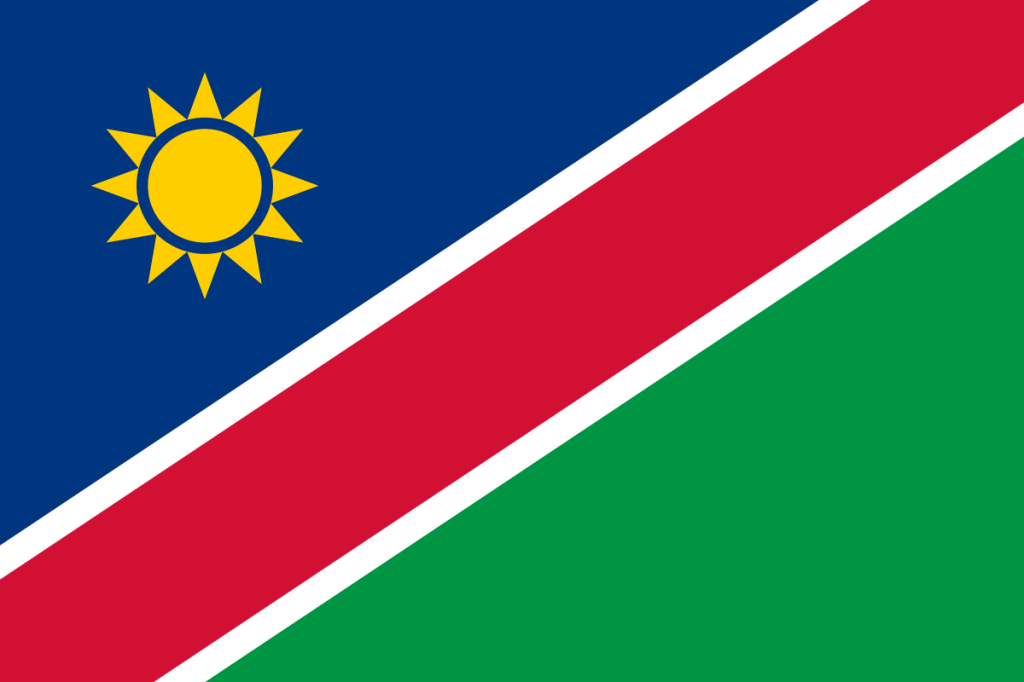
The Namibia Flag
Namibia Population: 2,606,971 (2017)
Namibia Capital City: Windhoek
Namibia GDP: $27.505 billion
Namibia Currency: Namibian Dollar (NAD) and South African Rand (ZAR)
Namibia Time Zone: UTC +2 (CAST)
Namibia Driving Side: Left
Namibia Calling Code: +264

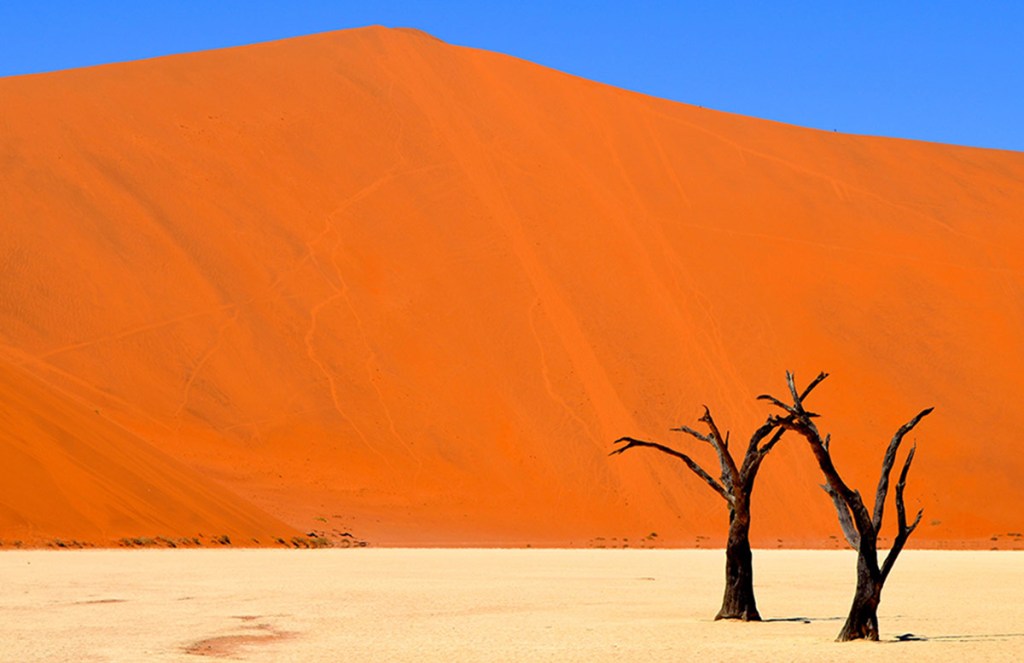
A trip to Namibia, the country where mysteriously stranded boats line the Skeleton Coast, and the red sand dunes of the Namib desert stands gracefully tall against the blue sky, is the experience of a lifetime.  

If you’ve ever thought of visiting Namibia, there is no time such as the present to do so. Many a visitor find Namibia to be a country with a raw and rare beauty that is so breathtaking, it leaves the mind in awe and the heart forever changed.

In this short but comprehensive guide to travel Nambia, you’ll find information featuring the top tourist attractions in Namibia, visa info, the best time to travel to Namibia, a short history of Namibia, as well as top tour package suggestions.

Get your safari pants ready, your camera batteries charged, and hop on that plane to Namibia!

A SHORT-COMPREHENSIVE GUIDE TO TRAVEL NAMIBIA

Where is Namibia?

The Republic of Namibia is a Southern African country, which borders South Africa on the east and south, Zambia and Angola to the north, and Botswana to the east.

5 Interesting Facts of Namibia

  • Namibia is the driest country in Sub-Saharan Africa and does not receive more than xxx rainfall per year.
  • Namibia was first inhabited by the San people, Damara and Nama, but in the 14th century, Bantu speaking people immigrated to the area and is today the majority.
  • Tourism contributes majorly to the Namibian economy. Up to 14.5% of the GDP is derived from tourism.
  • Namibia is known as a prime ecotourism destination, with the Namib desert known as a must-see.
  • Extreme sports such as skydiving, 4 x 4 trips through the Namib desert, and sandboarding are top tourist attractions in Namibia.

Visa for Namibia

Getting a visa for Namibia is pretty straight forward. Tourist, business, and other short- and long-term visas are available to tourists, diplomats, and business people who have a valid passport with a minimum of 6-month validity.  

Visa for Namibia – Exempt Countries

Validity: 3-Months within 1-Year

Visitors who hold ordinary passports and originate from any of the below-listed countries can enter Namibia without a visa.

  • Angola
  • Armenia
  • Australia
  • Austria
  • Azerbaijan
  • Belarus
  • Belgium
  • Botswana
  • Brazil
  • Canada
  • Cuba
  • Denmark
  • Eswatini
  • Finland
  • France
  • Germany
  • Hong Kong
  • Iceland
  • Indonesia
  • Ireland
  • Italy
  • Jamaica
  • Japan
  • Kazakhstan
  • Kenya
  • Kyrgyzstan
  • Lesotho
  • Liechtenstein
  • Luxemborough
  • Macao
  • Malaysia
  • Malawi
  • Mauritius
  • Moldova
  • Mozambique
  • Netherlands
  • New Zealand
  • Norway
  • Portugal
  • Russia
  • Seychelles
  • Singapore
  • South Africa
  • Spain
  • Sweden
  • Switzerland
  • Tajikistan
  • Tanzania
  • Turkmenistan
  • Ukraine
  • United Kingdom
  • United States
  • Uzbekistan
  • Zambia
  • Zimbabwe

Visa for Namibia – Visa On Arrival

Validity: 3-Months

Cost: N$1,000 (USD $28 – 30)

The main entry points into Namibia is Hosea Kutako International Airport or Walvis Bay Airport where visitors can obtain a 3-month Visa on Arrival for Namibia. Countries that qualify for a Namibia Visa on Arrival:

  • Benin
  • Bulgaria
  • Burkina Faso
  • Burundi
  • Cape Verde
  • Cambodia
  • Cameroon
  • Central African Republic
  • Chad
  • Chili
  • Comoros
  • Cote d’Ivoire
  • Czech Republic
  • Djibouti
  • Equatorial Guinea
  • Eritrea
  • Gabon
  • Gambia
  • Guinea
  • Guinea-Bissau
  • Hungary
  • Liberia
  • Madagascar
  • Mexico
  • Nicaragua
  • Nigeria
  • Poland
  • Romania
  • Rwanda
  • Sao Tome & Principe
  • Sierra Leone
  • Slovakia
  • South Korea
  • Thailand
  • Togo
  • Tunisia
  • Turkey
  • Uganda
  • United Arab Emirates
  • Venezuela
  • Vietnam

Visa for Namibia – African Passport Holders

The government of Namibia is said to soon introduce Visa on Arrival for all African passport holders. African passports will be issued to citizens of most of the African countries on the African continent to out phase the need for Africans to obtain a visa for the 55-states in Africa. This initiative is similar to the European Union and was first launched on 17 July 2016 in Kigali, Rwanda.

The Capital of Namibia

Windhoek is the capital city of Namibia and is situated right in the middle of the country in the Khomas Highland plateau area. It is also the largest and most densely populated city in Namibia, with 325,858 people calling it home.

The capital city of Namibia was first settled by indigenous pastoral communities since the area was known for its permanent hot springs. In 1840, a Captain of the Orlam by the name of Jonker Afrikaner settled here and built a stone church. Since then, Windhoek has grown into what it is in modern times today.

Namibia Population

After Mongolia, the Namibia population is known to have the second-lowest population density in the world. According to a 2017 survey, there are on average 3.08 people per km2. In total, the Namibia population is only 2,6 million (2017).

A Short History of Namibia

German South-West Africa, (as Namibia was known in the 18th century), was annexed by German Chancellor Bismarck in 1884, and declared a German Colony. That was done on the advice of Adolf Lüderitz, the founder of the small, coastal town of Namibia, Lüderizbucht.

The Germans feared British colonialization following the annexation of the main harbor town Walvisbay in 1878. Namibia’s local tribes, the Herero’s and Namaqua’s, fought a gallant war against the Germans but were no match for their superior weaponry.

During World War I, South Africa invaded the territory in 1915 and occupied Namibia on behalf of the British Commonwealth. The occupation lasted some 75 years.

The first 50 years were relatively peaceful, but during the final years before Namibia claimed independence, it became an all-out struggle between South Africa and SWAPO, the countries biggest liberation movement.

Namibia gained independence on 21 March 1990 under the leadership of Sam Nujoma, who also became the countries’ first president.

In 1994, the ‘lost’ territories of Walvisbay and the adjacent twelve small islands were handed back as well.

The Best Time to Travel Namibia

The best time to travel Namibia is during the winter and spring months, which is from June to October. Since Namibia can get quite hot, traveling between June to October is advised, since the temperatures are then around 18 – 26 degrees Celsius, depending on where you’re traveling.

Day time in Namibia is extremely pleasant during winter and spring, but night times can be cold, as is prone in desert type climates. It’s best to pack both short-sleeve and warmer clothes.

Is Namibia Safe to Travel?

Yes, Namibia is safe to travel. Comparted to other war-torn or dangerous countries in Africa, Namibia is one of the few countries on the continent with a politically stable government and where it’s safe for tourists to travel.

That said, there are the usual safety concerns and precautions everyone should take when traveling in Namibia, as would apply in any country in the world.

How To Stay Safe While You Travel In Namibia:

  • Join an organized tour with a known tour operator.
  • Do not drive around at night by yourself.
  • Avoid dark alleys or unknown, unsafe looking areas in towns/cities.
  • Stay in a group rather than traveling alone.

Map of Namibia

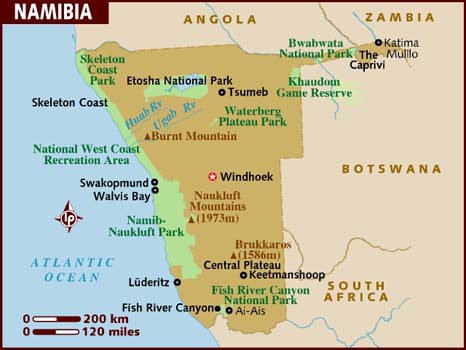
A map of Namibia. Note the location of Windhoek, the capital city of Namibia with a population of 325,858 people. Windhoek is situated at the very center of the country.

The Top 10 Tourist Attractions in Namibia

10 – Epupa Falls

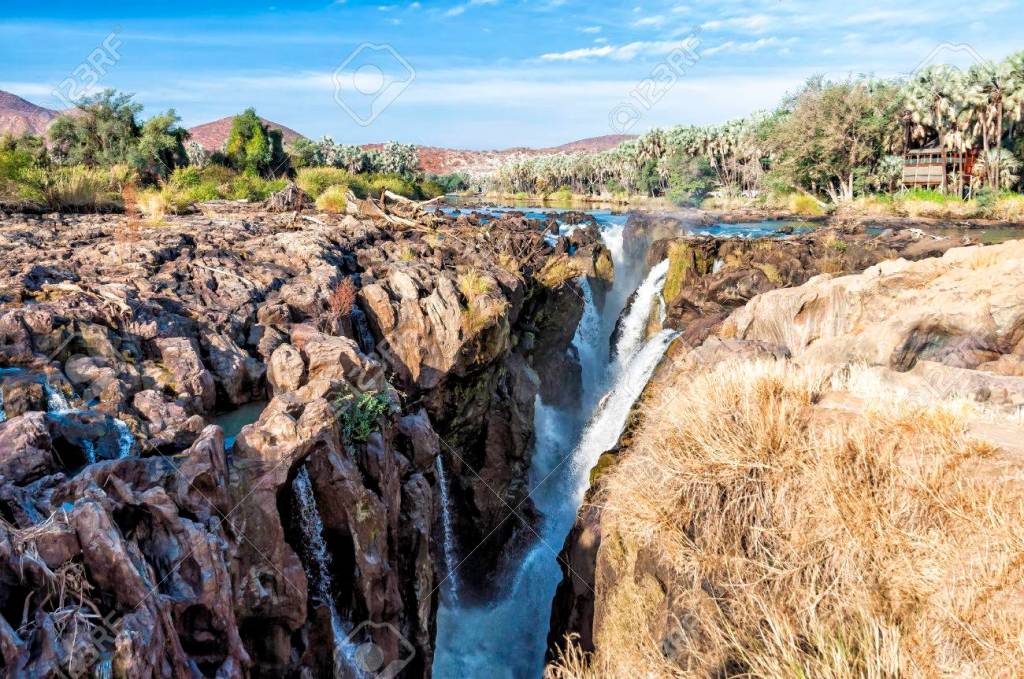
The Epupa Falls (also known as Monte Negro Falls in Angola) are created by the Kunene River on the border of Angola and Namibia, in the Kaokoland area of the Kunene Region. The river is 0.5 km wide and drops in a series of waterfalls spread over 1.5 km, with the greatest single drop being 37 m. The name “Epupa” is a Herero word for “foam”, in reference to the foam created by the falling water. https://en.wikipedia.org/wiki/Epupa_Falls

At the border between Angola and Namibia is the Cunene River. It’s here that the beautiful Kaokoland area of the Kunene Region of Namibia is situated, and where the 0.5 km wide Cunene River gives birth to the Epupa Falls spreading to over 1.5 km. The highest drop point is 37 meters.

Accommodation: Kapika Waterfall Lodge, Omarunga Camp Lodge, Epupa Camp Lodge & Epupa Falls Campsite Lodge

Popular Activities: Guided tours to the Epupa Falls and Himba Villages, whitewater rafting, bird watching, crocodile watching excursions, sightseeing the famous Baobab, and Mopane trees.

9 – Twyfelfontein

Image result for twyfelfontein

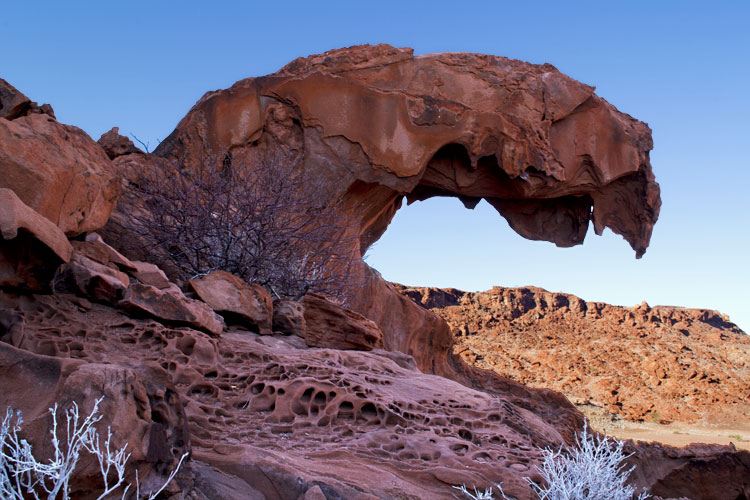
Twyfelfontein is home to one of the world’s largest concentrations of rock petroglyphs in Africa, and is a protected UNESCO site. Even if you’re not into rock art, you’ll find the Twyfelfontein rock art site situated in what was formerly known as Damaraland (today Kunene), absolutely breathtaking. The rock art is located in a valley that is flanked by a stunning sandstone mountain, with an aquifer that runs underground where a spring originates. It’s this spring from which Twyfelfontein (translated Doubt Spring) then also got its name. Twyvel in the Afrikaans language means ‘doubt,’ and fontein refers to ‘spring.’ Many thus speculate that the spring got its name due to the area receiving minimal annual rainfall (<150 mm per year).

8 –  Skeleton Coast

Image result for skeleton coast

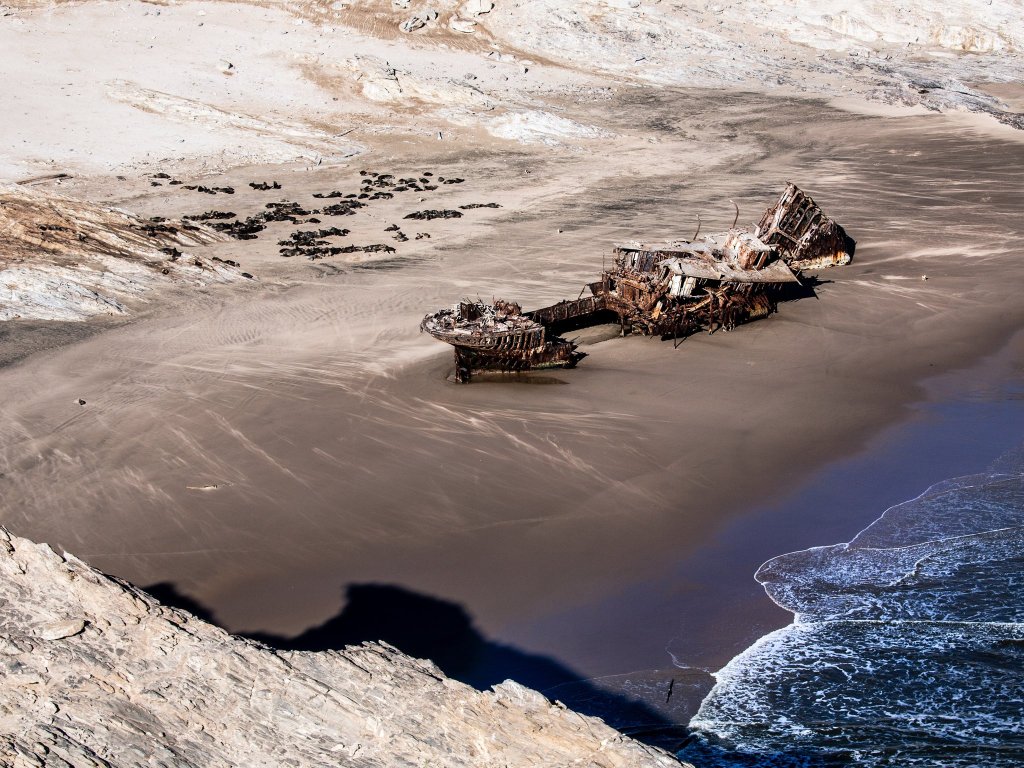
A trip to Namibia is incomplete without visiting the world-famous Skeleton Coast. The Skeleton Coast is also a national park and includes the 500 km coastal strip on the western part of Namibia. It is a barren, desolate desert coastal area with unique beauty. During autumn (May to June), the area covered in rolling fog, which may give a visitor a spooky chill along the spine. Autumn tends to be windy and is not ideal for wildlife viewing.

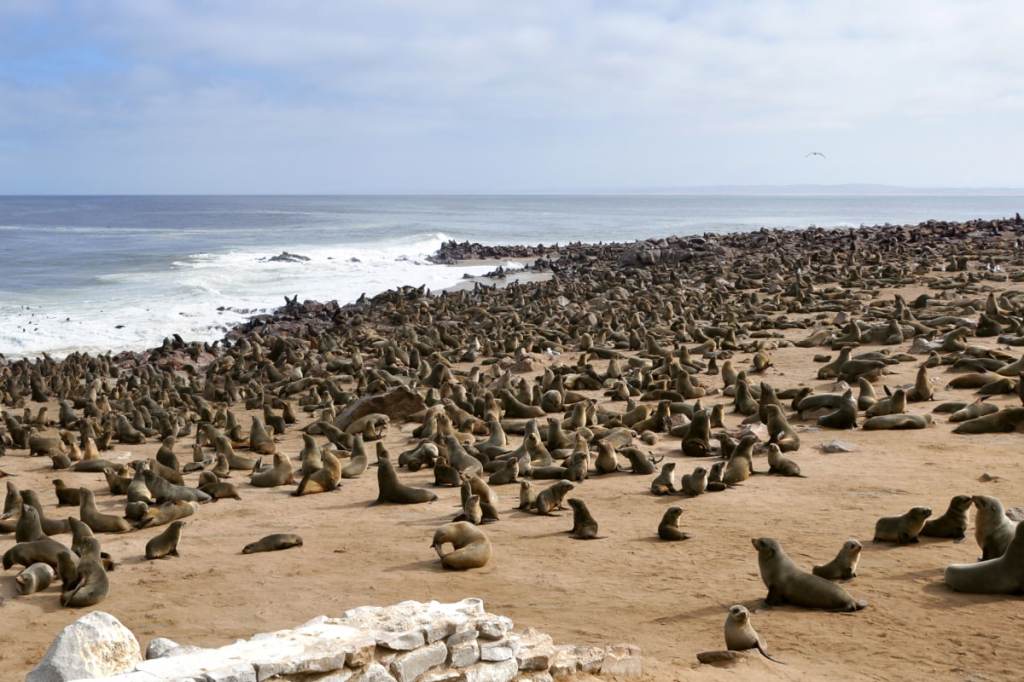
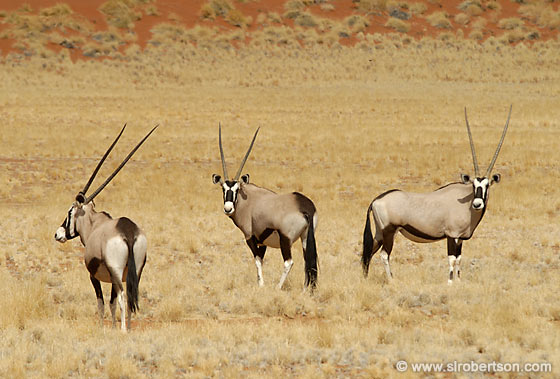
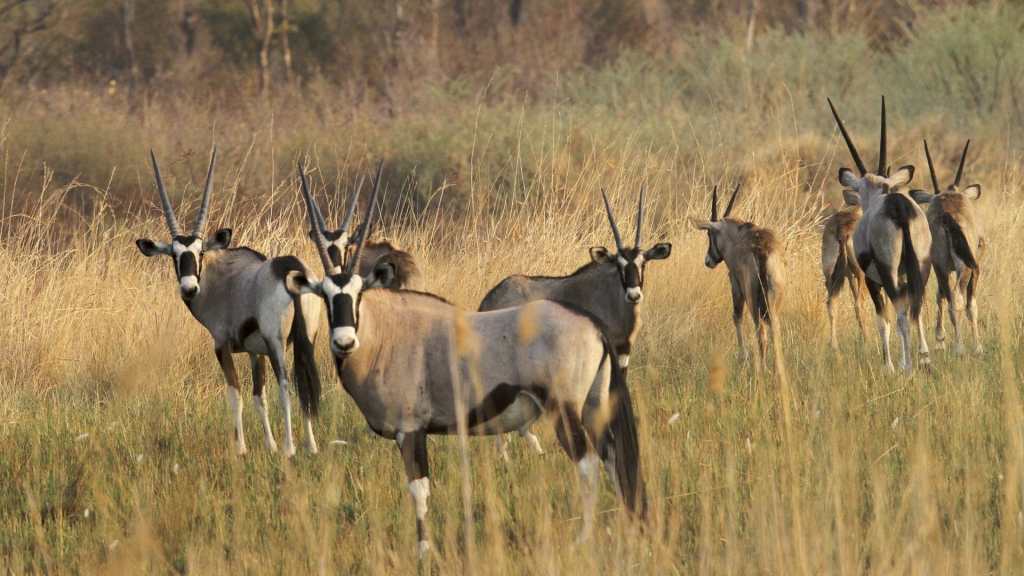
Close to river mouths and surrounding areas, wildlife is found at regular intervals. Amongst the wild, you will find Kudu, Springbok, and even Oryx. The brown hyena forms the clean-up crew. Amongst the birdlife, you can expect to see Ostridge and white pelicans as the most common amongst others. Marine life consists of large colonies of Cape Fur Seals and the occasional dolphins.

7 – The Caprivi Strip

Image result for caprivi strip

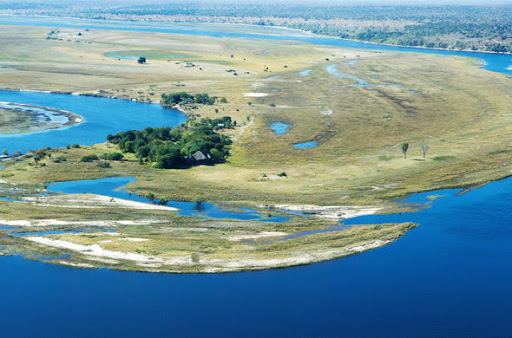
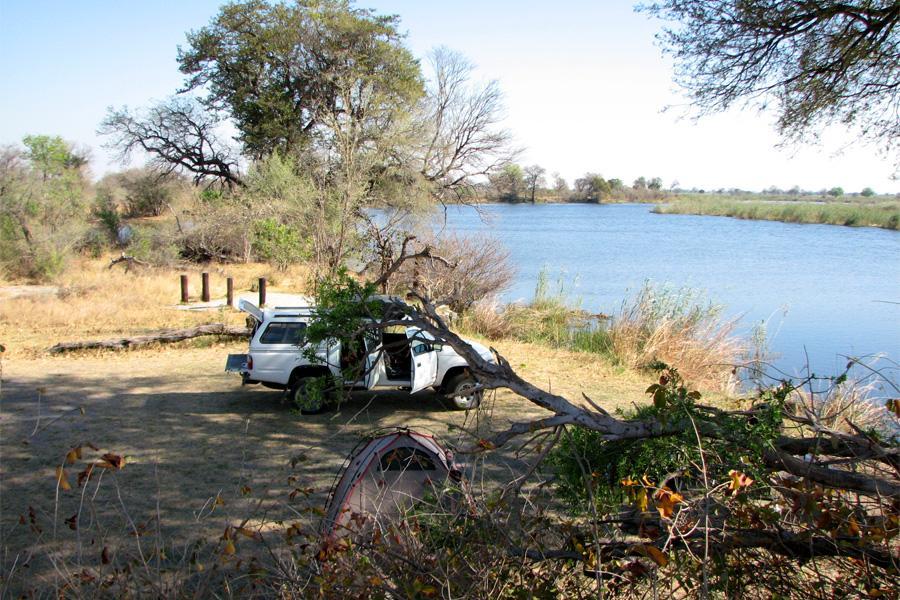
The Caprivi Strip (Caprivizipfel in German or Okavango Strip during colonial times), a salient (elongated protrusion not surrounded by water) of Namibia, starts in the north-east and protrudes east for close to 450 km (280 miles). On its southern flank, you’ll find Botswana, and north, Angola and Zambia. Zimbabwe borders its eastern tip for only about 100m. The Caprivi Strip is a spectacularly beautiful natural area, with various wildlife living there, including the critically endangered Wild African Dog.

6 – Swakopmund

Image result for swakopmund

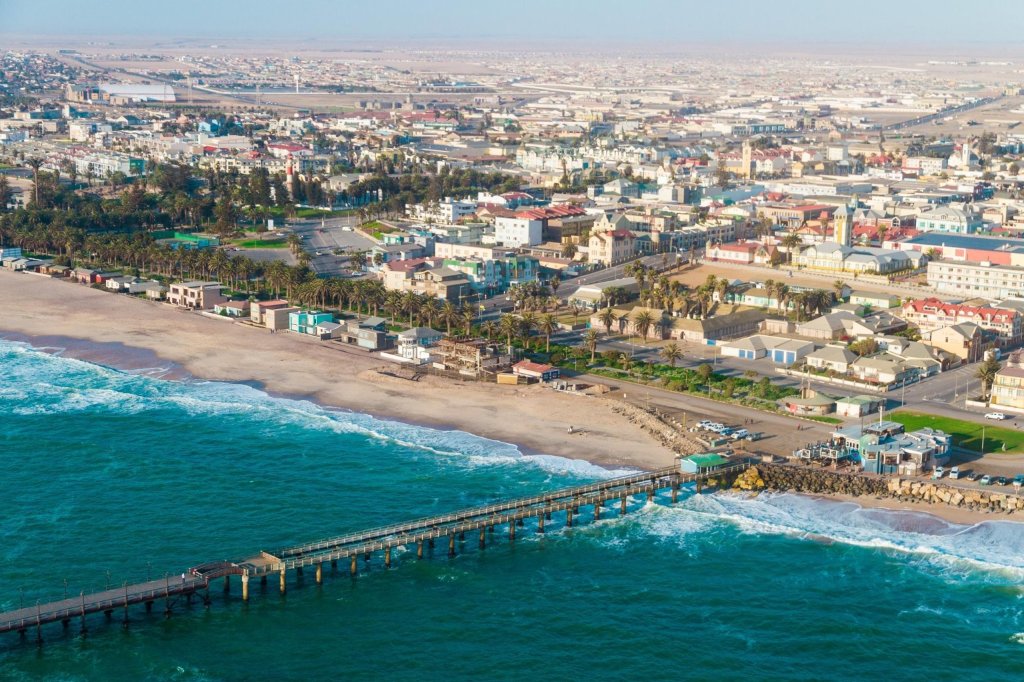
The coastal town of Swakopmund is situated about 200 km from the Skeleton Coast but is a worthwhile destination. Swakopmund is well-known for the Namibian national flower, the Welwitschia, and its so-called moon landscape areas.

5 – Cape Cross

Image result for cape cross

On the west coast of Namibia, you’ll find Cape Cross, a small headland in the South Atlantic, Skeleton Coast. One of the worlds’ largest colonies of Cape fur seals calls Cape Cross home, which is today a protected area and reserve.  Visitors will be amazed at the thousands of seals. Wow!

4 – Fish River Canyon

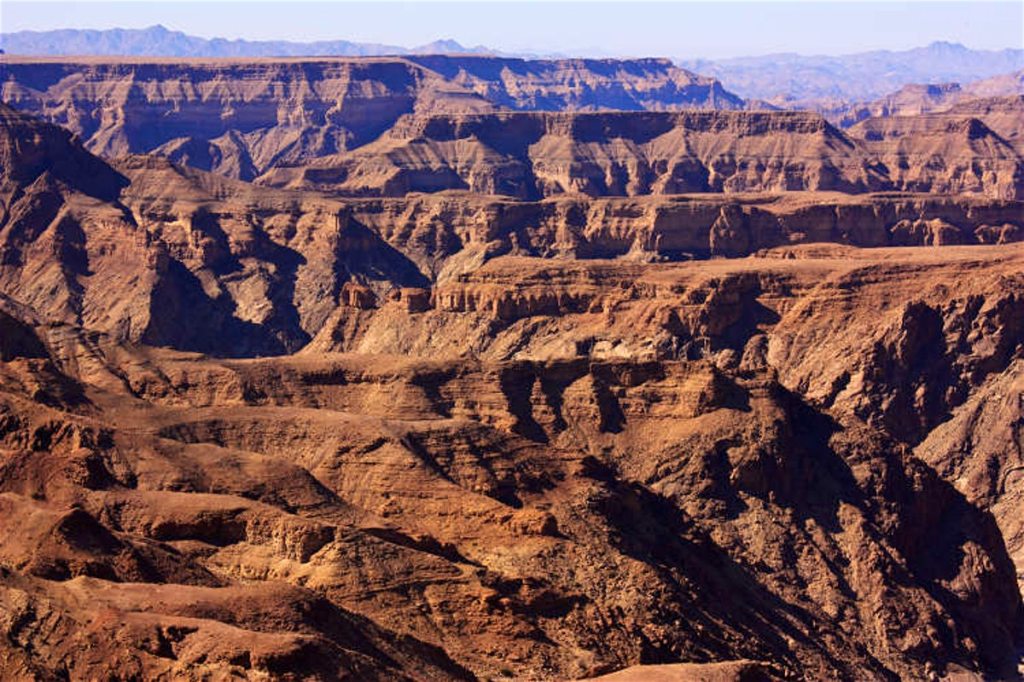
Known as the largest canyon in Africa, the Fish River Canyon of Namibia is a definite must-visit, and can stall among the giants of the world, including the famous Grand Canyon of North America. Situated in the south of Namibia, a mammoth ravine of 160 km (100 miles) runs deep through the dry, stone plateau. The canyon is 27 km wide and at it’s deepest points, 550 m deep. The longest river in Namibia, the Fish River (650 km), floods in the summer months and flows intermittently until it joins the Orange River of South Africa, 100 km from the Atlantic Ocean.

3 – Etosha National Park

Image result for etosha national park

One of the largest salt pans on earth (so big it can be seen from space), is located in the Etosha National Park of Namibia. Situated in the northwest of Namibia, the park covers an area of 22,270 km2, while the Etosha pan area is 4,760 km2, about 130km long, and 50 km wide. Do to hypersaline conditions, few species can survive or live there, but it’s worthwhile to note the discovery of extremophile micro-organisms that live comfortably in the pan’s salty ecosystem. During the summer season that brings rain, the salt pan fills briefly with water but is most often dry. A vast number of wildlife, including endangered animals, can be found at the Etosha National Park. Overall, an amazing experience of peace and tranquility for tourists.

2 – Circles of Namibia

Image result for circles of namibia

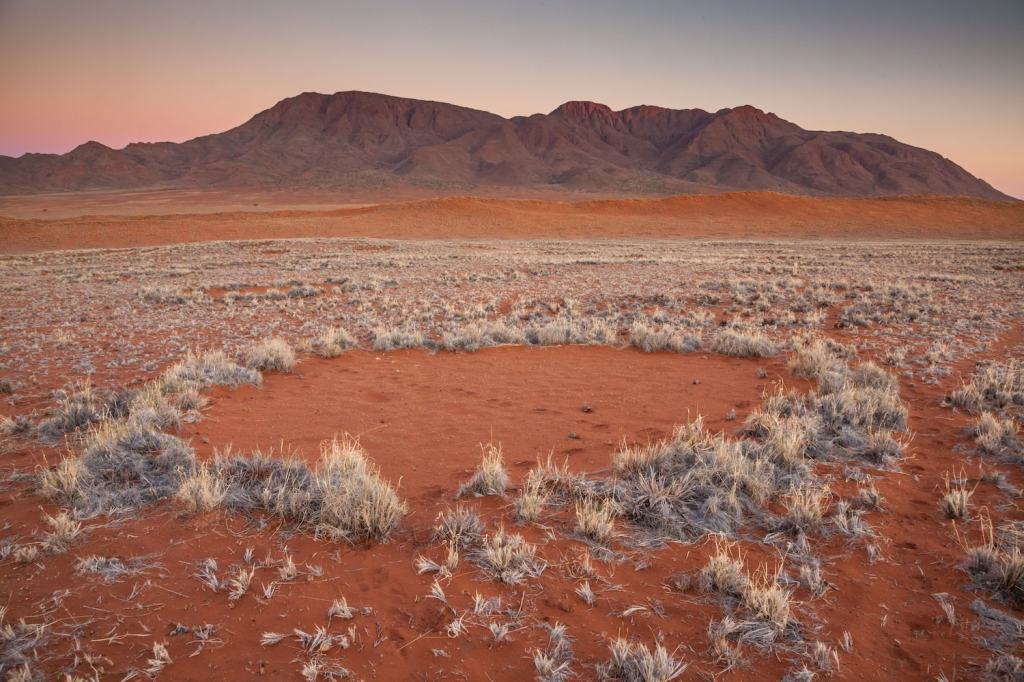
Within the Marienfluss valley of Namibia, the strangest circles can be found that have amazed and puzzled scientists for years. Dubbed the Fairy circles of Namibia, you’ll notice that circular forms line the monospecific grassy landscape in the Marienfluss valley, and is from 2 to 15 meters in diameter. Fairy circles only occur in two places in the world, namely Namibia and Pilbara, Western Australia.

1 – The Namib Desert, Including Sossusvlei, Spitzkoppe & Kolmanskop

Image result for namib desert

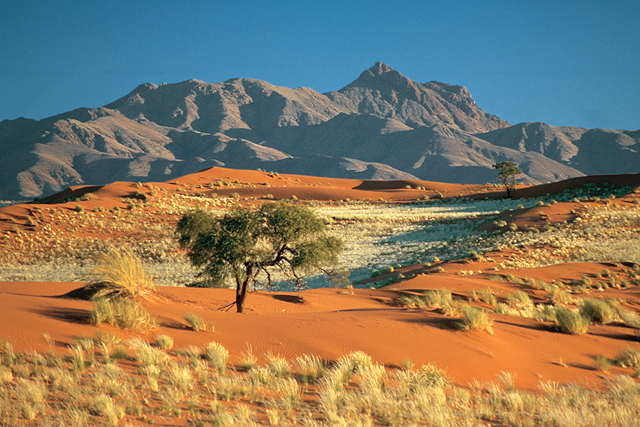
The word Namib is of Khoekhoegowab origin and means ‘vast place’, and rightly so. The Namib desert is a phenomenon and absolute must-see when visiting Namibia. The desert is an astronomical coastal desert that is 2,000 km in length, situated alongside the Atlantic ocean. It stretches over three countries, Namibia, Angola, and South Africa. It’s always been arid in this area, for almost 55 to 80 million years at estimate, and scientists think it might be the oldest desert in the world.

If you want to truly immerse yourself in a trip to Namibia’s famous Namib desert, ensure to set aside between 5 – 10 days since there is a treasure-trove of areas to see. These include visiting Sossusvlei, Spitzkoppe, and Kolmanskop.

Image result for sossusvlei

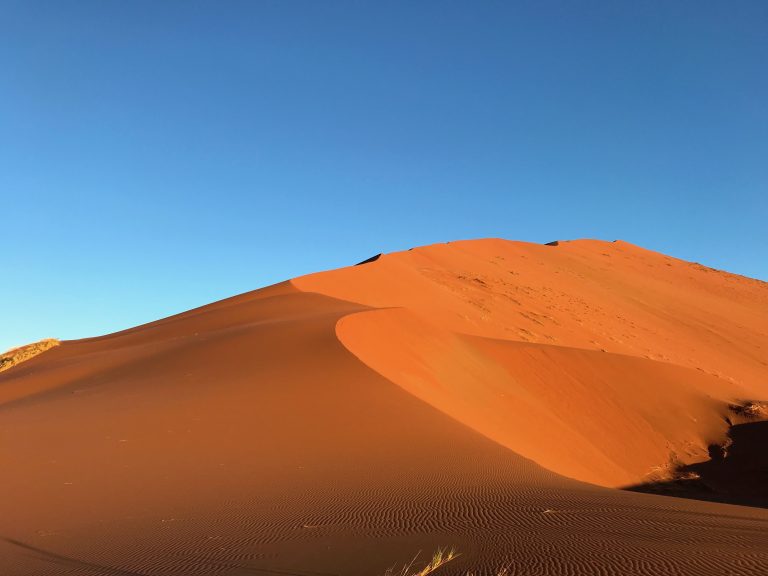
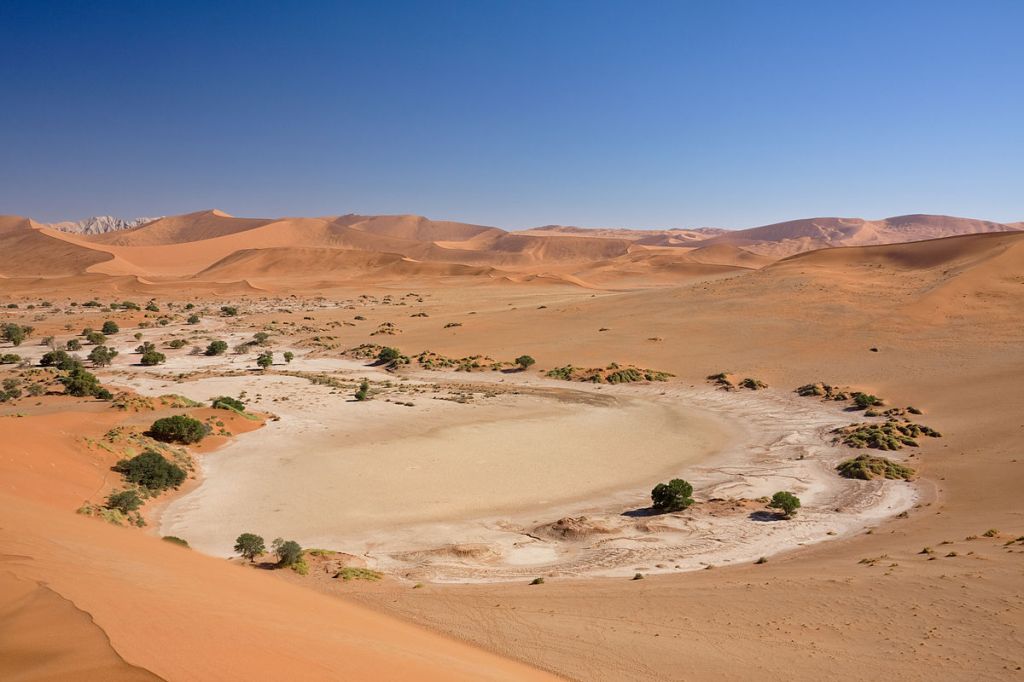
Sossusvlei, often referred to as ‘dead-end,’ is located in Southern Namibia. The area has flat clay pans and is surrounded by some of the highest dunes in the world. The dunes have a unique color ranging from pink to orange and a deep red. The famous Dune 7 is 400 meters in height and a challenge for man and machine. If you are reasonably fit, you can try and walk to the top.

Image result for spitzkoppe
OLYMPUS DIGITAL CAMERA

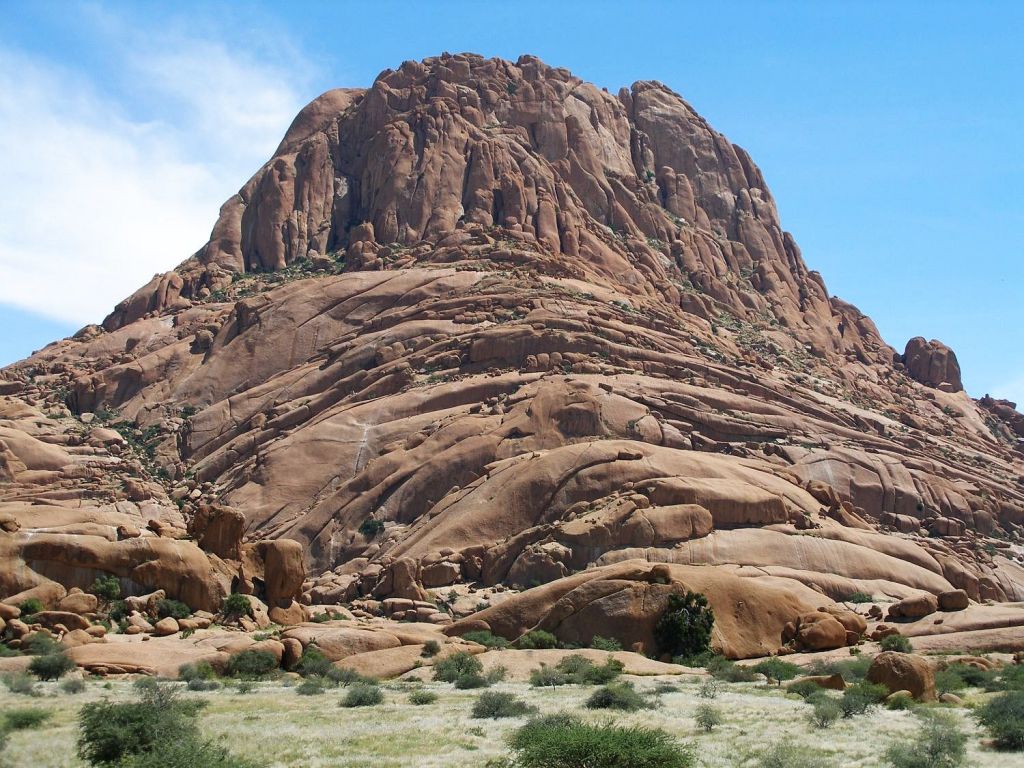
Spitzkoppe, a group of bald granite peaks, (otherwise known as inselbergs), are more than 120 million years old. The highest peak (kop) rises 1,728 meters above sea level and is located between Swakopmund and Usakos in the Namib desert.

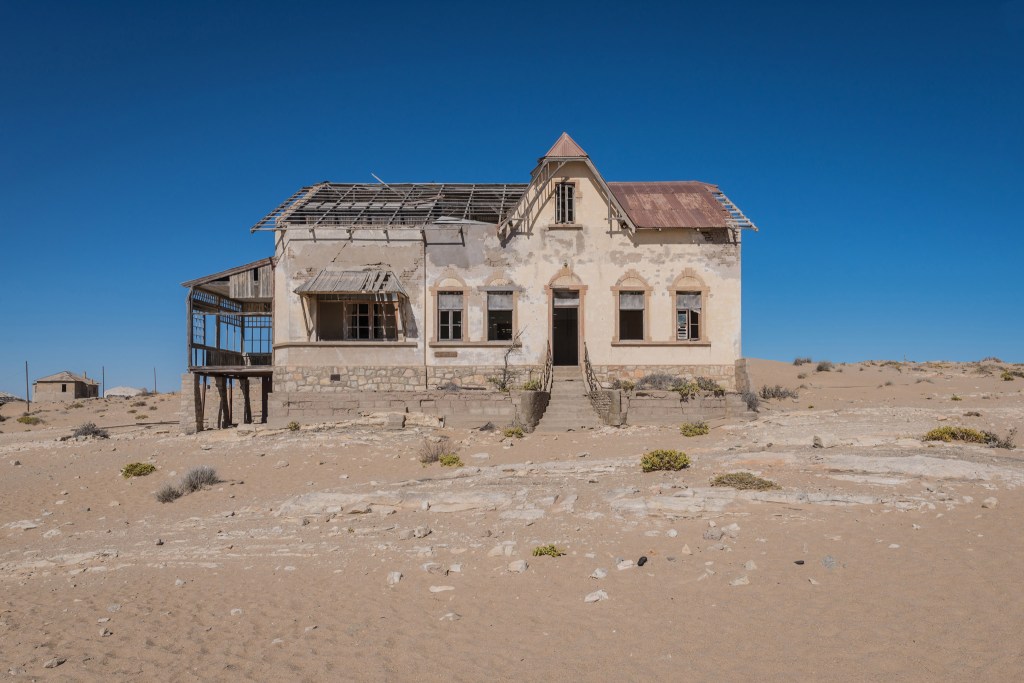
Eerily alone, hauntingly beautiful is Kolmanskop, a ghost town situated between the desert dunes of the Namib desert. Back in the day, it was a prospering mining town, but due to the decline of the diamond field and after World War II, more and more people left. Today, it is one of the top tourist attractions in Namibia while on a safari through the Namib desert.

Other Noteworthy Tourist Attractions in Namibia

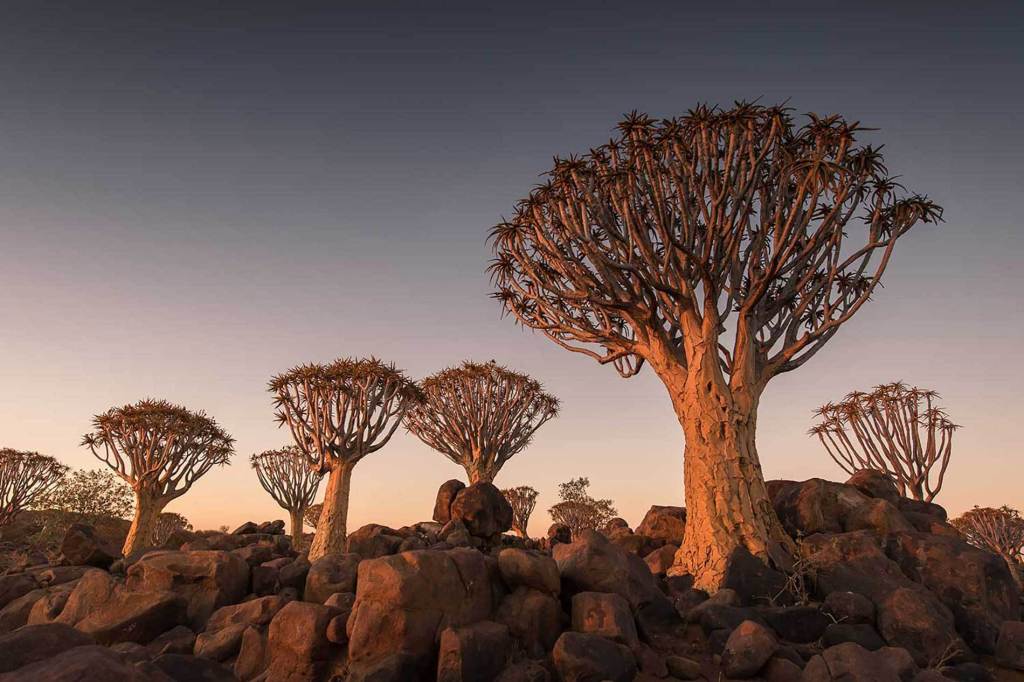
  • Quiver Tree Forest
Image result for quiver tree forest
  • Bwabwata National Park
Image result for bwabwata
  • Naukluft Mountains
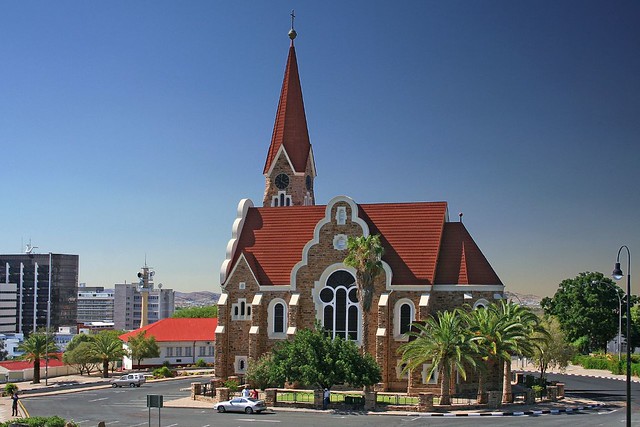
  • Christ Church in Windhoek
Image result for christ church windhoek
  • Nkasa Rupara National Park
Image result for nkasa rupara national park
  • Namib-Naukluft Nationalpark
  • Deadvlei
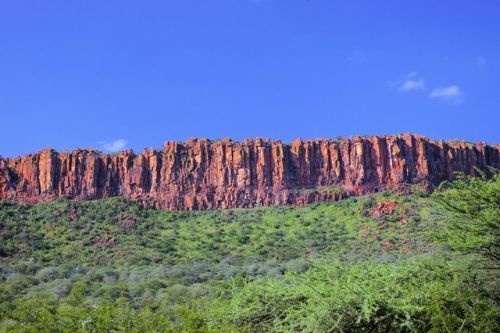
  • Waterberg Plateau Park
Image result for waterberg plateau
  • Brandberg Mountain
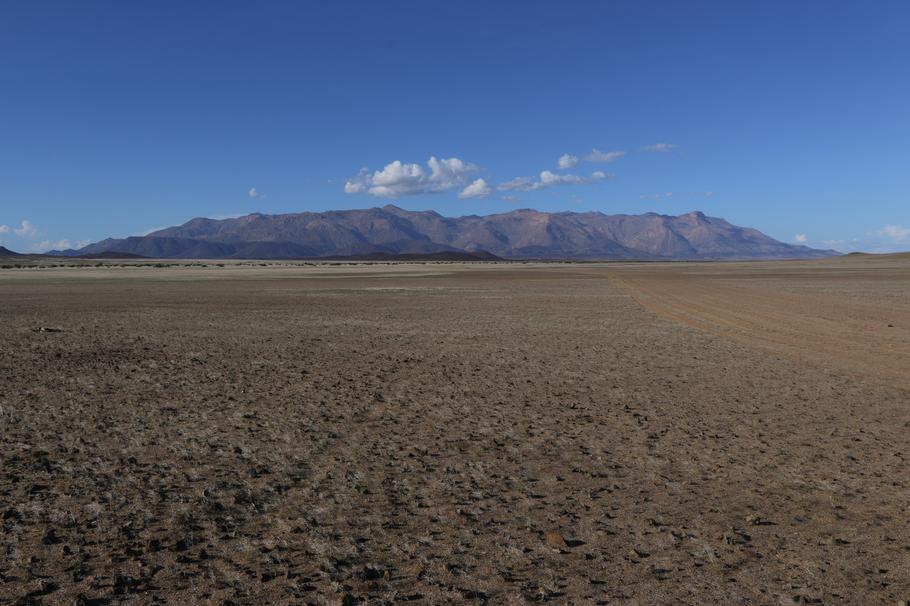
Image result for brandberg mountain
  • NamibRand Nature Reserve
Image result for namibrand nature reserve
  • Muduma National Park
Image result for mudumu national park
  • Sperrgebiet
Image result for sperrgeibit
  • Khaudum National Park

The Top Tours in Namibia

Falcon Safari is one of the leading and most trusted tour operators in Africa. Have a look at any of the Falcon Safari tour packages operated by Falcon Safari to Namibia listed below:


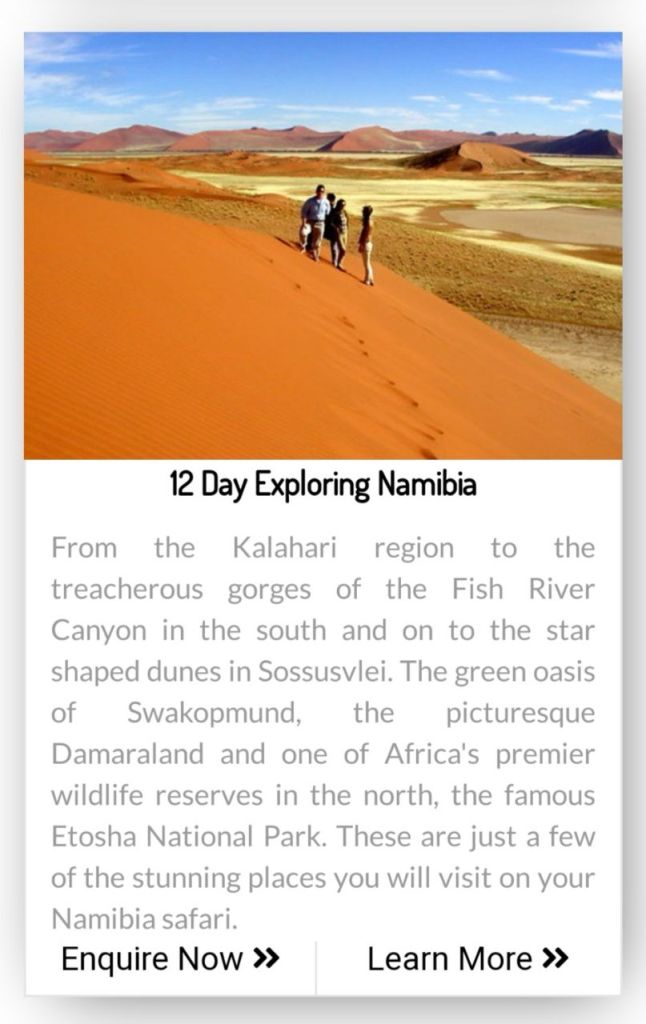
12 Day of Exploring Namibia.
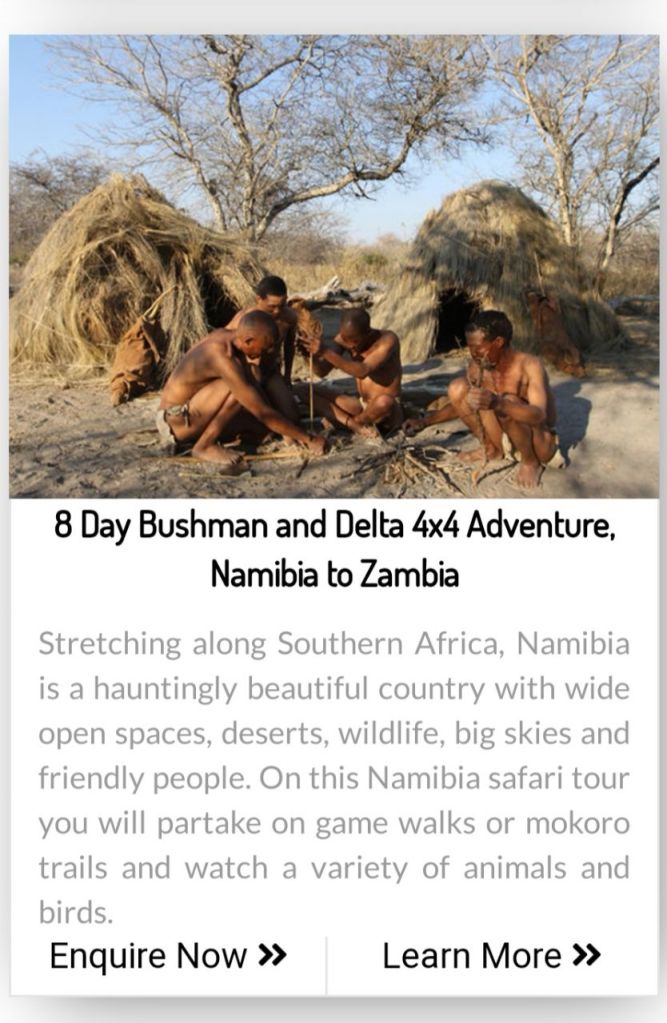
Knowing the Bushman Life
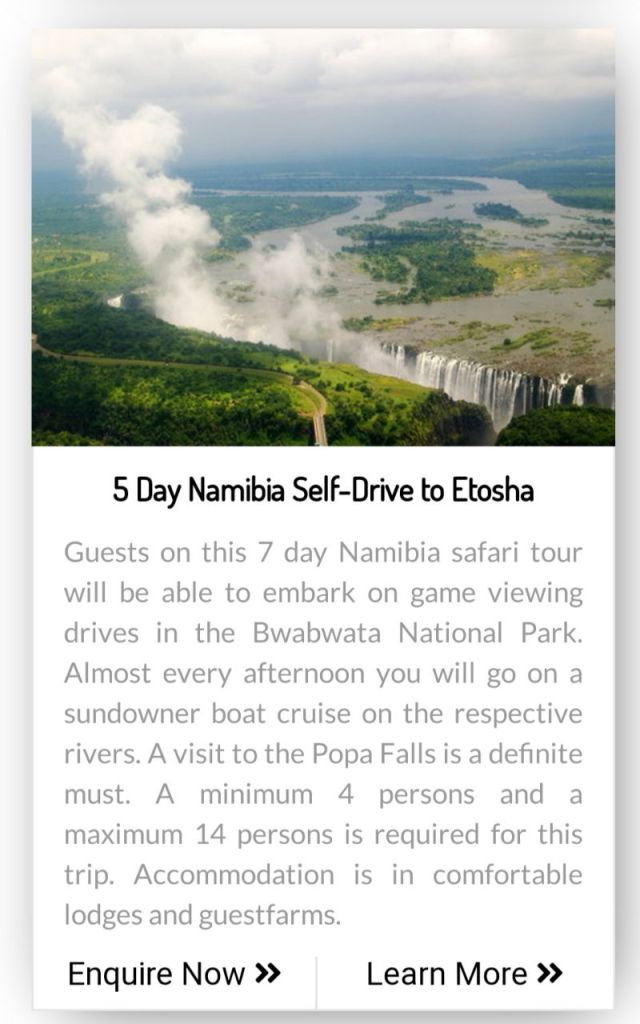
Enjoy the POPA falls, game viewing and the best of Bwabwata National Park


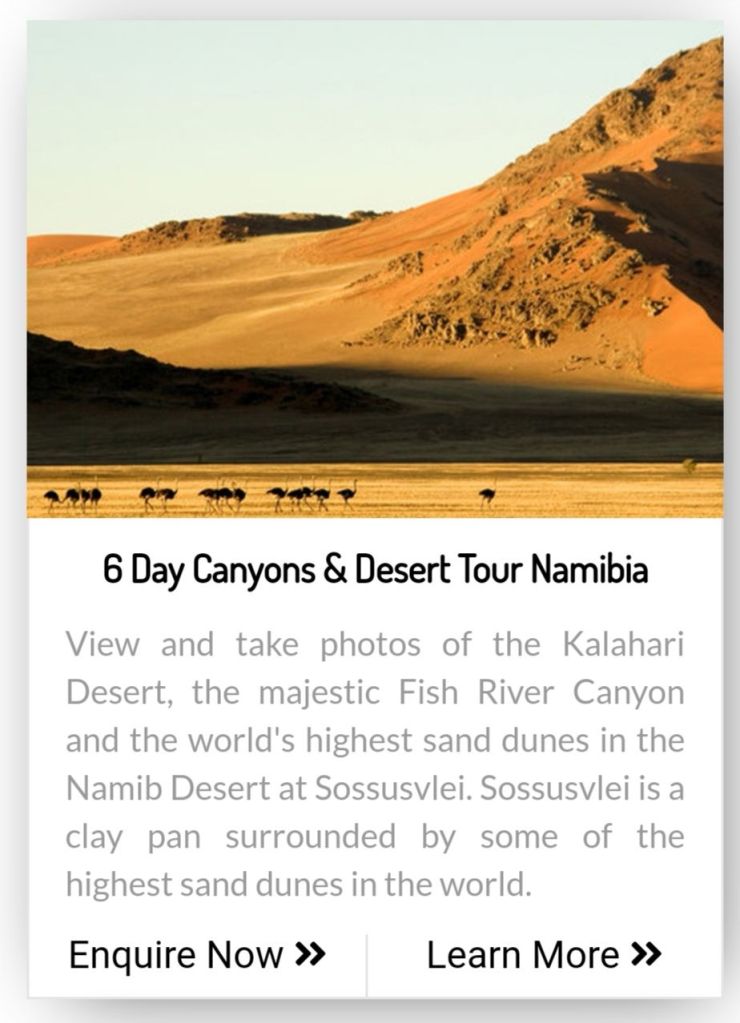
Canyonys and Desert tour.
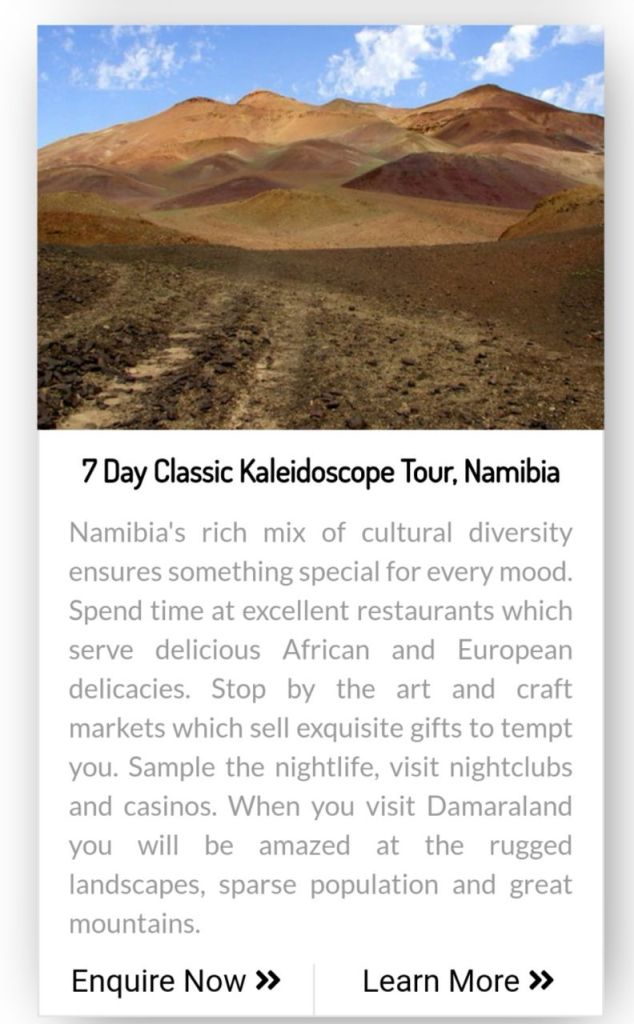
Classic cultural diversity tour

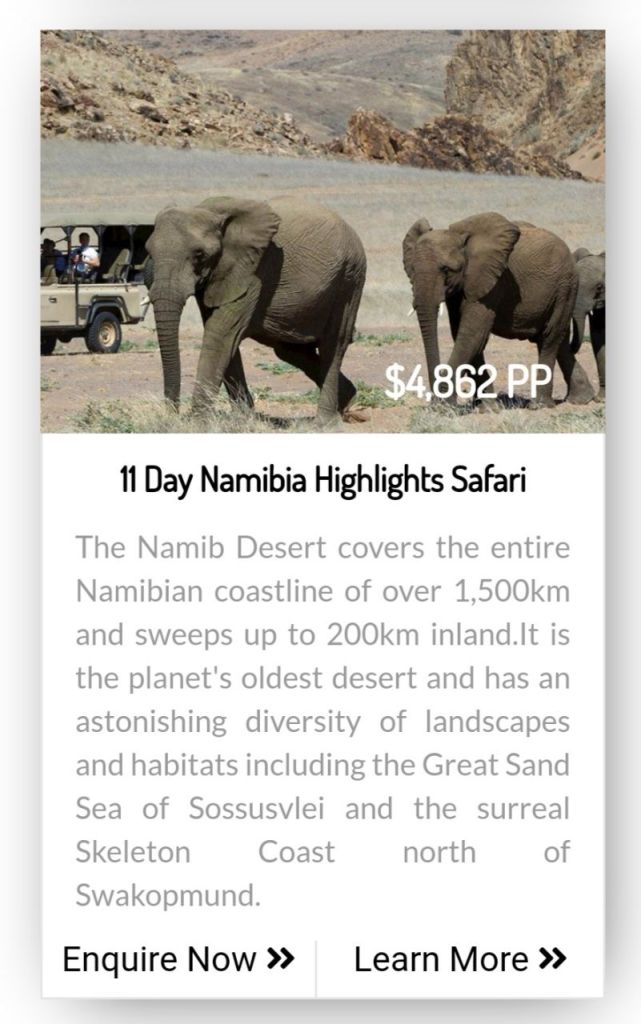
Namibai Safari in 11 Days
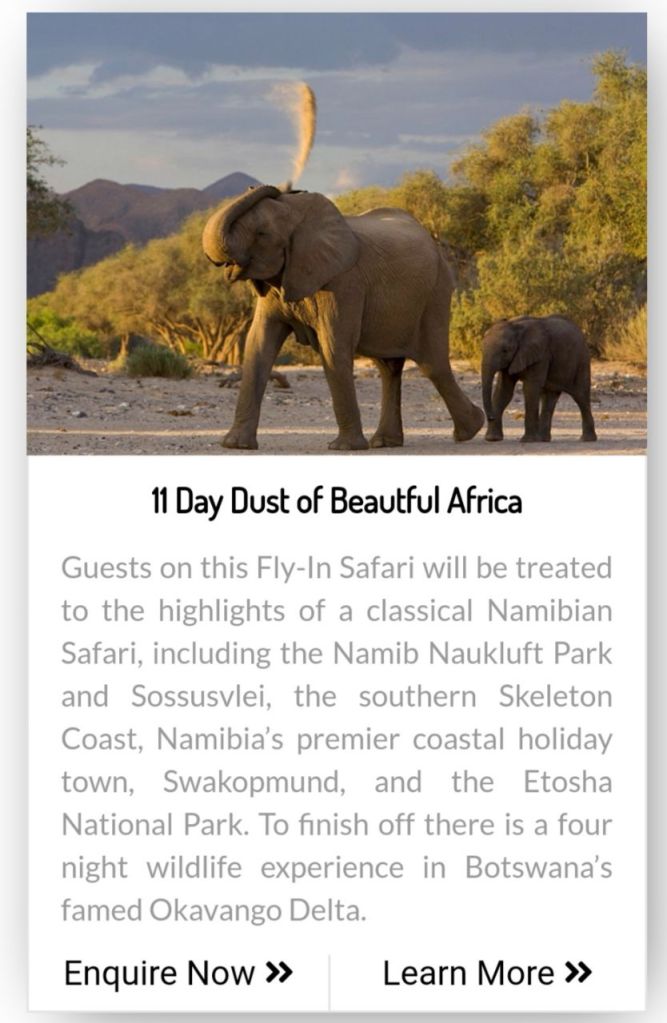
The Beauty of Africa

A Place of Eating, The Boma Dinner & Dance Show

The Boma – Place of Eating  is a must-do destination in Victoria Falls, an incredible African experience that is inspired by Zimbabwean cuisine. It offers an unparalleled experience, partially open to African skies, that bombards senses with Africa’s flavors, sights, sounds, and smells-together with Zimbabwe’s warmth and hospitality. Cultural Activities and Experiences

It (The Boma) offers you a four-course meal that combines a choice of starters from the kitchen and soups of a campfire, as well as an extensive barbecue buffet served on cast iron plates. They offer a range of salads from the salad bar, and you can choose from a choice of delicious buffet desserts. Specialty is offered in a great selection of traditional Zimbabwean foods.

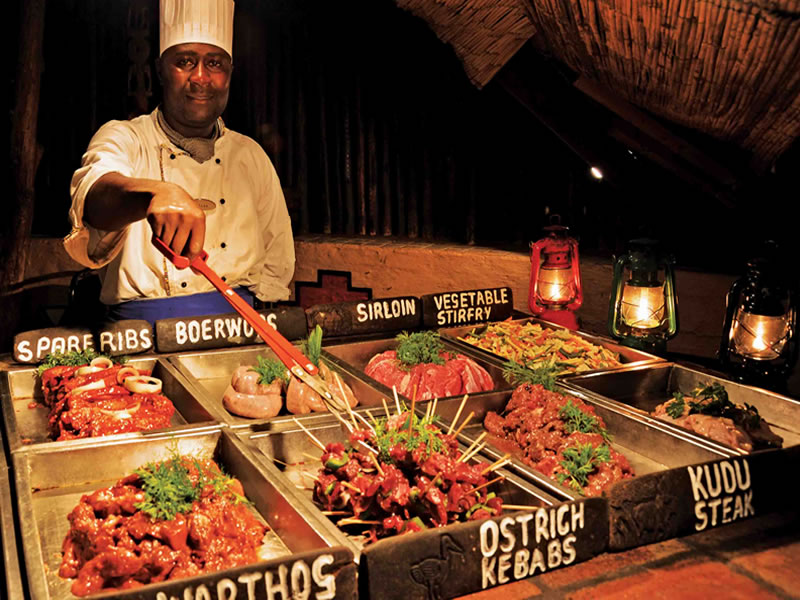
The Buffet at the Boma.

While everybody is fond of local delights, like Mopani worms and game cookies, those who want to enjoy beef, poultry, fish, and chicken or a variety of vegetarian food are also welcome. The Boma is famous for its fillet of warthog. Vehicles from Boma are picked up from hotels and lodges between 19:00 and 7:15 a.m. so that you will sit around 7:30 p.m. for an evening of fun.

In the local languages Shona and Ndebele, you are welcomed with a traditional greeting. The guests are then put up in’ chitenges’ and ready to enter the central enclosure. Hand washing is usually done before meals. The Boma, Victoria Falls, Zimbabwe Tasting of the local brew ‘mahewu’ at The Boma, Victoria Falls, Zimbabwe Wide selection of meats at The Boma – Victoria Falls, Zimbabwe The salad bar at The Boma – Victoria Falls, Zimbabwe Traditional customs, such as local beer tasting and hand-washing are observed, and the atmosphere is blazed by Ndebele song, dance, and culture.

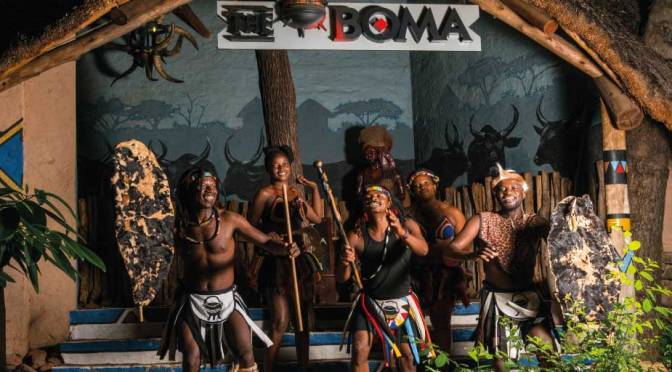
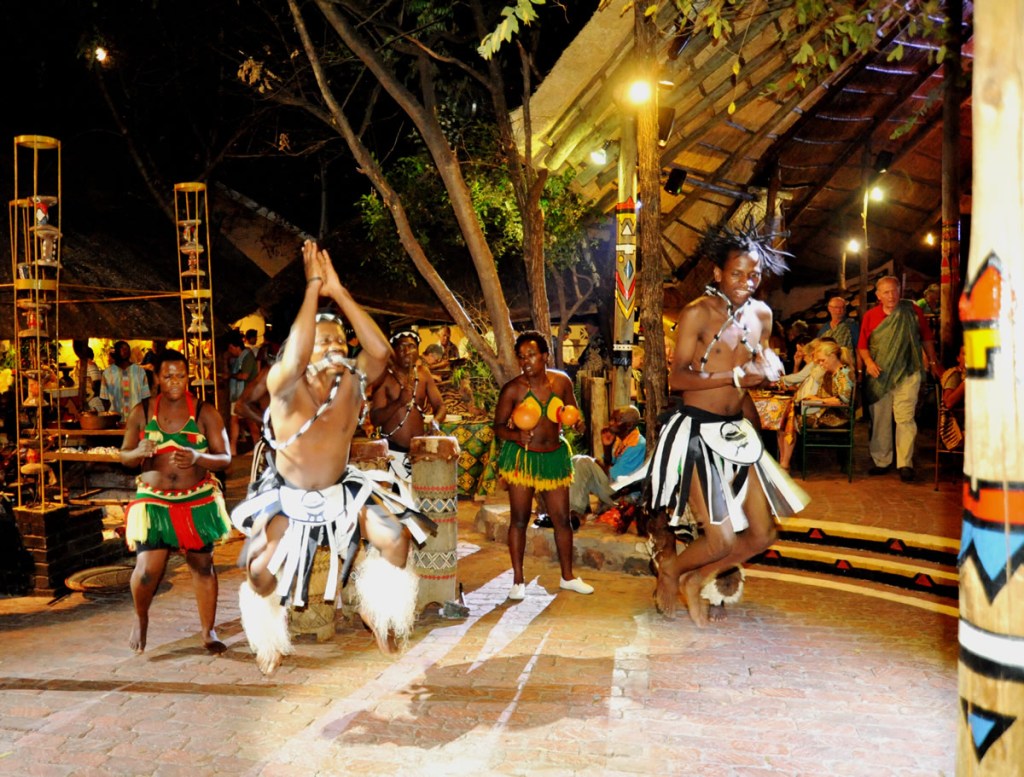
A nightly entertainment festival includes traditional Amakwezi dancers, singers, a narrator, and a Sangoma (traditional healer). Guests are invited to participate in the drumming exercise after dinner. This is the highlight of the evening, and everyone is welcomed with their renowned Amazulu drummers to join in the drumming and dancing show.

The Permormers at The Boma. credit The Boma
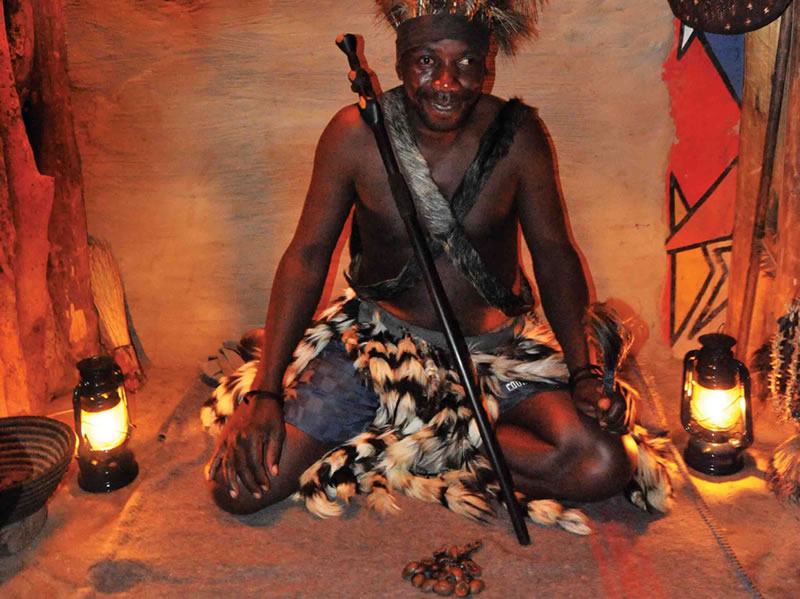
The Sangoma

The Menu
IVULAMPHIMBO – STARTERS

INGWENYA YASEKHUNJINI LUKAZAMBEZI
Smoked crocodile tail
PEPPERED IMPALA
Skewered with apricot fruit
CORN CIABATTA AND ‘INDUMBA’ BEAN FRITTERS (v)(n)
Accompanied by pumpkin, feta and hummus
FROM THE BUFFET
IMBHIDA YABELUNGU (v)
Salad selection with a variety of breads, dressings and
traditional accompaniments.

UMHLUZI WALAMHLA (v)
Chef’s freshly made soup of the day.
THE BOMA
EMAWOSWENI WEBOMA
From the Boma Braai Cook House and Campfire
A selection of grilled game meats
including beef, pork and marinated chicken
and our spit roast of the day
Try Potjies,
for our Traditional “Umzingeli” Hunter’s Stews
Fish, Zambezi Bream and Kapenta (whitebait)
Peanut Butter Rice, isitshwala / sadza (thick maize meal
served as a starch), potato wedges, home baked
garlic and herb bread and a variety of sauces (v)
A choice of freshly prepared vegetarian dishes including
vegetable stir-fry, chef’s daily pasta dish
and bush vegetables (v)

KWEZINAMBITHAYO
Your choice of desserts from the buffet
ZIMBABWE’S FAMOUS TANGANDA TEA, ROOIBOS TEA
AND FILTER COFFEE
‘KHOLISANI UKUDLA KWENU’
‘IDYAI ZVAKANAKA’
ENJOY YOUR DINNER . Credit The Boma Menu.

ENJOYED THIS BLOG?

Let us know in the comments below. We would love to hear from you.

                        ****************