Travel Tips For those coming to Namibia

Travel Tips,like the following,can be taken into consideration:

Namibia is a peaceful, democratic country and is relatively crime free. However, as in any other place in the world there are undesirable elements.

By following basic advice it is possible to avoid most potential problems. It is advised that you carry a record of the numbers of your passport, airline tickets and travellers cheque’s. These should be kept in a safe place. Please note expensive jewellery should not be taken on safari.

Do not flash lots of money, an expensive camera or jewellery. Take note of onlookers and keep your possessions in sight at all times to avoid opportunistic theft. Make use of your hotel safety deposit box for expensive items. Never leave baggage or personal items unattended, especially at airports. It is best not to wander around the streets after dark.

If you are travelling in a car, do not leave your purse or bag lying on the passenger seat in clear view – rather keep them in the car boot. Do not consider picking up hitchhikers.

Currency :
1 Namibian Dollar (N$) = 100 cents The Namibia Dollar (N$) is fixed to and equals the South African Rand (ZAR) 1:1. The South African Rand is legal tender in Namibia and is accepted throughout for payment. Currency Exchange : www.xe.com

Credit Cards : 
International Visa and Master Card credit cards are generally accepted throughout Namibia. Holders of other credit cards are advised to clarify with a commercial bank whether their card is acceptable in Namibia. VISA cards are not accepted at petrol filling stations.

Voltage : 
220/240 volts AC. 3-Pin Plugs are used

Communications : 
IDD is available. Country code: 264

Local Time: 
Summertime is GMT + 2 from the first Sunday in September to the first Sunday in April.
Wintertime is GMT + 1, from the first Sunday in April to the first Sunday in September.

Banking Hours : 
09h00-15h30 Monday-Friday
09h00-11h00 Saturday

Shopping Hours :
08h00-17h30 Monday-Friday
08h00-13h00 Saturday

Passport & VISA Requirements : 
All visitors are required to carry a passport that is valid for six months beyond the intended length of stay. Nationals of certain countries do not require visas. It is advisable to check for the latest visa and entry requirements.

Health Precautions : 
Due to the hot dry climate Namibia is virtually free of tropical diseases, therefore health certificates are not normally required. However, vaccination requirements change from time to time. We suggest you consult your local doctor or health department.

Malaria exists in the northern area throughout the year, but you can reduce the risk of malaria by using prophylactics, which should be started before arriving in Namibia and with your doctor’s guidance.

If you are on prescription medication, please ensure you have an adequate supply, to last the duration of your stay and a copy of your prescription(s).

The Southern Africa sun is harsh, therefore we advise that you apply highest (SPF ’20) sun block liberally prior to going on walks, swimming etc.

Accessibility : 
By Air: Namibia is directly accessible by regular international flights from Europe by Air Namibia & LTU and neighboring countries from Johannesburg, Cape Town, Maun, Victoria Falls, and Luanda by Air Namibia, South African Airways, British Airways/Comair and SA Express.

By Road: Namibia is directly accessible by the regular Intercape Mainliner bus service from Johannesburg, Cape Town and Victoria Falls.

Airports : 
International Airports – Hosea Kutako International Airport, previously Windhoek International Airport; Walvis Bay Airport

International & Domestic Airports: 
Hosea Kutako International Airport – 45km east of Windhoek, previously Windhoek International Airport, caters primarily for international air traffic, while Eros Airport, situated within the municipal boundaries of Windhoek, handles domestic and regional flights.

All major Namibian tourist destinations have airports, landing strips and/or heliports to accommodate holidaymaker’s traveling by air.
Although Namibia has over 300 known airfields, travellers are cautioned not to land at unlicensed airfields, as the condition is not always known. Aircraft fuel is usually not available at the landing strips, and landings must be arranged in advance.

Transport : 
Domestic transport services available include Intercape Mainliner bus service and scheduled commercial flights.

Private transport available includes hired car , 4×4 vehicle or light aircraft.
Please note: Sense of Africa discourages clients from using public transport.

Road Conditions

A two-wheel drive vehicle is adequate for a self-drive holiday. The country has  a  well  established  road network, of which some 5 450 km is tarred and 37 000km consists of gravel and earth roads, providing access to the majority of towns, parks, nature reserves and tourist attractions in the country. Road conditions are good and well signposted.Two major development projects, the Trans-Caprivi Highway and the Trans-Kalahari Highway, provide access to Botswana, Zambia, Zimbabwe and South Africa and link Namibia with other Southern African Development Community (SADC) countries for trade, travel and communication.

What to Buy :
Finely crafted jewellery, precious and semi-precious gemstones, karakul jackets, indigenous crafts, Namibian brewed beer and locally manufactured chocolates and exotic leather goods.

Water :
Tap water is safe to drink throughout the country, except for isolated rural areas, where the consumption of filtered or bottled mineral water is recommended.
(Remember water is as precious as diamonds in this drought-stricken land.)

Accommodation : 
Advanced bookings are highly recommended, especially outside of major centres and are absolutely essential in July, August, September, October, November and December.

The accommodation type in Namibia varies from hotels, guesthouses, pensions, guest farms, tented camps and lodges.

Lodges and safari camps tend to be on private ranches and offer both standard and luxury accommodation.

National parks offer camping, self-catering huts or chalets .

Dietary Requirements : 
Special dietary requirements are catered for throughout Namibia.
Most restaurants offer selections for vegetarians, depending on their forte.
Note : It is important to give advanced notice to places where you intend staying.

Tips & Gratuities :
Some restaurants do include service charges; otherwise 10 per cent of the billed amount is adequate. The same applies to hotel service personnel.

What to Pack :
Cotton rather than synthetic clothing is recommended for Namibian summers. This can be bought at shops in Windhoek that specialise in lightweight safari wear. Winters are usually mild to warm, which calls for light clothing in  the  middle  of  the day, and a sweater or jacket for evenings and early mornings when it can become quite cold. It is often cold and windy at the coast, for which warm clothing, including a windbreaker, is necessary. An important item is comfortable walking shoes. Swimsuits are required for public beaches or swimming pools. When packing, remember to include binoculars, a sun-hat, sunglasses, sun block, bathing towel, moisturiser, lip-ice and mosquito repellent. Points for electric shavers (electric current 250VAC) are available at major hotels and most state-owned rest camps and resorts. It is advisable to bring battery-operated or conventional razors when visiting remote areas. Camping equipment can be hired in Windhoek.

Photographic Equipment :
Ensure that you have sufficient film and spare batteries, as these may be difficult to purchase in some areas. A lens hood and ultra violet filter are advisable.
Dust-proof packing of your equipment is strongly recommended.

Important Note !!! : It is courteous to ask permission before photographing people. Please be sensitive. Not all African cultures are familiar with cameras. Rural folk will often shy away from having their picture taken. Some locals may ask a fee for having their photograph taken. It is recommended you avoid photographing anything relating to government and military, including personnel (soldiers and police) and buildings.
ON TOUR WITH FALCON SAFARIS IN CHOBE AND THE OKAVANGO DELTA

Just imagine a comfortable campfire with nightfall approaching. One by one, the evening sounds begin. In the distance, you can hear the roar of a wandering lion, then the laugh of a hyena. Hopefully, it is not laughing at you because the sound is normally an indication that it wants to be left alone. Then, close by, the howl of a jackal fills the night. The smell of food on a fire, the chat and laughter of friends and fellow tourists around you…

Suddenly, it is sunrise, and bird song awakens you. You hear the barking “aw” and “ih” of baboons and the gibber of apes. Our forebears (well, of some of us,) are waking up. In the distance, the bark of a zebra…

Then you realize that you are on safari with Falcon Safaris, the best tour operator in Southern Africa, and that you are in the Chobe National Park in Botswana.

WHY FALCON SAFARIS?

Well, that’s a very easy one to answer. Falcon is the prime full-service destination management company in Southern Africa. Fancy words, you muse? It applies to the best tour operator in the business, and you are on tour with them. Falcon Safaris offers choice packages that include traditional game viewing in open vehicles and comfortable overnight stops, as well the real thing: camping and campfires, the true way to experience Africa. 

THE CHOBE NATIONAL PARK

A Chobe National Park safari is one of the packages offered by Falcon Safaris. The park is located in the northern part of Botswana and borders the famous Okavango Delta. Some of Falcon’s Victoria Falls tour packages include visits to the park as well. Located along the Chobe River, the park consists of vast grassy plains, with the bushier Savuti marsh areas to the south. The Chobe river camp is a favourite with tourists. 

For more information visit: https://www.chobe-safari-lodges.com/  and http://www.chobe-national-park.net/

THE BIG FIVE

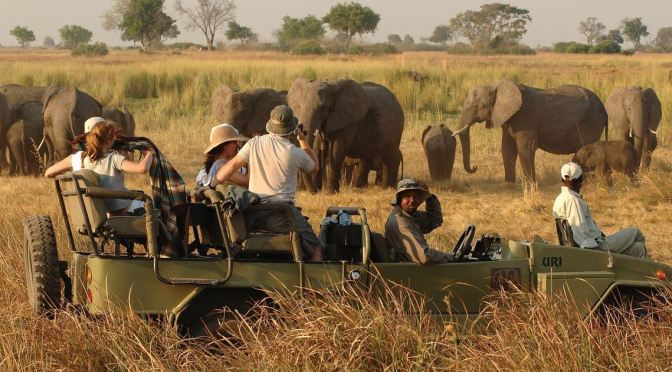
The big five are one of the reasons why most tourists want to visit a game reserve. You won’t be disappointed here. The park boasts one of the biggest elephant populations in Southern Africa. Led by a Falcon Safari guide, you will cross paths with buffalo herds, leopards and lions. The rhino, the fire fighter of the bush, is a bit on the shy side, and you may just miss it. With a bit of luck, you may see lions feeding on their kill or a leopard protecting its prey high up in a tree.

CHOBE WILDLIFE AND BIRD WATCHING

Wildlife is in abundance in the park, and it includes giraffe, zebra, kudu, springbok, impala and hartebeest. The river is well-populated with crocodiles, hippos and fish. For bird lovers, there is a kaleidoscope of birds to watch. Some 450 different species have been identified. Common species to see are the African darter, the saddle-billed stork and the squacco heron. The best time for bird watching with Falcon Safaris is from mid-November to April. This is the breeding season for the birds, and all migrant species are back “home”.

BABOONS

While everyone is on the lookout for the so-called big five, you may find yourself under observation by some close relatives. Big troops of African baboons are found all over Chobe. They like watching you as much as you like watching them. The biggest fun is to identify some of your family members amongst them. They live in close-knit family groups, with lots of children that need supervision and discipline, and you will find their almost-human behaviour great fun to watch. See if you are able to spot any of your uncles, aunts, neighbours or friends amongst them. Feeding them is a big no-no as it encourages them to raid tourists’ food supplies. Beware, they may try to steal your provisions if you allow them too close.

THE OKAVANGO DELTA

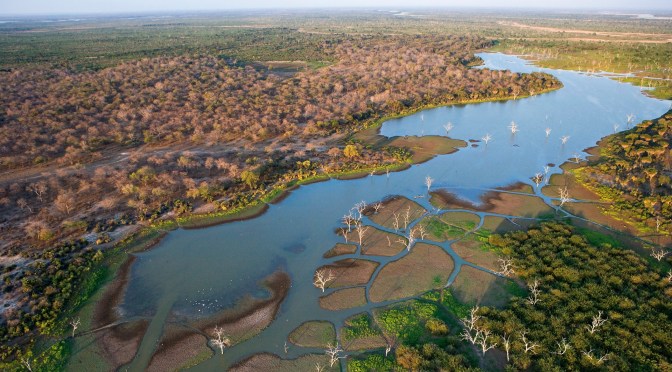
A Falcon Safari tour will include a visit to the Okavango Delta, a Unesco World Heritage Site. The delta borders Chobe and is basically a continuation of the nature reserve. It is subjected to seasonal flooding, with the main influx from the southern parts of Angola. The swampy flatland has its biggest inflow of water during the dry winter months and peaks around July. Scientists tend to regard the area as an oasis in a dry area rather than a natural wet-climate swamp. Receding water levels that follow the peak period attract large numbers of animals, which makes for excellent game viewing. Summer temperatures (November to early March) can reach 40 degrees, with a high humidity factor. The mid-year temperature pattern is mild by day with cooler nights.

OKAVANGO WILDLIFE

Falcon Safaris offers standard game viewing from open vehicles. Trips by motorboat or houseboat are also available. The delta attracts a wide variety of wildlife including the big five, the African bush elephant, blue wildebeest, springbok, sable antelope, impala, black and white rhinos, the Nile crocodile and yes, our cousins the baboons and some vervet monkeys.

Naturally, the delta supports a variety of fish species as well. Some seventy different species have been identified, including tiger fish and the well-known catfish. Fishing trips are available but need to be booked in advance. Tiger fish catches ranging between eight and ten kilograms have been recorded.

SNAKES

Most people don’t like snakes, and the feeling is somewhat mutual. That dates back to the time when the snake persuaded Eve to eat some of Eden’s export apples, with well-known consequences! Puff adders and cobras are amongst the snakes found in the area. Most snakes are likely to avoid humans. The exception is the puff adder, which, because it is slow-moving, prefers to lie still if there is danger. Puff adders bite when threatened and are responsible for up to 70% of all snakebites in Africa. Stay close to your Falcon guide and don’t try to entice or prod a snake with a stick or anything else, for that matter. 

YOUR FALCON SAFARI GUIDE AND TRAVEL TIPS

As for all tourist destinations, there are some precautions you will have to take and some items that will make life easier for you:

  • Malaria – The Chobe and Okavango areas are high-risk malaria areas, and you will be wise to take precautions. The swamps are rife with insects, and insect repellents are a must-have.
  • Sunblock and sunglasses are essential, especially in the November to February summer season with accompanying high temperatures. Use practical sunglasses that can be replaced at low cost should you happen to lose or break them. If you use prescription glasses, a safe option is to have a spare set available.
  • Well-worn hiking boots are another good investment. Well-worn is the keyword. You don’t want to hobble around with blistered feet. Remember to shake a boot before putting it on! It’s a nice hideout for spiders and scorpions.
  • Binoculars are a sound investment, and a good camera is a must for recording your memories.
  • Don’t overburden yourself with luggage, but do pack long-sleeved shirts and a hat, as well as a jacket for cooler nights if your visit falls within the winter months.
  • It is also useful to have a small battery-powered torch and a supply of meds for headaches, indigestion, etc.
  • Pack comfortable clothing, but remember it is Africa. Don’t pack camouflage or similar clothing and appear in public in it. You may just draw the attention of the police, and you wouldn’t like them to spoil your safari.

Speak to Falcon Safaris, the top tour operator for Southern Africa, for your planned Africa visit. Their top-class destination management team will make your African encounter a memorable one.

ENJOYED THIS BLOG?

Let us know in the comments below. We would love to hear from you.

                        ****************

ON TOUR WITH FALCON SAFARIS TO THE VICTORIA FALLS

They say that the best thing about an African safari is a sunset in Africa. And the only thing better than that is another sunset with your favourite drink on standby, or an African sunrise on a clear day. What better way to start your African encounter with Falcon Safaris, the best tour operator in Southern Africa, than with a visit to one of the seven wonders of the world, the Victoria Falls? This stunning Unesco World Heritage site is located on the border between Zimbabwe and the southern tip of Zambia, and your adventure begins when you land at Livingstone Airport.

WHY LIVINGSTONE?

Livingstone has a modern combined military / civilian airport with direct links to Johannesburg (South Africa), Nairobi (Kenya) and Addis Ababa (Ethiopia). The former Livingstone airport is now called the Harry Mwanga Nkumbula International Airport. Livingstone is a typical old, colonial-style town, with a modern business area at its heart and more rural African townships located to the south and east. The town derived its name from David Livingstone, the famous explorer and missionary who, in 1855, was the first white man to lay eyes on the Mosi-o-Tunya (“the smoke that thunders”) or what we now know as the Victoria Falls.  

LIVINGSTONE CITY MUSEUM TOUR

The Falcon Safaris’ full-service destination management team will guide you on a two-hour tour of the famous Livingstone Museum. You are not a history buff, you may say, but a visit will give you a taste of historic Africa. Exhibits include letters and other memorabilia from Livingstone himself, tribal and witchcraft artefacts, animal taxidermy, as well as a model African village. If you have a day to spare, allow Falcon Safaris to take you on a visit to the adjoining Mosi-oa-Tunya National Park, as well.

VICTORIA FALLS AND THE VICTORIA FALLS HOTEL

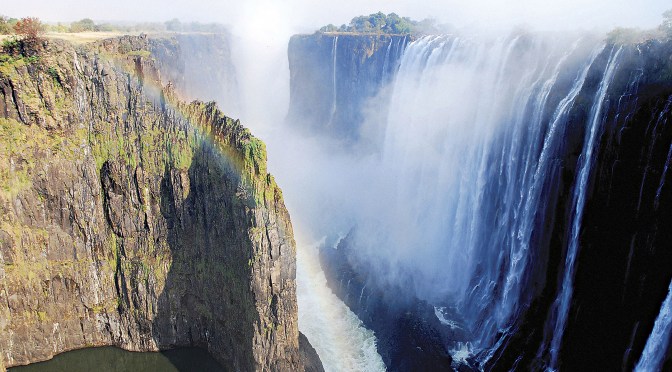
The main objective of your visit may be just to experience the Victoria Falls – to feel the spray on your body and hear the thunder of the water. Imagine a selfie with you in the foreground and a rainbow in the mist in the background. Don’t forget a picture of yourself with the statue of David Livingstone, too. The best views of the falls are from the Zimbabwean side, but make sure that you view it from both sides. Entrance fees range between $20 and $30. 

DEVIL’S POOLS

This is the ultimate swimming experience offered by Falcon Safaris. Keep in mind that the pools can be reached only from the Zambian side. Swimming in this natural pool will probably be the adrenaline rush of a lifetime. You can peek over the edge and see the largest waterfall in Africa. It is advisable to be a reasonably good swimmer if you intend to participate in this venture. Remember that you will have to swim across the Zambezi River. Stay close to the Falcon Safari guides at all times. This excursion costs between $100 and $170, depending on the season, and you will have to sign an indemnity.

BUNGEE JUMPING

No tour with Falcon Safaris would be complete without a walk across the bridge. For the daring and the young-at-heart, there is also the opportunity of bungee jumping from the bridge. The jump is regarded as one of the most scenic jumps in the world. Image the majestic backdrop and the river below. Don’t worry about the Nile crocodiles; they are not known for high-jumping, so you won’t become part of their diet. The fall of some 110 meters will live in your memory for a long, long time. Pictures are taken with each jump, and you can take your memories with you.

SUNSET CRUISES

As mentioned above, a sunset in Africa is a must-do, and there’s no better way to experience it than with a two-hour sunset cruise on the Zambezi River with Falcon Safaris. Take a transfer shuttle to the river and enjoy the magnificent views. Guides will be on hand to point out landmarks and describe wildlife encountered along the way. As this is a trip within a National Park, be prepared to pay certain fees.

HELICOPTER FLIGHTS

Breathtaking helicopter flights are available throughout the day. A typical flight takes the tourist over the falls, and the views are from both the Zimbabwean and Zambian sides. The flight lasts for about an hour and provides an unforgettable bird’s eye view of one of the seven wonders of the world.

HORSE RIDING FROM THE VICTORIA FALLS HOTEL

With Falcon Safaris, you will be able to experience the wild on horseback. A qualified guide will take you on a three-hour ride for some spectacular game viewing. Elephant, buffalo, kudu, and other wild animals are plentiful, and you will get the real feel of Africa. No experience is needed – you don’t need to be a cowboy to do this ride. But remember, a few hours on horseback will have some impact on your backside, and you may experience some stiffness the next day.

For more information on the Victoria Falls Hotel visit:

The Victoria Falls Hotel  and https://www.falconsafaris.com/

HIKING THE FALLS – THE BOILING POT HIKE

This is a dream hike winding down to the bottom of the falls where you can experience the spray of the falls and view nature’s boiling pot of thundering water. This hike is only available in the dry season between August and December, and you need to be reasonably fit and agile to undertake it. It’s relatively easy going down, but you have to hike back up again!

WHAT YOU WILL NEED FOR A TOUR WITH FALCON SAFARIS

Every person has different requirements. Falcon Safaris provides for most if not everything, but it is worth considering the following, as well:

  • Good-quality sunglasses. You may lose or break them during your activities, so rather go for practical glasses that won’t cost you an arm or a leg to replace.
  • If photography is your hobby, make sure that you have equipment that you can carry. It should also be waterproof because you will encounter a lot of spray and moisture.
  • The climate is ideal for mosquitoes. There is no truth in the rumour that they are so big that they will carry you away and suck you dry at home, but do take some strong insect repellent with you on the trip.
  • Malaria has mostly been eradicated in the Falls area, but some 15 cases are still being reported annually. The wise thing to do is to take prophylactics, especially if your trip falls between August and February.
  • Other “should haves” include good-quality, well-worn hiking boots, sunblock and a fold-up raincoat.
  • Lastly, remember to apply, with the help of Falcon Safaris, for a Kaza Uni-Visa. You will need it for the regular border crossings between Zimbabwe and Zambia.

A well-organized safari with Falcon Safaris, the premiere full-service destination management company in Southern Africa, will make your trip the memory of a lifetime. They say that once you have felt the African sun on your skin, you always want to come back for more.

ENJOY THIS BLOG?

Let us know in the comments below. We would love to hear from you.

                                    ****************

Unspoiled Wilderness of Botswana

“In certain parks you can watch some of the richest concentration of wildlife in the world, as undisturbed as it must have been for thousands of years, with no other vehicles or tourists to spoil your safari Botswana is the Premier Luxury Safari Destination in Africa” — A wilderness wonderland


Botswana is a land of unspoilt wilderness and unlimited wildlife. From the largest inland delta, the Okavango to the Kalahari desert, to the ancient super-lake of Makgadikgadi pans there is much to discover and experience. From the mystical hills to the thirstlands of the central Kalahari – Botswana is a beautiful land of contrasts. chobe elephants
It occupies 581 730km² of plateau with an average elevation of 1000 m. More than 100 000km² is devoted to game reserves and national parks. Over 80% of Botswana is a semi arid region of grassland or thorn trees with erratic rainfall.Beyond the narrow eastern corridor where the majority of the population is concentrated, Botswana is a largely roadless wilderness of savannahs, deserts, wetlands and salt pans. With its unique okavango delta and the wildlife wonderland of the Chobe national park, Botswana is one of Africa’s premier safari destinations.Botswana’s leaders took the view that high quality / low volume tourism was the best way to create a sustainable industry, while still preserving the environment. The high price, low impact has worked brilliantly April to August is one of the best times to visit Botswana, although it is winter the weather is still pleasant and it is dry. This however is also the busiest time as Europe and America have annual holidays. The least crowded times are June, early July and mid to late September. Summer is probably the worst time to visit as the rains damage roads and game is less visible Botswana safaris & tours. Our packages are tailor made and can be adjusted to suit. As FALCON SAFARIS we are a leading tour operator and we will gladly supply a quote with or without flights for any package tour of accommodation, transfers and activities for Southern Africa


dd Chobe, Linyati and Savuti Game Reserves
dd Moremi Game Reserves and Okavango Delta
dd Central Kalahari accommodation
dd 
dd Tour packages to Botswana Safari Tours
dd Honeymoon Safaris
dd Chobe National Park

We welcome you!

Welcome To Falcon Safaris Blog

Let us be your guide to African Adventure.

— Hamilton Mandizvidza.

We greet you and are delighted in sharing Southern Africa, a region with millions of welcoming smiles, wildlife paradise, incredible scenic beauty and the seventh wonder of the world, Victoria Falls, with our guests.We are a Tour Operator as well as a premiere full service Destination Management Company with over 15 years of combined in-house experience. We operate tailor made safaris, incentive and adventure travel in and around Zimbabwe, Zambia, Namibia, Botswana and South Africa. Whether it be car rental, a comprehensive travel itinerary or accommodation bookings, we will provide you with all your travel requirements, making Falcon Safaris a one-stop travel shop.

Design a site like this with WordPress.com
Get started