A DAY’S ADVENTURE IN THE RESORT TOWN OF VICTORIA FALLS

by Vimbai Nhindiri Katsvanga.

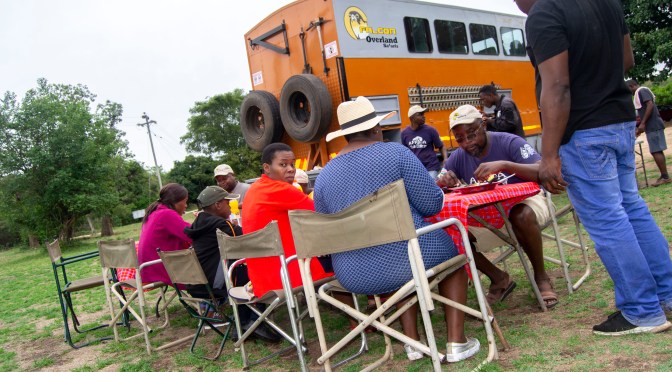
We met at 310 office which was the meeting point for our Transfers, and proceeded to the Wallow where we were going to do the first activity which was scheduled for the day. There were various clients who were joining us and all in all we were a total of 10 individuals. During a short drive to the wallow, the tour leader gave us a brief description about what they do and it was also perfect time for us to get to know each other.

Elephant Encounter

Elephant Encounter.

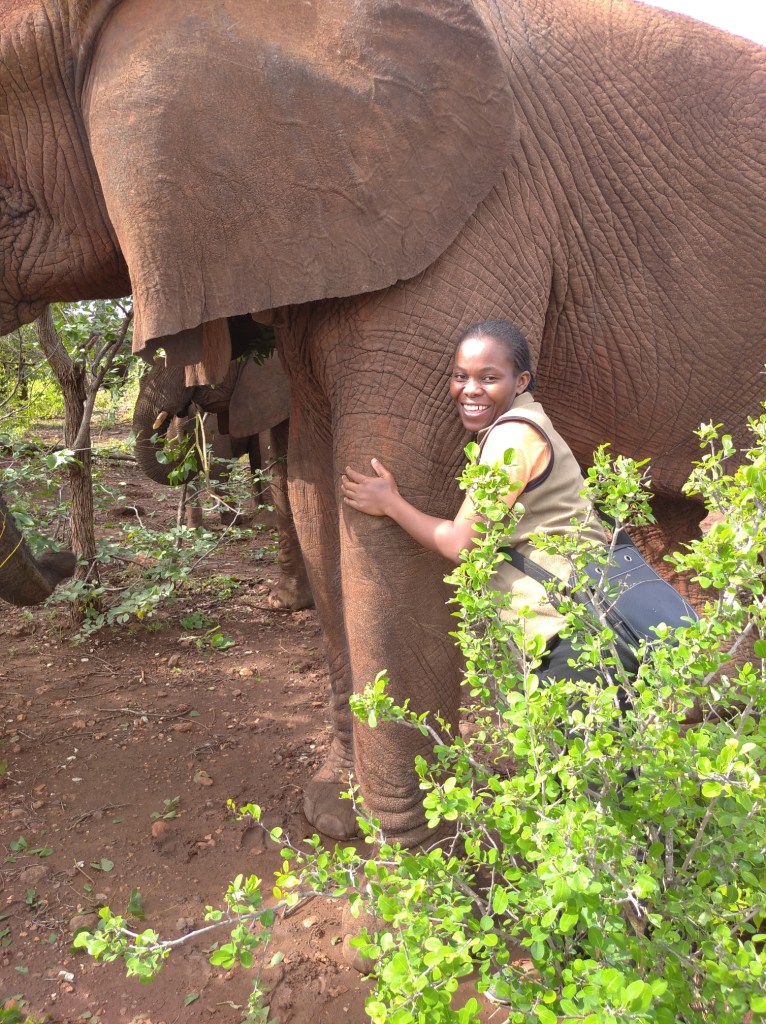
When we reached the Wallow, we were introduced to our guide Amos who was going to be taking us for the Elephant Encounter. Before doing anything, we signed off the indemnity forms as it is one of the major things that you do before you could do the activity. After the formalities we got into 4×4 vehicles and had a short game drive into the bush where we were going to meet the giants of the forests. Our guide gave us a short briefing about the elephant’s history, how the elephant came into being into Wild Horizons care and the threats facing the elephants today.

We got the opportunity to get close and personal with the elephant and we took pictures with the giant mammals. Lastly, we fed the elephant with some treats and also took pictures with the elephants. Sadly, it was time to leave the elephants and get back to the wallow.

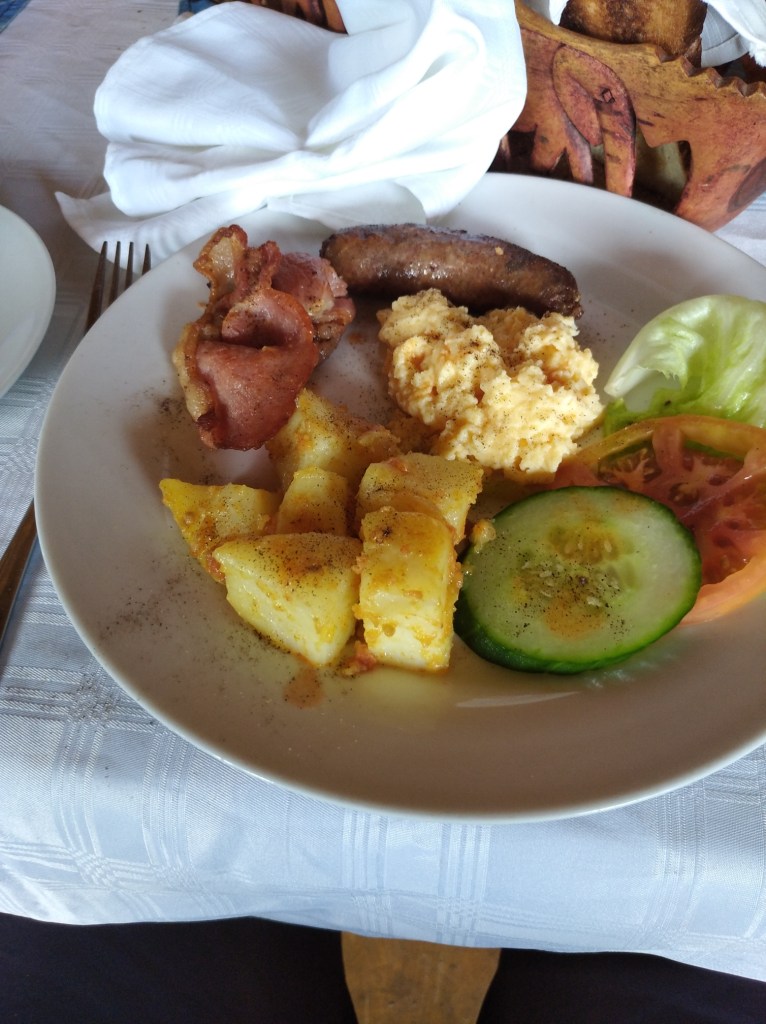
After the elephant encounter, we were offered a full English breakfast which was delicious and everyone enjoyed it.

The breakfast at the Wallow. credit Vimbai.

Bicycle Tours

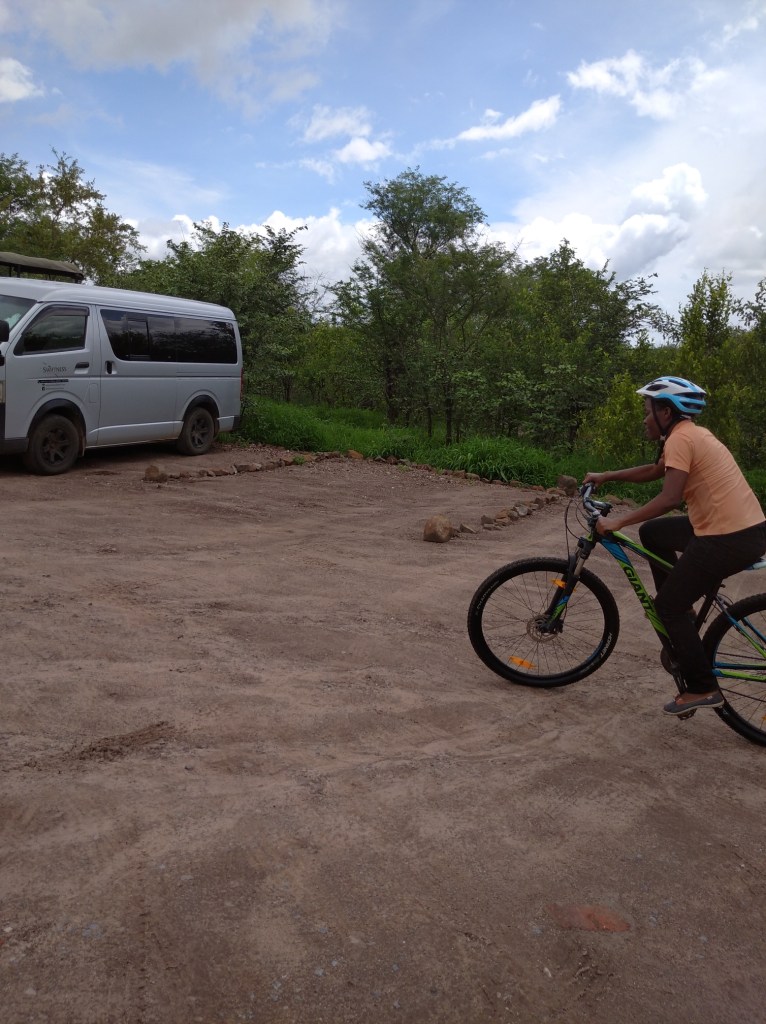
We drove back to town and went to Lookout café where other activities were awaiting us. A recently launched activity was availed to us which is a bicycle tour. We got the opportunity to ride the 27 gear bikes from the Lookout Café up to the Rainforest entrance and back. We could not manage to experience the full tour as the time was limited and with other activities scheduled for us for the day.

Vimbai during the bicycle tour.

Zipline and Gorge swing

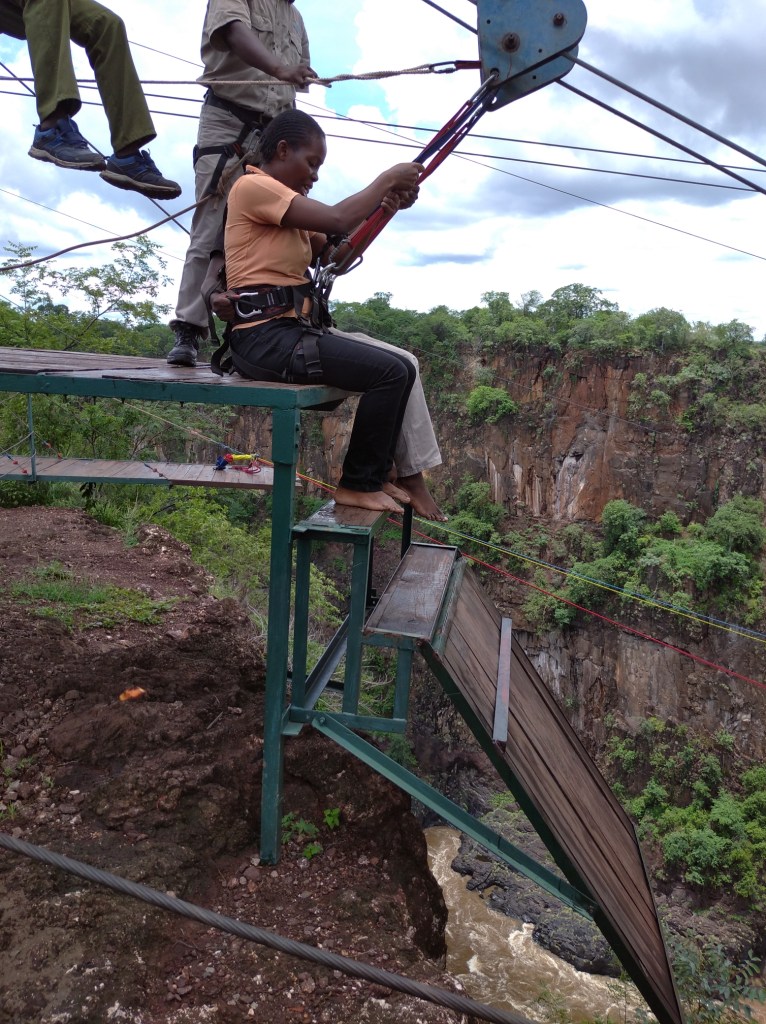
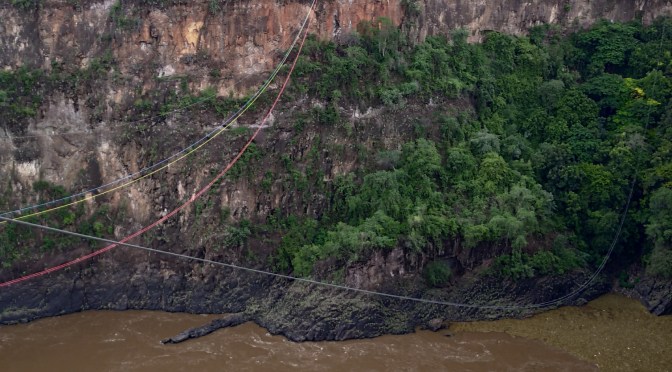
After the bike tour it was time to do the Adrenalin Activity i.e. zip line, gorge swing etc. An option was given to the brave ones who wanted to do Gorge Swing. I was acrophobic and could not see myself doing the activity but I decided that it was something that I had to do in order to conquer my fears. Almost everyone did Tandem Zip Line and when it was my turn, I wanted to chicken out but I did not want to disappoint my Tandem partner and also to disappoint myself as I had told myself that it was the day that I was going to conquer my fears. The guides were very friendly as they calmed me and assured me that everything was going to be fine and there was nothing to worry out. I could not believe that I had actually done it and it was a wonderful experience as I got to see the view of the Victoria Falls Bridge and the Lookout Café dangling in the gorge on a cable. If given the chance I would definitely do it again.

The Tandem Zip Line

Lunch Cruise

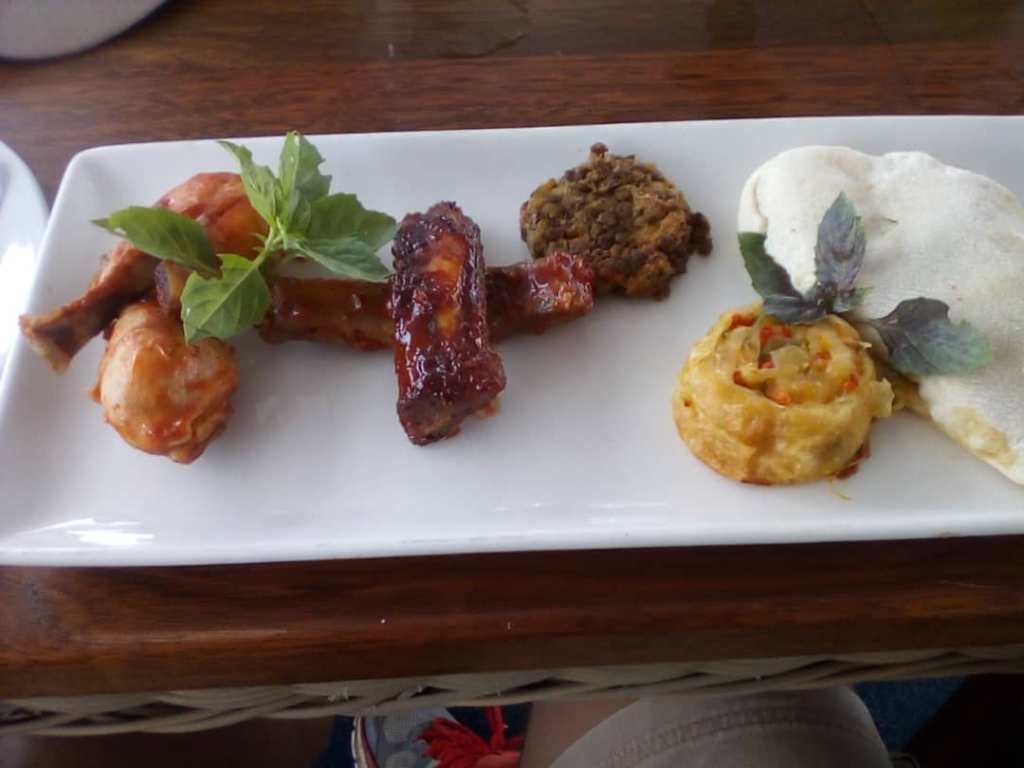
Lastly it was time to do the Lunch Cruise on the Might Zambezi River. We enjoyed the cool breeze while relaxing in the luxurious vessels of Wild Horizons Boat. It was very quiet on the river as it was the only boat in the river during that time. We saw some elephants, hippopotamus, and crocodiles not forgetting the famous “logodiles” of the Zambezi River. We were served with a 3-course light lunch including soft drinks, local spirits and mineral water. After 2 hours of cruising it was time for us to get back, sadly every good thing comes to an end.

The Meal at the Lunch Cruise.

We were dropped off at the pick-up point and that was the end of the tour. What started off as a normal day ended up being one of the most adventurous day in the Resort Town of Victoria Falls.

I definitely recommend the experience to anyone coming or going to Victoria Falls.

ENJOYED THIS BLOG?

Let us know by emailing us to media@falconsafaris.com. We would love to hear from you.

Zimbabwe, Home to a natural wonder and wildlife species

Located in the heart of Southern Africa, Zimbabwe is known for its aesthetic landscape and wildlife making it a must visit tourist destination on the Africa continent. Its unique heritage and culture is found in all cardinal points around the country with historic and tourist sites evenly spread throughout Zimbabwe. Zimbabwe experiences a very temperate sub- tropical climate with four different seasons all year round.  The best time to visit the beautiful country of Zimbabwe would be during the months of May to October (winter and spring).

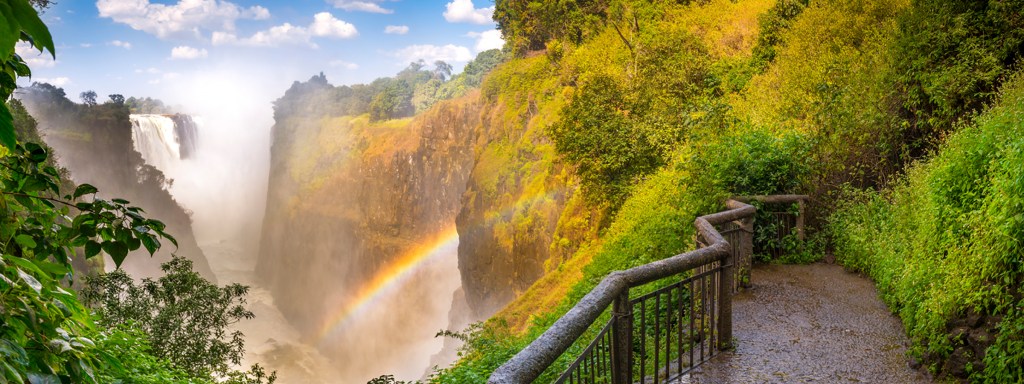
Home to one of natural seven wonders of the world, the Victoria Falls located in the western part of the country. The vicinity is home to Zimbabwe’s largest national park, Hwange National Park it is home to teeming wildlife ranging from elephants, white rhinos, buffalos, giraffes, wildebeest and various antelopes. Dusk and dawn Game drives can be booked in order to see the wildlife and have a tour around the National park.  The Victoria Falls and Hwange area is famous for its reptile species particularly the Nile and Albino crocodile that is found in the Zambezi River. The area is filled with crocodile farms that allow tourists to see and touch them. The beauty of this area does not stop there, as the town of Victoria Falls is abundant with world class affordable resorts.  

The Victoria Falls. Zimbabwe

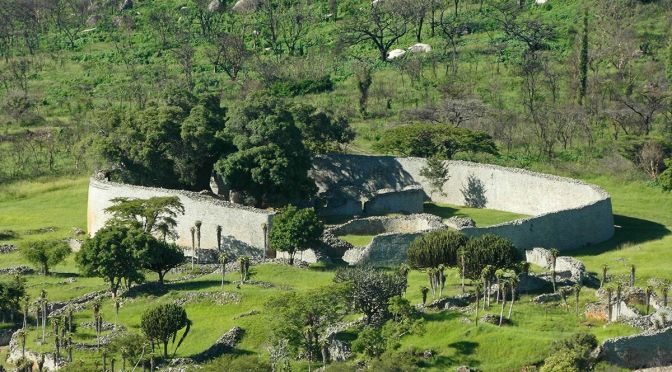
In the south eastern part of Zimbabwe lies one of the world’s archaeological marvels and heritage sites, the Lost City of Zimbabwe common known as the ruins of the Great Zimbabwe. This tourist and historic monument is where Zimbabwe derives its name from and it was built in the 11th century during the late Iron Age. Refreshing hikes around the ruins showcases the historic stone architecture and craftsmanship of a city that was built no mortar making it a marvel.

A visit to Zimbabwe will allow one to experience all the perks of being on the African continent. The landscape gets better and breath taking as one goes to eastern Zimbabwe. The Eastern Highlands is home to the highest points in Zimbabwe starting from Mount Nyangani with a scenic view at its’ summit to the evergreen tropical Mountains of Chimanimani. The mountains are suitable for hiking and seeing nature such as the Mtarazi waterfalls, streams, deep valleys, hot springs and geysers are profuse in the area.  To add a cherry on top of the cake, the world renowned Leopard Rock Hotel is based in the Eastern Highlands offering 4-star hotel and chalet accommodation at the pleasure of nature’s peace tranquil atmosphere.

The Chinhoyi Caves located an hour away from the capital Harare, is a serene site to see as they showcase one of natures’ blue water Sleeping pools.  The Sleeping pool can be seen from the ground but the scenic view is best as one walks through the caves. For those that might be adventurous, the sleeping pool can be used as a place to scuba dive as the pool is said to be very deep.

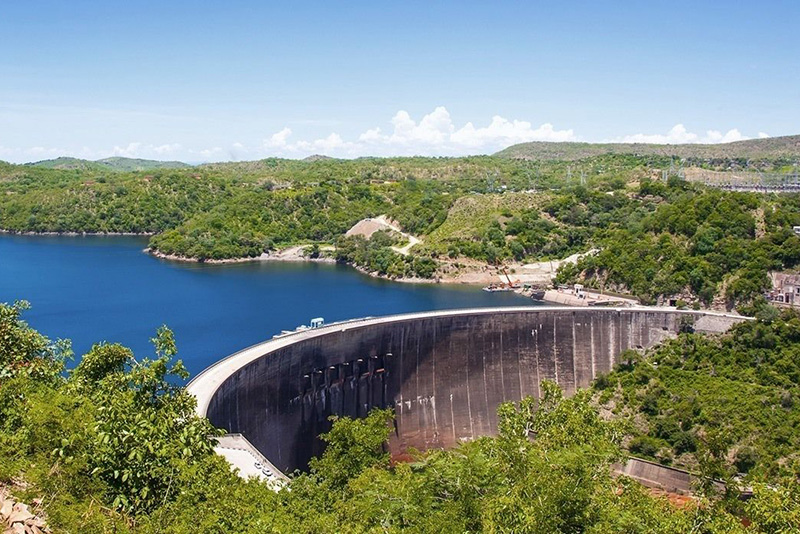
A tour around Zimbabwe would not be complete without visiting the Lake Kariba. Famous for its sunset and sunrise boat cruises, fishing and resorts built along the Lake. The Lake has various Islands along it as it lies 1300 kilometres upstream from the Indian Ocean bordering both Zimbabwe and Zambia. Lake Kariba is Africa’s largest man made dam, the dam wall is a must visit for anyone visiting the area. It is undoubtedly the perfect location to have a houseboat as the weather is always warm and tourist friendly. Lake Kariba will surely give you an ambiance to remember with vast safaris and vast wildlife surrounding the area. The must see resorts is the magnificent Bumi Hills which is only accessible by air. Extravagant views and fantastic wildlife are the order of the day at this location.

The Largest man made dam in Africa. Lake Kariba.

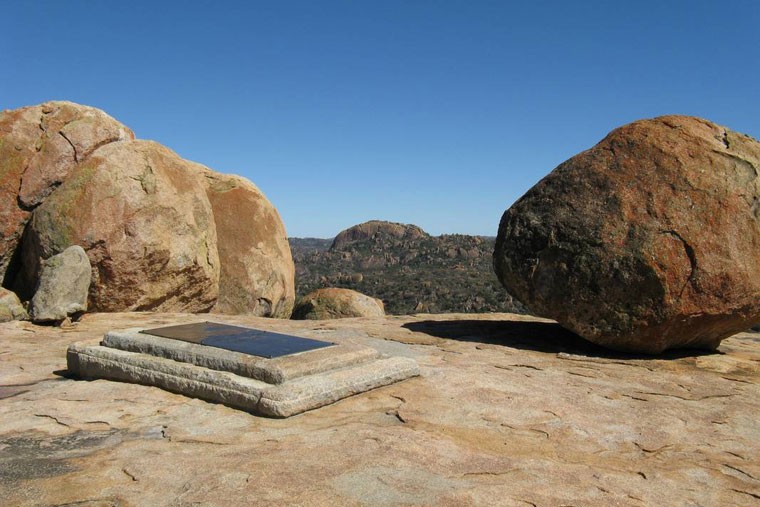
Bulawayo, Zimbabwe’s second largest city houses various tourist attractions. One of them is the Tshabalala Game Reserve which found en-route to Matobos. This Game reserve hosts various antelopes, rhinoceros and giraffes. Matobo National Park is where leopards and rhinoceros can be spotted and is the perfect location for camping, water sports and safaris. It is synonymous for its historical heritage as the famous explorer Cecil John Rhodes was laid to rest at this location. Chipangali Wildlife Orphanage is also situated in Bulawayo, the wildlife orphanage has various wild animals ranging from cheetahs, lions, leopards to exotic birds and snakes. Lastly, the Khami Ruins similar to the Great Zimbabwe but much smaller can be found on the outskirts of Bulawayo.

Cecil Rhodes’ grave in Matobo.

Zimbabwe takes tourism to another dimension as it is one of the few African countries that have an active trophy hunting industry. The abundance of wildlife makes Zimbabwe one of the best trophy hunting locations in the world as the valuable hunts are available. Trophy hunting in Zimbabwe is carried out in various national parks across the country.

Wildlife, National Parks and safaris are part of the real Zimbabwean Tourism experience as the country is blessed beyond doubt with numerous tourist attractions. Zimbabwe’s unique geographical location is a tourists’ pleasure as the country is bordered by South Africa, Botswana, Namibia, Zambia and Mozambique making it the hub of tourism in southern Africa.

In all these, as Falcon Safaris we are delighted to be Your Guide to African Adventure.

ENJOYED THIS BLOG?

ENJOYED THIS BLOG?

Let us know in the comments below. We would love to hear from you.

                        ****************

A Place of Eating, The Boma Dinner & Dance Show

The Boma – Place of Eating  is a must-do destination in Victoria Falls, an incredible African experience that is inspired by Zimbabwean cuisine. It offers an unparalleled experience, partially open to African skies, that bombards senses with Africa’s flavors, sights, sounds, and smells-together with Zimbabwe’s warmth and hospitality. Cultural Activities and Experiences

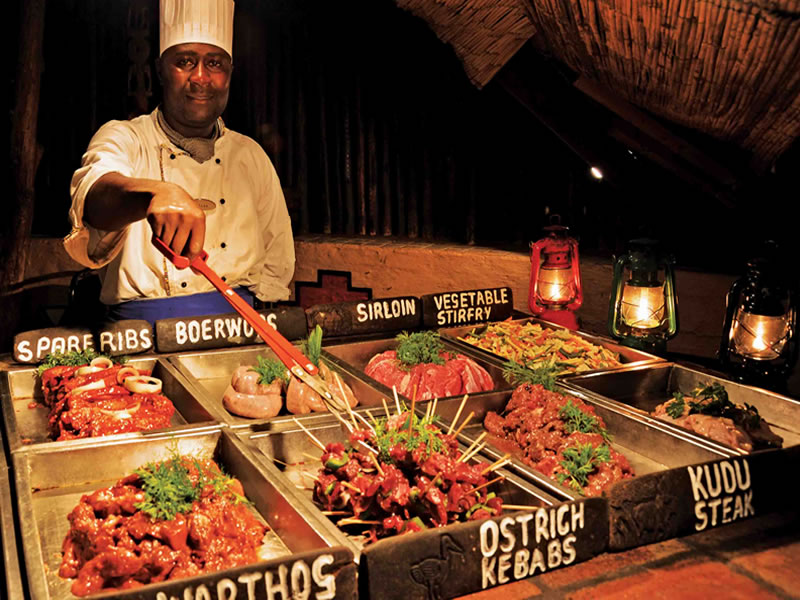
It (The Boma) offers you a four-course meal that combines a choice of starters from the kitchen and soups of a campfire, as well as an extensive barbecue buffet served on cast iron plates. They offer a range of salads from the salad bar, and you can choose from a choice of delicious buffet desserts. Specialty is offered in a great selection of traditional Zimbabwean foods.

The Buffet at the Boma.

While everybody is fond of local delights, like Mopani worms and game cookies, those who want to enjoy beef, poultry, fish, and chicken or a variety of vegetarian food are also welcome. The Boma is famous for its fillet of warthog. Vehicles from Boma are picked up from hotels and lodges between 19:00 and 7:15 a.m. so that you will sit around 7:30 p.m. for an evening of fun.

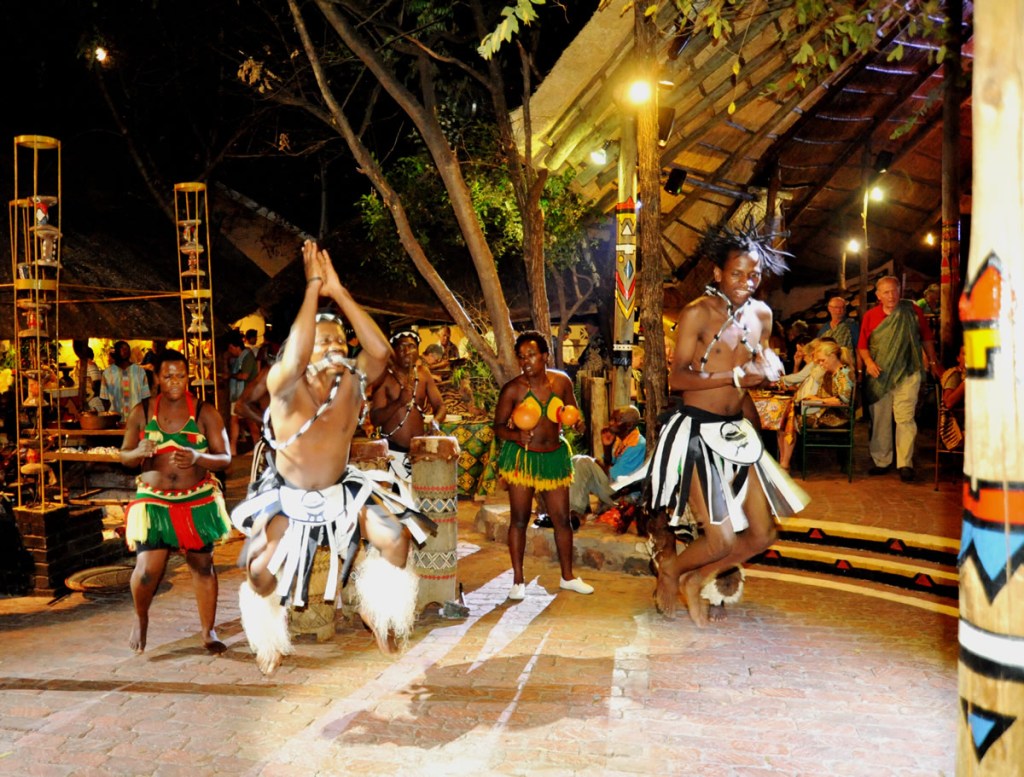
In the local languages Shona and Ndebele, you are welcomed with a traditional greeting. The guests are then put up in’ chitenges’ and ready to enter the central enclosure. Hand washing is usually done before meals. The Boma, Victoria Falls, Zimbabwe Tasting of the local brew ‘mahewu’ at The Boma, Victoria Falls, Zimbabwe Wide selection of meats at The Boma – Victoria Falls, Zimbabwe The salad bar at The Boma – Victoria Falls, Zimbabwe Traditional customs, such as local beer tasting and hand-washing are observed, and the atmosphere is blazed by Ndebele song, dance, and culture.

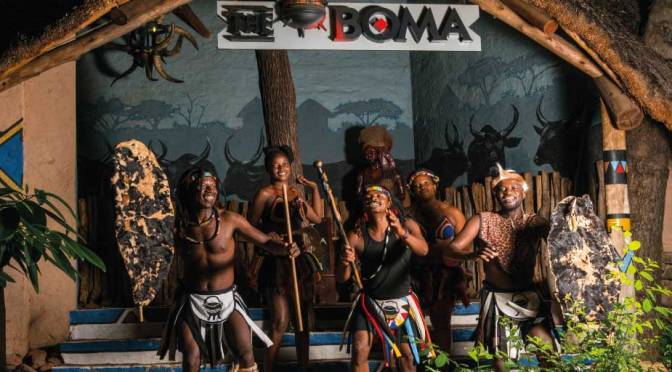
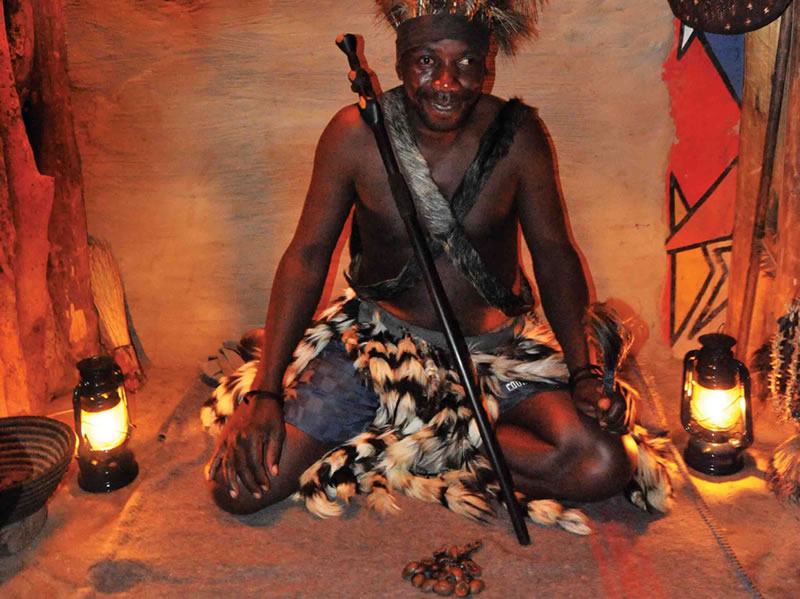
A nightly entertainment festival includes traditional Amakwezi dancers, singers, a narrator, and a Sangoma (traditional healer). Guests are invited to participate in the drumming exercise after dinner. This is the highlight of the evening, and everyone is welcomed with their renowned Amazulu drummers to join in the drumming and dancing show.

The Permormers at The Boma. credit The Boma
The Sangoma

The Menu
IVULAMPHIMBO – STARTERS

INGWENYA YASEKHUNJINI LUKAZAMBEZI
Smoked crocodile tail
PEPPERED IMPALA
Skewered with apricot fruit
CORN CIABATTA AND ‘INDUMBA’ BEAN FRITTERS (v)(n)
Accompanied by pumpkin, feta and hummus
FROM THE BUFFET
IMBHIDA YABELUNGU (v)
Salad selection with a variety of breads, dressings and
traditional accompaniments.

UMHLUZI WALAMHLA (v)
Chef’s freshly made soup of the day.
THE BOMA
EMAWOSWENI WEBOMA
From the Boma Braai Cook House and Campfire
A selection of grilled game meats
including beef, pork and marinated chicken
and our spit roast of the day
Try Potjies,
for our Traditional “Umzingeli” Hunter’s Stews
Fish, Zambezi Bream and Kapenta (whitebait)
Peanut Butter Rice, isitshwala / sadza (thick maize meal
served as a starch), potato wedges, home baked
garlic and herb bread and a variety of sauces (v)
A choice of freshly prepared vegetarian dishes including
vegetable stir-fry, chef’s daily pasta dish
and bush vegetables (v)

KWEZINAMBITHAYO
Your choice of desserts from the buffet
ZIMBABWE’S FAMOUS TANGANDA TEA, ROOIBOS TEA
AND FILTER COFFEE
‘KHOLISANI UKUDLA KWENU’
‘IDYAI ZVAKANAKA’
ENJOY YOUR DINNER . Credit The Boma Menu.

ENJOYED THIS BLOG?

Let us know in the comments below. We would love to hear from you.

                        ****************

Embarking On an Experienced Tour Company

Falcon Safaris is a competent organizer of travel arrangements, from Zimbabwe to destinations all over the world. Falcon Safaris has also had the pleasure of bringing tourists to Zimbabwe and Africa from other parts of the world. Falcon Safaris, through its competent and dedicated staff, has managed to provide excellent services to its customers, increasing the perceived value of the company products and services

Falcon Safaris enjoys a cordial relationship with other industrial players (such as hotels, airlines, and other providers). This allowed us to obtain excellent rates, which we always received with pleasure from our esteemed customers.

We are here to work with you to upgrade your dream tour, help you plan and reserve your business vacation, make it easy for you to set up your company conference or event, crack the glaze through a team-building in your office or take you on a fun holiday that helps you to relax and relax. Regardless of your budget, big or small, Falcon Safaris is your ideal partner for a memorable experience. Why don’t you contact us today for exceptional travel services?

Our professional team and integrity are our pride. Our 3E’s are efficiency, efficiency, and experience. We sell African Safaris. We provide safaris. We operate safaris tours from Kenya, Uganda, Tanzania, and Rwanda to different parts of the world inbound and outbound tour operators. The professional workers and integrity team are the joy. We offer safaris for the Americas, Australia, Europe, and Africa, the Middle East, and Southeast Asia.

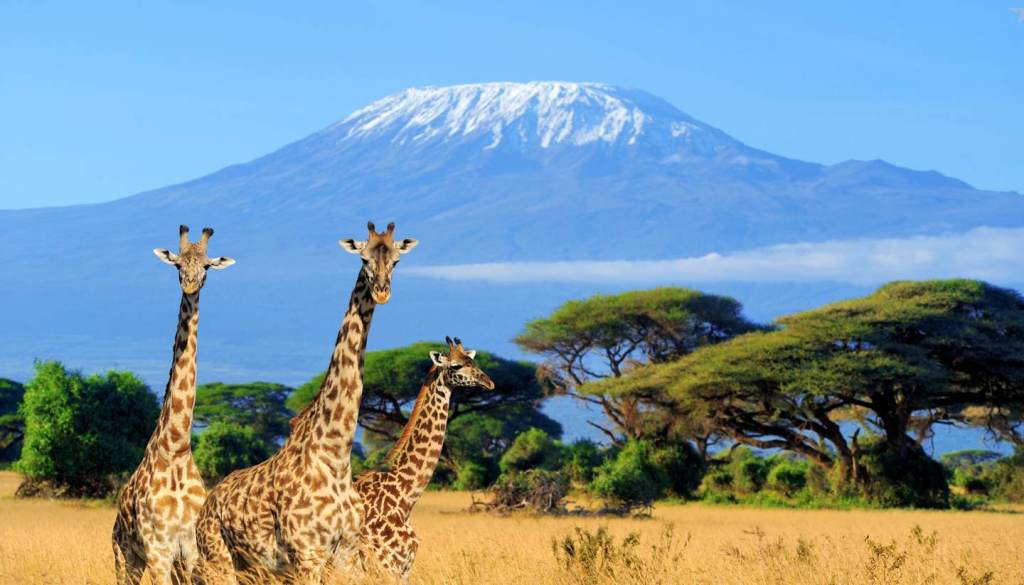
Kenya National Park. credit World Travel Guide.

Africa offers everything if you want to schedule a dream honeymoon, a thrilling African adventure trip, the ultimate African safari, or a unique family vacation. African safaris, eco-tourism, and adventure travel give beautiful eyes to you. Even our tours are tailored to the preferences of our guests–and there will never be two trips the same. We have something that will meet your needs, regardless of your special interest. All we need to do is pack up your bags and make sure you are on an African holiday. We plan the road, provide maps, and cover all the specifics Let Us Be You Guide to African Adventure.

Falcon Safaris is managed by people who personally know and work there on the African continent and who know the people and the places. It is run by people who were born and raised in Africa who come back year after year–not only to refresh their skills but mostly because of their love and passion for their areas.

Image result for falcon safaris
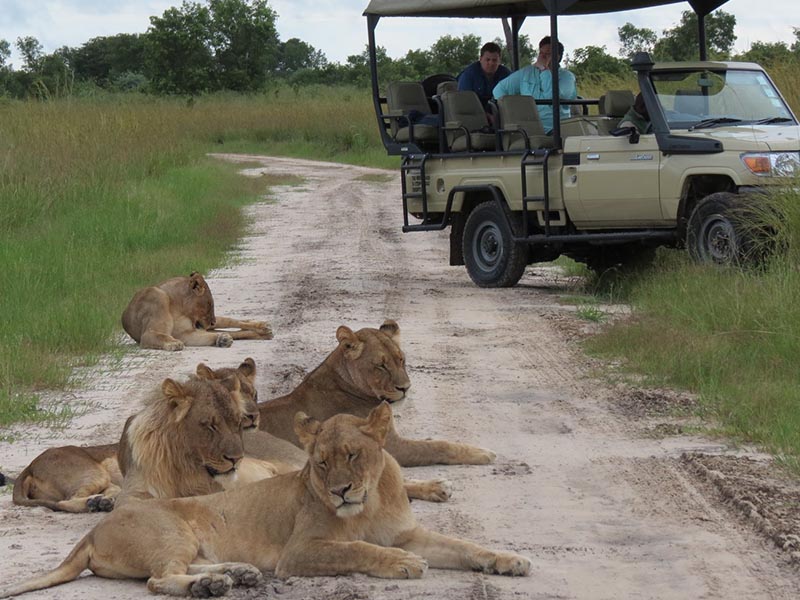
Just another day in the National Park.

Our safaris are of high quality, and we have the right equipment for your safari experience to optimize. Most of the travel is done in 4/4 vehicles, and our window seat ensures easy visibility and touring in the fields of photography. We work by listening to your holiday needs rather than offering what is best for our customers. Our extensive experience in adventure travel allows us to understand your needs and provide practical advice.

ENJOYED THIS BLOG?

Let us know in the comments below. We would love to hear from you.

                        ****************

Travel Tips For those coming to Namibia

Travel Tips,like the following,can be taken into consideration:

Namibia is a peaceful, democratic country and is relatively crime free. However, as in any other place in the world there are undesirable elements.

By following basic advice it is possible to avoid most potential problems. It is advised that you carry a record of the numbers of your passport, airline tickets and travellers cheque’s. These should be kept in a safe place. Please note expensive jewellery should not be taken on safari.

Do not flash lots of money, an expensive camera or jewellery. Take note of onlookers and keep your possessions in sight at all times to avoid opportunistic theft. Make use of your hotel safety deposit box for expensive items. Never leave baggage or personal items unattended, especially at airports. It is best not to wander around the streets after dark.

If you are travelling in a car, do not leave your purse or bag lying on the passenger seat in clear view – rather keep them in the car boot. Do not consider picking up hitchhikers.

Currency :
1 Namibian Dollar (N$) = 100 cents The Namibia Dollar (N$) is fixed to and equals the South African Rand (ZAR) 1:1. The South African Rand is legal tender in Namibia and is accepted throughout for payment. Currency Exchange : www.xe.com

Credit Cards : 
International Visa and Master Card credit cards are generally accepted throughout Namibia. Holders of other credit cards are advised to clarify with a commercial bank whether their card is acceptable in Namibia. VISA cards are not accepted at petrol filling stations.

Voltage : 
220/240 volts AC. 3-Pin Plugs are used

Communications : 
IDD is available. Country code: 264

Local Time: 
Summertime is GMT + 2 from the first Sunday in September to the first Sunday in April.
Wintertime is GMT + 1, from the first Sunday in April to the first Sunday in September.

Banking Hours : 
09h00-15h30 Monday-Friday
09h00-11h00 Saturday

Shopping Hours :
08h00-17h30 Monday-Friday
08h00-13h00 Saturday

Passport & VISA Requirements : 
All visitors are required to carry a passport that is valid for six months beyond the intended length of stay. Nationals of certain countries do not require visas. It is advisable to check for the latest visa and entry requirements.

Health Precautions : 
Due to the hot dry climate Namibia is virtually free of tropical diseases, therefore health certificates are not normally required. However, vaccination requirements change from time to time. We suggest you consult your local doctor or health department.

Malaria exists in the northern area throughout the year, but you can reduce the risk of malaria by using prophylactics, which should be started before arriving in Namibia and with your doctor’s guidance.

If you are on prescription medication, please ensure you have an adequate supply, to last the duration of your stay and a copy of your prescription(s).

The Southern Africa sun is harsh, therefore we advise that you apply highest (SPF ’20) sun block liberally prior to going on walks, swimming etc.

Accessibility : 
By Air: Namibia is directly accessible by regular international flights from Europe by Air Namibia & LTU and neighboring countries from Johannesburg, Cape Town, Maun, Victoria Falls, and Luanda by Air Namibia, South African Airways, British Airways/Comair and SA Express.

By Road: Namibia is directly accessible by the regular Intercape Mainliner bus service from Johannesburg, Cape Town and Victoria Falls.

Airports : 
International Airports – Hosea Kutako International Airport, previously Windhoek International Airport; Walvis Bay Airport

International & Domestic Airports: 
Hosea Kutako International Airport – 45km east of Windhoek, previously Windhoek International Airport, caters primarily for international air traffic, while Eros Airport, situated within the municipal boundaries of Windhoek, handles domestic and regional flights.

All major Namibian tourist destinations have airports, landing strips and/or heliports to accommodate holidaymaker’s traveling by air.
Although Namibia has over 300 known airfields, travellers are cautioned not to land at unlicensed airfields, as the condition is not always known. Aircraft fuel is usually not available at the landing strips, and landings must be arranged in advance.

Transport : 
Domestic transport services available include Intercape Mainliner bus service and scheduled commercial flights.

Private transport available includes hired car , 4×4 vehicle or light aircraft.
Please note: Sense of Africa discourages clients from using public transport.

Road Conditions

A two-wheel drive vehicle is adequate for a self-drive holiday. The country has  a  well  established  road network, of which some 5 450 km is tarred and 37 000km consists of gravel and earth roads, providing access to the majority of towns, parks, nature reserves and tourist attractions in the country. Road conditions are good and well signposted.Two major development projects, the Trans-Caprivi Highway and the Trans-Kalahari Highway, provide access to Botswana, Zambia, Zimbabwe and South Africa and link Namibia with other Southern African Development Community (SADC) countries for trade, travel and communication.

What to Buy :
Finely crafted jewellery, precious and semi-precious gemstones, karakul jackets, indigenous crafts, Namibian brewed beer and locally manufactured chocolates and exotic leather goods.

Water :
Tap water is safe to drink throughout the country, except for isolated rural areas, where the consumption of filtered or bottled mineral water is recommended.
(Remember water is as precious as diamonds in this drought-stricken land.)

Accommodation : 
Advanced bookings are highly recommended, especially outside of major centres and are absolutely essential in July, August, September, October, November and December.

The accommodation type in Namibia varies from hotels, guesthouses, pensions, guest farms, tented camps and lodges.

Lodges and safari camps tend to be on private ranches and offer both standard and luxury accommodation.

National parks offer camping, self-catering huts or chalets .

Dietary Requirements : 
Special dietary requirements are catered for throughout Namibia.
Most restaurants offer selections for vegetarians, depending on their forte.
Note : It is important to give advanced notice to places where you intend staying.

Tips & Gratuities :
Some restaurants do include service charges; otherwise 10 per cent of the billed amount is adequate. The same applies to hotel service personnel.

What to Pack :
Cotton rather than synthetic clothing is recommended for Namibian summers. This can be bought at shops in Windhoek that specialise in lightweight safari wear. Winters are usually mild to warm, which calls for light clothing in  the  middle  of  the day, and a sweater or jacket for evenings and early mornings when it can become quite cold. It is often cold and windy at the coast, for which warm clothing, including a windbreaker, is necessary. An important item is comfortable walking shoes. Swimsuits are required for public beaches or swimming pools. When packing, remember to include binoculars, a sun-hat, sunglasses, sun block, bathing towel, moisturiser, lip-ice and mosquito repellent. Points for electric shavers (electric current 250VAC) are available at major hotels and most state-owned rest camps and resorts. It is advisable to bring battery-operated or conventional razors when visiting remote areas. Camping equipment can be hired in Windhoek.

Photographic Equipment :
Ensure that you have sufficient film and spare batteries, as these may be difficult to purchase in some areas. A lens hood and ultra violet filter are advisable.
Dust-proof packing of your equipment is strongly recommended.

Important Note !!! : It is courteous to ask permission before photographing people. Please be sensitive. Not all African cultures are familiar with cameras. Rural folk will often shy away from having their picture taken. Some locals may ask a fee for having their photograph taken. It is recommended you avoid photographing anything relating to government and military, including personnel (soldiers and police) and buildings.
ON TOUR WITH FALCON SAFARIS IN CHOBE AND THE OKAVANGO DELTA

Just imagine a comfortable campfire with nightfall approaching. One by one, the evening sounds begin. In the distance, you can hear the roar of a wandering lion, then the laugh of a hyena. Hopefully, it is not laughing at you because the sound is normally an indication that it wants to be left alone. Then, close by, the howl of a jackal fills the night. The smell of food on a fire, the chat and laughter of friends and fellow tourists around you…

Suddenly, it is sunrise, and bird song awakens you. You hear the barking “aw” and “ih” of baboons and the gibber of apes. Our forebears (well, of some of us,) are waking up. In the distance, the bark of a zebra…

Then you realize that you are on safari with Falcon Safaris, the best tour operator in Southern Africa, and that you are in the Chobe National Park in Botswana.

WHY FALCON SAFARIS?

Well, that’s a very easy one to answer. Falcon is the prime full-service destination management company in Southern Africa. Fancy words, you muse? It applies to the best tour operator in the business, and you are on tour with them. Falcon Safaris offers choice packages that include traditional game viewing in open vehicles and comfortable overnight stops, as well the real thing: camping and campfires, the true way to experience Africa. 

THE CHOBE NATIONAL PARK

A Chobe National Park safari is one of the packages offered by Falcon Safaris. The park is located in the northern part of Botswana and borders the famous Okavango Delta. Some of Falcon’s Victoria Falls tour packages include visits to the park as well. Located along the Chobe River, the park consists of vast grassy plains, with the bushier Savuti marsh areas to the south. The Chobe river camp is a favourite with tourists. 

For more information visit: https://www.chobe-safari-lodges.com/  and http://www.chobe-national-park.net/

THE BIG FIVE

The big five are one of the reasons why most tourists want to visit a game reserve. You won’t be disappointed here. The park boasts one of the biggest elephant populations in Southern Africa. Led by a Falcon Safari guide, you will cross paths with buffalo herds, leopards and lions. The rhino, the fire fighter of the bush, is a bit on the shy side, and you may just miss it. With a bit of luck, you may see lions feeding on their kill or a leopard protecting its prey high up in a tree.

CHOBE WILDLIFE AND BIRD WATCHING

Wildlife is in abundance in the park, and it includes giraffe, zebra, kudu, springbok, impala and hartebeest. The river is well-populated with crocodiles, hippos and fish. For bird lovers, there is a kaleidoscope of birds to watch. Some 450 different species have been identified. Common species to see are the African darter, the saddle-billed stork and the squacco heron. The best time for bird watching with Falcon Safaris is from mid-November to April. This is the breeding season for the birds, and all migrant species are back “home”.

BABOONS

While everyone is on the lookout for the so-called big five, you may find yourself under observation by some close relatives. Big troops of African baboons are found all over Chobe. They like watching you as much as you like watching them. The biggest fun is to identify some of your family members amongst them. They live in close-knit family groups, with lots of children that need supervision and discipline, and you will find their almost-human behaviour great fun to watch. See if you are able to spot any of your uncles, aunts, neighbours or friends amongst them. Feeding them is a big no-no as it encourages them to raid tourists’ food supplies. Beware, they may try to steal your provisions if you allow them too close.

THE OKAVANGO DELTA

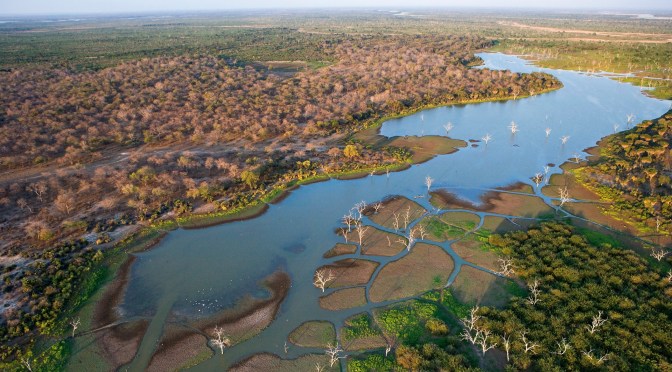
A Falcon Safari tour will include a visit to the Okavango Delta, a Unesco World Heritage Site. The delta borders Chobe and is basically a continuation of the nature reserve. It is subjected to seasonal flooding, with the main influx from the southern parts of Angola. The swampy flatland has its biggest inflow of water during the dry winter months and peaks around July. Scientists tend to regard the area as an oasis in a dry area rather than a natural wet-climate swamp. Receding water levels that follow the peak period attract large numbers of animals, which makes for excellent game viewing. Summer temperatures (November to early March) can reach 40 degrees, with a high humidity factor. The mid-year temperature pattern is mild by day with cooler nights.

OKAVANGO WILDLIFE

Falcon Safaris offers standard game viewing from open vehicles. Trips by motorboat or houseboat are also available. The delta attracts a wide variety of wildlife including the big five, the African bush elephant, blue wildebeest, springbok, sable antelope, impala, black and white rhinos, the Nile crocodile and yes, our cousins the baboons and some vervet monkeys.

Naturally, the delta supports a variety of fish species as well. Some seventy different species have been identified, including tiger fish and the well-known catfish. Fishing trips are available but need to be booked in advance. Tiger fish catches ranging between eight and ten kilograms have been recorded.

SNAKES

Most people don’t like snakes, and the feeling is somewhat mutual. That dates back to the time when the snake persuaded Eve to eat some of Eden’s export apples, with well-known consequences! Puff adders and cobras are amongst the snakes found in the area. Most snakes are likely to avoid humans. The exception is the puff adder, which, because it is slow-moving, prefers to lie still if there is danger. Puff adders bite when threatened and are responsible for up to 70% of all snakebites in Africa. Stay close to your Falcon guide and don’t try to entice or prod a snake with a stick or anything else, for that matter. 

YOUR FALCON SAFARI GUIDE AND TRAVEL TIPS

As for all tourist destinations, there are some precautions you will have to take and some items that will make life easier for you:

  • Malaria – The Chobe and Okavango areas are high-risk malaria areas, and you will be wise to take precautions. The swamps are rife with insects, and insect repellents are a must-have.
  • Sunblock and sunglasses are essential, especially in the November to February summer season with accompanying high temperatures. Use practical sunglasses that can be replaced at low cost should you happen to lose or break them. If you use prescription glasses, a safe option is to have a spare set available.
  • Well-worn hiking boots are another good investment. Well-worn is the keyword. You don’t want to hobble around with blistered feet. Remember to shake a boot before putting it on! It’s a nice hideout for spiders and scorpions.
  • Binoculars are a sound investment, and a good camera is a must for recording your memories.
  • Don’t overburden yourself with luggage, but do pack long-sleeved shirts and a hat, as well as a jacket for cooler nights if your visit falls within the winter months.
  • It is also useful to have a small battery-powered torch and a supply of meds for headaches, indigestion, etc.
  • Pack comfortable clothing, but remember it is Africa. Don’t pack camouflage or similar clothing and appear in public in it. You may just draw the attention of the police, and you wouldn’t like them to spoil your safari.

Speak to Falcon Safaris, the top tour operator for Southern Africa, for your planned Africa visit. Their top-class destination management team will make your African encounter a memorable one.

ENJOYED THIS BLOG?

Let us know in the comments below. We would love to hear from you.

                        ****************